ATS Tactical Gear Sistem de îmbrăcăminte de nivel scăzut: Modular Ultra Lo-Pro / Lo-Vis Tactical Armor Tricou Plate Carrier System pentru Dynamic CQB și PSD Ops!

Sistemul ATS pentru îmbrăcăminte la un nivel scăzut este un sistem modular scalabil pentru operațiile de vizibilitate redusă. Se compune din trei părți care pot fi utilizate independent unul de celălalt sau combinate în orice configurație are nevoie de utilizator. Sistemul este alcătuit dintr-un suport de placă dimensionat în jurul dimensiunilor plăcii ESAPI și plăcile dure 10X12. Harnașul pentru vizibilitate la joasă vizibilitate poate fi folosit ca produs autonom sau în combinație cu dispozitivul de transport cu plăci, utilizând umerii de curea inclusi.

ATS Tactical Gear Low Level Clothing System: Scalable, Modular Ultra Lo-Pro/Lo-Vis Tactical Armor Shirt Plate Carrier System for Dynamic CQB and PSD Ops!
Posted by: David Crane September 27, 2018

Print Friendly, PDF & Email
By David Crane

September 27, 2018
Last updated on 9/27/18.

This one comes to us from DefenseReview (DR) writer/contributor and chief new-product tester Jeff Gurwitch. ATS Tactical Gear recently released their Low Level Clothing System shirt plate carrier for commercial sales. Gurwitch received one last year to try out, so he could make suggestions for improvements. Here’s what Gurwitch said about it to DR (minimally modified):

“It’s a good low-level setup. See the link below. It’s designed for low level CQB work and PSD (Personal Security Detail/Detachment). I’ve attached pics of my kit. I took it on one contractor deployment, and just thought it’s worth a quick heads-up piece on DR.

ATS NEW LOW LEVEL CLOTHING SYSTEM!“

The following information on the rig comes directly from the ATS company website:

“The ATS Low level Clothing System is a scalable, modular system for low visibility operations. It consists of three parts that can be used independently of each other or combined in what ever configuration the user needs. The System consists of a Plate carrier sized around ESAPI plate sizes and the 10X12 hard plates. The Low Visibility Chest Harness can be used as a stand alone product or in conjunction with the Plate Carrier by using the included strap hangers.

The shirt can used in combination with either of the other parts of the System, and is modified to accept the Low Visibility chest Harness to its front, whether using the plate carrier or not. The System is available in several color options and both long sleeve and short sleeve variants. Plate pockets sizes are available from ESAPI small through extra large and shirt sizes are available from small through XXl. plates are not included with this package.”

Looks pretty slick. DR digs it.

Company Contact Info:

ATS
Phone: 270-885-2890
Email Contact Page: https://atstacticalgear.com/contact-us/
Website: https://atstacticalgear.com
Nano-subtire invizibilitate mantie face obiecte 3D dispar (Nano-thin invisibility cloak makes 3D objects disappear)

Oamenii de știință de la Laboratorul Național Lawrence Berkeley (Berkeley Lab) și Universitatea din California (UC) Berkeley au elaborat o manta ultra-subțire de invizibilitate „pielii”, care poate fi conformă cu forma unui obiect și ascunde-l din detecție cu lumină vizibilă. Deși această mantie este doar de dimensiuni microscopice, principiile care stau la baza tehnologiei ar trebui să îi permită să fie redimensionate pentru a ascunde și elementele macroscopice.Invizibilitatea mantalelor de piele la scară microscopică s-ar putea dovedi valoroasă pentru ascunderea aspectului detaliat al componentelor microelectronice sau pentru scopurile de criptare a securității. La macroscala, printre alte aplicații, mantalele de invizibilitate s-ar putea dovedi utile pentru afișajele 3D.

Posted: Sep 18, 2015

Nano-thin invisibility cloak makes 3D objects disappear (w/video)

(Nanowerk News) Invisibility cloaks are a staple of science fiction and fantasy, from Star Trek to Harry Potter, but don’t exist in real life, or do they? Scientists at the U.S. Department of Energy (DOE)’s Lawrence Berkeley National Laboratory (Berkeley Lab) and the University of California (UC) Berkeley have devised an ultra-thin invisibility „skin” cloak that can conform to the shape of an object and conceal it from detection with visible light. Although this cloak is only microscopic in size, the principles behind the technology should enable it to be scaled-up to conceal macroscopic items as well.

Invisibility Skin Cloak
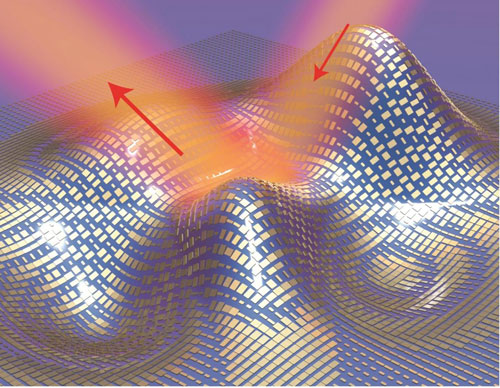
This image shows a 3-D illustration of a metasurface skin cloak made from an ultrathin layer of nanoantennas (gold blocks) covering an arbitrarily shaped object. Light reflects off the cloak (red arrows) as if it were reflecting off a flat mirror. (Image courtesy of Xiang Zhang group, Berkeley Lab/UC Berkeley)
Working with brick-like blocks of gold nanoantennas, the Berkeley researchers fashioned a „skin cloak” barely 80 nanometers in thickness, that was wrapped around a three-dimensional object about the size of a few biological cells and arbitrarily shaped with multiple bumps and dents. The surface of the skin cloak was meta-engineered to reroute reflected light waves so that the object was rendered invisible to optical detection when the cloak is activated.
„This is the first time a 3D object of arbitrary shape has been cloaked from visible light,” said Xiang Zhang, director of Berkeley Lab’s Materials Sciences Division and a world authority on metamaterials – artificial nanostructures engineered with electromagnetic properties not found in nature. „Our ultra-thin cloak now looks like a coat. It is easy to design and implement, and is potentially scalable for hiding macroscopic objects.”
Zhang, who holds the Ernest S. Kuh Endowed Chair at UC Berkeley and is a member of the Kavli Energy NanoSciences Institute at Berkeley (Kavli ENSI), is the corresponding author of a paper describing this research in Science („An ultrathin invisibility skin cloak for visible light”).
It is the scattering of light – be it visible, infrared, X-ray, etc., – from its interaction with matter that enables us to detect and observe objects. The rules that govern these interactions in natural materials can be circumvented in metamaterials whose optical properties arise from their physical structure rather than their chemical composition. For the past ten years, Zhang and his research group have been pushing the boundaries of how light interacts with metamaterials, managing to curve the path of light or bend it backwards, phenomena not seen in natural materials, and to render objects optically undetectable. In the past, their metamaterial-based optical carpet cloaks were bulky and hard to scale-up, and entailed a phase difference between the cloaked region and the surrounding background that made the cloak itself detectable – though what it concealed was not.
This short video clip shows how the activation of a metasurface cloak made from an ultrathin layer of nanoantennas can render a 3D object invisible. When the cloak is turned “on,” the bump-shaped object being illuminated in the center white spot disappears from view. The object reappears when the cloak is turned “off.” (Video courtesy of Xiang Zhang and his research group, Berkeley Lab/UC Berkeley)
„Creating a carpet cloak that works in air was so difficult we had to embed it in a dielectric prism that introduced an additional phase in the reflected light, which made the cloak visible by phase-sensitive detection,” says co-lead author Xingjie Ni, a recent member of Zhang’s research group who is now an assistant professor at Penn State University. „Recent developments in metasurfaces, however, allow us to manipulate the phase of a propagating wave directly through the use of subwavelength-sized elements that locally tailor the electromagnetic response at the nanoscale, a response that is accompanied by dramatic light confinement.”
In the Berkeley study, when red light struck an arbitrarily shaped 3D sample object measuring approximately 1,300 square microns in area that was conformally wrapped in the gold nanoantenna skin cloak, the light reflected off the surface of the skin cloak was identical to light reflected off a flat mirror, making the object underneath it invisible even by phase-sensitive detection. The cloak can be turned „on” or „off” simply by switching the polarization of the nanoantennas.
„A phase shift provided by each individual nanoantenna fully restores both the wavefront and the phase of the scattered light so that the object remains perfectly hidden,” says co-lead author Zi Jing Wong, also a member of Zhang’s research group.
The ability to manipulate the interactions between light and metamaterials offers tantalizing future prospects for technologies such as high resolution optical microscopes and superfast optical computers. Invisibility skin cloaks on the microscopic scale might prove valuable for hiding the detailed layout of microelectronic components or for security encryption purposes. At the macroscale, among other applications, invisibility cloaks could prove useful for 3D displays.
Source: Lawrence Berkeley National Laboratory
Subscribe to a free copy of one of our daily
Nanowerk Newsletter Email Digests
with a compilation of all of the day’s news.

Rostec MilitaryStealth din Rusia-militarii rusi cu camasa de „camuflaj ” cameleon( helmeadaptive)(Rostec Russian Military’Stealth camouflage’with’chameleon helmet’adaptive camo )

DR a fost acoperit de tehnologie de camuflaj adaptabil / cloaking vizual pentru mulți ani acum.

Adaptive camouflage

Este militarul american pe vârful unei radar X-Ray Vision și al inteligenței artificiale (Prediction Intelligence Artificial Intelligence) „Combinație-tehnologie Urban Warfare(Is the US Military on the Cusp of a Through-Wall Radar X-Ray Vision and AI (Artificial Intelligence) ‘Activity Prediction’ Combined-Technology Urban Warfare/Combat Revolution?)

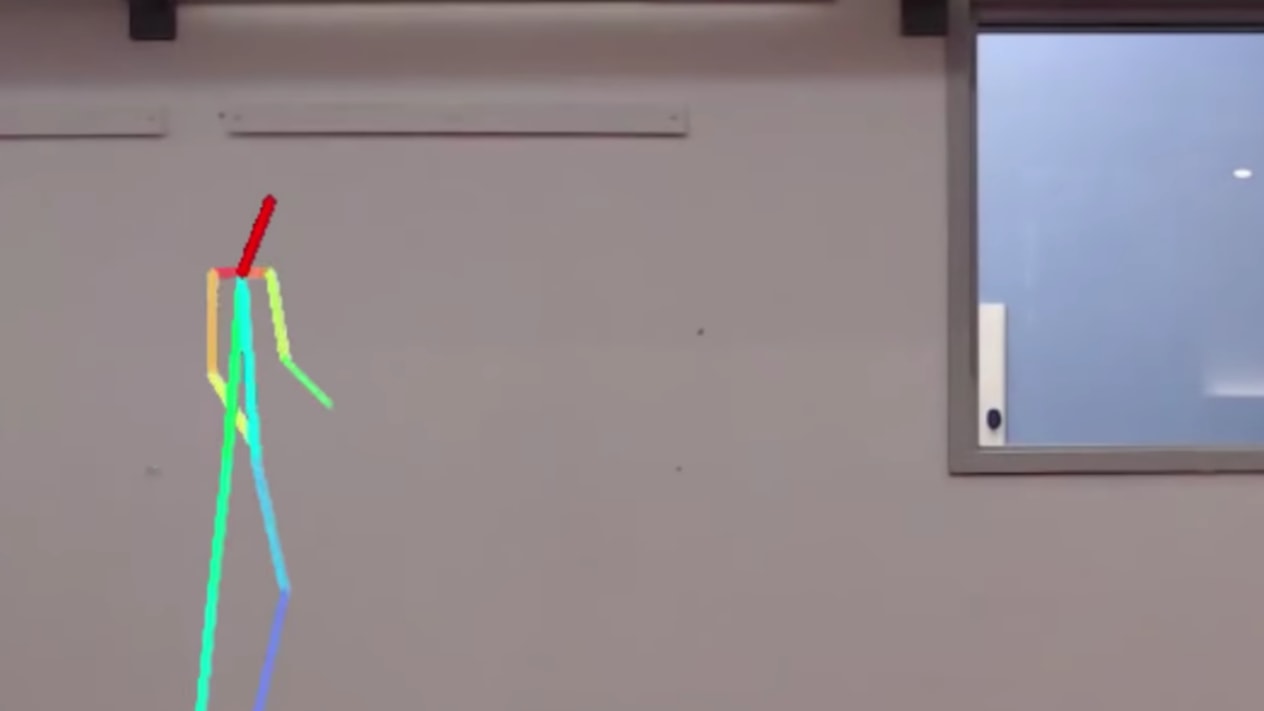
Radar tech-see-through-walls se numește RF-Pose și este dezvoltat la MIT. Permite utilizatorului să vadă ce face un individ în ceea ce privește mișcarea brutală și poziția corpului pe cealaltă parte a peretelui în timp real, cu o rată de precizie actuală de 83%. „Inima” tehnologiei RF-Pose este un emițător radio care are aproximativ aceeași dimensiune ca un laptop. Grinzile radare trec prin pereți și se reflectă înapoi de corpurile umane, datorită conținutului ridicat de apă pe care îl conțin.

Is the US Military on the Cusp of a Through-Wall Radar X-Ray Vision and AI (Artificial Intelligence) ‘Activity Prediction’ Combined-Technology Urban Warfare/Combat Revolution?

In just the past month, articles have been published on two technologies that have peaked DefenseReview’s (DR) attention: x-ray-vision-type radar that allows one to see through walls, and artificial intelligence (AI) tech that allows one to predict human behavior/action minutes before it happens. These two technologies are respectively revolutionary on their own. However, combined, they’re potentially truly transformative with regard to urban warfare, also known as urban combat.

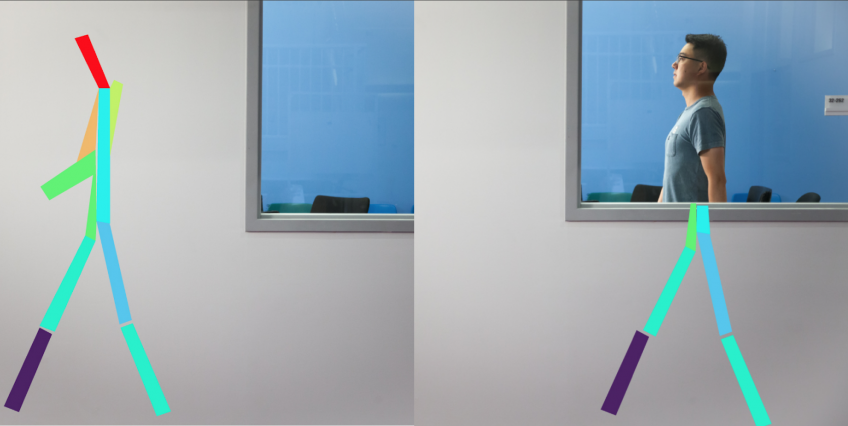
The see-through-walls radar tech is called RF-Pose, and it’s being developed at MIT. It allows the user to see what an individual is doing in terms of gross movement and body position on the other side of a wall in real time, with a current accuracy rate of 83%. The “heart” of the RF-Pose tech is a radio transmitter that’s roughly the same size as a laptop. The radar beams pass through walls, and get reflected back by human bodies, due to the high water content they contain.

“Computer algorithms analyze the reflected waves, homing in on the head, hands, feet and other key body parts to produce moving stick figures on a screen,” according to NBC News MACH writer Kate Baggaley. At the moment, the RF-Pose tech can only penetrate thin walls. Carnegie Mellon Robotics Institute research associate Ginés Hidalgo says RF-Pose “could become a breakthrough” if this current wall-thickness limitation is solved.

The behavior/”activity-prediction” AI tech comes from a University of Bonn (Germany) research team. Right now, the technology can predict your actions minutes before they happen, but Dr. Jürgen Gall “believes the intelligent software will eventually be able to prophesize your actions ‘hours before they happen’”, according to Aaron Brown of Daily Mail. The activity-prediction technology relies on a rather advanced algorithm that apparently learns, recognizing information patterns.

Anyway, let’s just hope that both of these technologies only used against our enemies, and not against US. Defense Review will of course keep an eye on them.


Un sistem optic în bandă largă, care poate identifica molecule în infraroșu la mijloc(A chip-scale broadband optical system that can sense molecules in the mid-infrared)

În acest studiu actual, cercetătorii s-au concentrat asupra gamei de infraroșii medii (IR), care, datorită absorbției lor moleculare puternice, este de obicei de 10 până la 1000 de ori mai mare decât cele din infraroșu vizibil sau aproape, este ideal pentru detectarea moleculelor de urme . Intervalul intermediar IR acoperă în mod eficient „amprenta” multor molecule.
Echipa a efectuat spectroscopia mid-IR dual-pieptene folosind două dispozitive nanophotonice de siliciu ca microresonatoare. Dispozitivele lor integrate au permis generarea directă a luminii infraroșii medii în bandă largă și viteze rapide de achiziție pentru caracterizarea absorbției moleculare

Posted: May 23, 2018

A chip-scale broadband optical system that can sense molecules in the mid-infrared

(Nanowerk News) Researchers at Columbia Engineering have demonstrated, for the first time, a chip-based dual-comb spectrometer in the mid-infrared range, that requires no moving parts and can acquire spectra in less than 2 microseconds. The system, which consists of two mutually coherent, low-noise, microresonator-based frequency combs spanning 2600 nm to 4100 nm, could lead to the development of a spectroscopy lab-on-a-chip for real-time sensing on the nanosecond time scale.

“Our results show the broadest optical bandwidth demonstrated for dual-comb spectroscopy on an integrated platform,” said Alexander Gaeta, David M. Rickey Professor of Applied Physics and of Materials Science and senior author of the study, published in Nature Communications(„Silicon-chip-based mid-infrared dual-comb spectroscopy”).
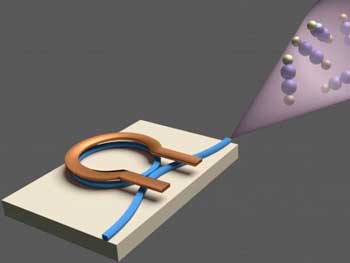
silicon microresonator generating a frequency comb
Schematic of silicon microresonator generating a frequency comb that samples molecules for chemical identification. (Image: Alexander Gaeta/Columbia Engineering)
Creating a spectroscopic sensing device on a chip that can realize real-time, high-throughput detection of trace molecules has been challenging. A few months ago, teams led by Gaeta and Michal Lipson, Higgins Professor of Electrical Engineering, were the first to miniaturize dual-frequency combs by putting two frequency comb generators on a single millimeter-sized chip. They have been working on broadening the frequency span of the dual combs, and on increasing the resolution of the spectrometer by tuning the lines of the comb.
In this current study, the researchers focused on the mid-infrared (mid-IR) range, which, because its strong molecular absorption is typically 10 to 1,000 times greater than those in the visible or near-infrared, is ideal for detecting trace molecules. The mid-IR range effectively covers the “fingerprint” of many molecules.
The team performed mid-IR dual-comb spectroscopy using two silicon nanophotonic devices as microresonators. Their integrated devices enabled the direct generation of broadband mid-infrared light and fast acquisition speeds for characterizing molecular absorption.
“Our work is a critical advance for chip-based dual-comb spectroscopy for liquid/solid phase studies,” said Mengjie Yu, lead author of the paper and a PhD student in Gaeta’s lab. “Our chip-scale broadband optical system, essentially a photonic lab-on-a-chip, is well-suited for identification of chemical species and could find a wide range of applications in chemistry, biomedicine, material science, and industrial process control.”
Source: Columbia University School of Engineering and Applied Science

Investigarea tehnologiilor de pigmentare cu reflexie în infraroșu pentru aplicații de acoperire și compozite(Investigation of Infrared Reflective Pigmentation Technologies for Coatings and Composite Applications)

O astfel de tehnologie este folosirea pigmenților de reflexie specială în infraroșu, folosiți pentru a conferi culoarea unui obiect, și reflectă căldura invizibilă din obiect pentru a minimiza acumularea de căldură, atunci când este expusă radiației solare

Investigation1Investigation2

Supraviețuire de bază Hel-Star 6 SWIR Combaterea multifuncțională(Core Survival Hel-Star 6 SWIR Multi-Function Combat)

se numeste „ShortWave IR” si este cea mai noua arma usoara cu cascada de lumina IR din arma militara americana (SOF) pentru lupta impotriva celor rai noaptea, permitand baietilor nostri sa devina invizibili asupra lor, chiar daca inamicul are noaptea viziune și / sau senzori termici / IR

Core

Supraviețuire de bază Hel-Star 6 SWIR (ShortWave InfraRed) Lampă LED multifuncțională combinată cu căști tactice pentru a merge invizibilă noaptea(Core Survival Hel-Star 6 SWIR (ShortWave InfraRed) Multi-Function Combat/Tactical Helmet-Mounted LED Light for Going Invisible at Night!)

Conform analizei companiei Sensors Unlimited Inc. (o divizie a sistemelor UTC Aerospace Systems), „detectarea în gama de infrarosu scurt (SWIR) (lungimi de undă de la 0,9 până la 1,7 microni) a devenit recent practică prin dezvoltarea Indium Gallium Arsenide (Senzori InGaAs). „Sensors Unlimited Inc. explică tehnologia SWIR după cum urmează (mai bine decât putem):

Core Survival Hel-Star 6 SWIR (ShortWave InfraRed) Multi-Function Combat/Tactical Helmet-Mounted LED Light for Going Invisible at Night!

As if the Core Survival Hel-Star 6 Helmet Mounted, Multi-Function Light (combat/tactical helmet-mounted LED light) wasn’t already cool and interesting enough, Core Survival’s topped themselves with this little bad boy, the new Core Survival Hel-Star 6 SWIR. DefenseReview (DR) got the chance to view and handle it at SHOT Show 2018, and Core Survival’s Jamey Caldwell was kind enough to take us through it (see video below). “SWIR” stands for ShortWave IR (InfaRed), and it’s the latest IR-light-spectrum helmet-mounted light weapon in the US Military Special Operations Forces (SOF) arsenal for fighting the bad guys at night, allowing our guys to go invisible on them, even if the enemy has night vision (near IR) and/or thermal/IR sensors.

So, what is SWIR, really? According to Sensors Unlimited Inc.’s (a division of UTC Aerospace Systems) company literature, “sensing in the shortwave infrared (SWIR) range (wavelengths from 0.9 to 1.7 microns) has only recently been made practical by the development of Indium Gallium Arsenide (InGaAs) sensors.” Sensors Unlimited Inc. expounds on SWIR technology as follows (better than we can):

First, a basic fact: light in the SWIR band is not visible to the human eye. The visible spectrum extends from wavelengths of 0.4 microns (blue, nearly ultraviolet to the eye) to 0.7 microns (deep red). Wavelengths longer than visible wavelengths can only be seen by dedicated sensors, such as InGaAs. But, although light in the shortwave infrared region is not visible to the eye, this light interacts with objects in a similar manner as visible wavelengths. That is, SWIR light is reflective light; it bounces off of objects much like visible light.

As a result of its reflective nature, SWIR light has shadows and contrast in its imagery. Images from an InGaAs camera are comparable to visible images in resolution and detail; however, SWIR images are not in color. This makes objects easily recognizable and yields one of the tactical advantages of the SWIR, namely, object or individual identification.

The Core Survival Hel-Star 6 SWIR Helmet-Mounted, Multi-Function Light leverages this technology, and applies it to the Hel-Star 6 Gen III design. Pretty cool. DR doesn’t yet know whether or not the Hel-Star 6 SWIR will be as durable/rugged and waterproof as the Hel-Star 6 Gen III. According to the Core Survival website, “independent testing has confirmed that the HEL-STAR 6® Gen III exceeds the FAA’s 3 statute mile visibility requirement and is shock and vibration resistant, dustproof, and open sea waterproof to 130 fsw (laboratory 300+ feet).”

Defense Review will try to find out if the Hel-Star 6 SWIR can match or at least approach those specs. In the meantime, enjoy our video below.


Company Contact Info:

CORE Survival, Inc
4241 116th Terrace North
Clearwater, Florida 33762
Phone: 727-576-1700
Email: [email protected]
Website: http://coresurvival.com

Metamaterialul dielectric este reglat dinamic de lumină(Dielectric metamaterial is dynamically tuned by light)

au construit primul metamaterial dinamic, tunabil dinamic, pentru controlul undelor electromagnetice. Abordarea ar putea constitui baza pentru tehnologii variind de la scanere de securitate îmbunătățite la noi tipuri de afișaje vizuale.Pentru acest studiu, cilindrii au fost dimensionați pentru a interacționa cu unde terahertz – o bandă a spectrului electromagnetic care se află între microunde și lumina infraroșie. Controlul acestei lungimi de undă de lumină ar putea îmbunătăți comunicațiile în bandă largă între sateliți sau ar putea conduce la tehnologii de securitate care să poată scana cu ușurință prin îmbrăcăminte. Abordarea ar putea fi, de asemenea, adaptată la alte benzi ale spectrului electromagnetic – cum ar fi infraroșu sau lumină vizibilă – pur și simplu prin diminuarea dimensiunii cilindrilor.

Posted: May 01, 2018

Dielectric metamaterial is dynamically tuned by light

(Nanowerk News) Researchers at Duke University have built the first metal-free, dynamically tunable metamaterial for controlling electromagnetic waves. The approach could form the basis for technologies ranging from improved security scanners to new types of visual displays.

The results appear in the journal Advanced Materials („Phototunable Dielectric Huygens’ Metasurfaces”).
metamaterial
Artistic representation of the new metasurface technology. Rays of light (red) bombard the silicon cylinders, changing their electromagnetic properties to precisely tune how they interact with electromagnetic waves. (Image: Kebin Fan, Duke University)
A metamaterial is an artificial material that manipulates waves like light and sound through properties of its structure rather than its chemistry. Researchers can design these materials to have rare or unnatural properties, like the ability to absorb specific ranges of the electromagnetic spectrum or to bend light backward.
„These materials are made up of a grid of separate units that can be individually tuned,” said Willie Padilla, professor of electrical and computer engineering at Duke. „As a wave passes through the surface, the metamaterial can control the amplitude and phase at each location in the grid, which allows us to manipulate the wave in a lot of different ways.”
In the new technology, each grid location contains a tiny silicon cylinder just 50 microns tall and 120 microns wide, with the cylinders spaced 170 microns apart from one another. While silicon is not normally a conductive material, the researchers bombard the cylinders with a specific frequency of light in a process called photodoping. This imbues the typically insulating material with metallic properties by exciting electrons on the cylinders’ surfaces.
These newly freed electrons cause the cylinders to interact with electromagnetic waves passing through them. The size of the cylinders dictates what frequencies of light they can interact with, while the angle of the photodoping affects how they manipulate the electromagnetic waves. By purposefully engineering these details, the metamaterial can control electromagnetic waves in many different ways.
For this study, the cylinders were sized to interact with terahertz waves – a band of the electromagnetic spectrum that sits between microwaves and infrared light. Controlling this wavelength of light could improve broadband communications between satellites or lead to security technology that can easily scan through clothing. The approach could also be adapted to other bands of the electromagnetic spectrum – like infrared or visible light – simply by scaling the size of the cylinders.
„We’re demonstrating a new field where we can dynamically control each point of the metasurface by adjusting how they are being photodoped,” Padilla said. „We can create any type of pattern we want to, allowing us to create lenses or beam-steering devices, for example. And because they’re controlled by light beams, they can change very fast with very little power.”
While existing metamaterials control electromagnetic waves through their electric properties, the new technology can also manipulate them through their magnetic properties.
„This allows each cylinder to not only influence the incoming wave, but the interaction between neighboring cylinders,” said Kebin Fan, a research scientist in Padilla’s laboratory and first author of the paper. „This gives the metamaterial much more versatility, such as the ability to control waves traveling across the surface of the metamaterial rather than through it.”
„We’re more interested in the basic demonstration of the physics behind this technology, but it does have a few salient features that make it attractive for devices,” Padilla said.
„Because it is not made of metal, it won’t melt, which can be a problem for some applications,” he said. „It has subwavelength control, which gives you more freedom and versatility. It is also possible to reconfigure how the metamaterial affects incoming waves extremely quickly, which has our group planning to explore using it for dynamic holography.”
Source: Duke University

LALO Tactical Prototype Bloodbird și pantofi de pantofi cu camuflaj digital Camo (Camuflaj) Modelul țesut superior: o „greșeală fericită”(LALO Tactical Prototype Bloodbird and Grinder Sneakers with Digital Combat Camo (Camouflage) Pattern Woven Uppers: A ‘Happy Mistake’)

Defense Review va incerca sa obtina cateva pantofi adidasi LALO Tactical pentru a le testa pe sosea si la gama, cat mai curand posibil. Ne-ar plăcea foarte mult să obținem cel puțin o pereche pe scriitorul / contribuitorul DR și pe pictorul lui Jeff Gurwitch, șeful noului produs. Deci, fii atent la o revizuire de la noi.

LALO Tactical Prototype Bloodbird and Grinder Sneakers with Digital Combat Camo (Camouflage) Pattern Woven Uppers: A ‘Happy Mistake’! (Video!)

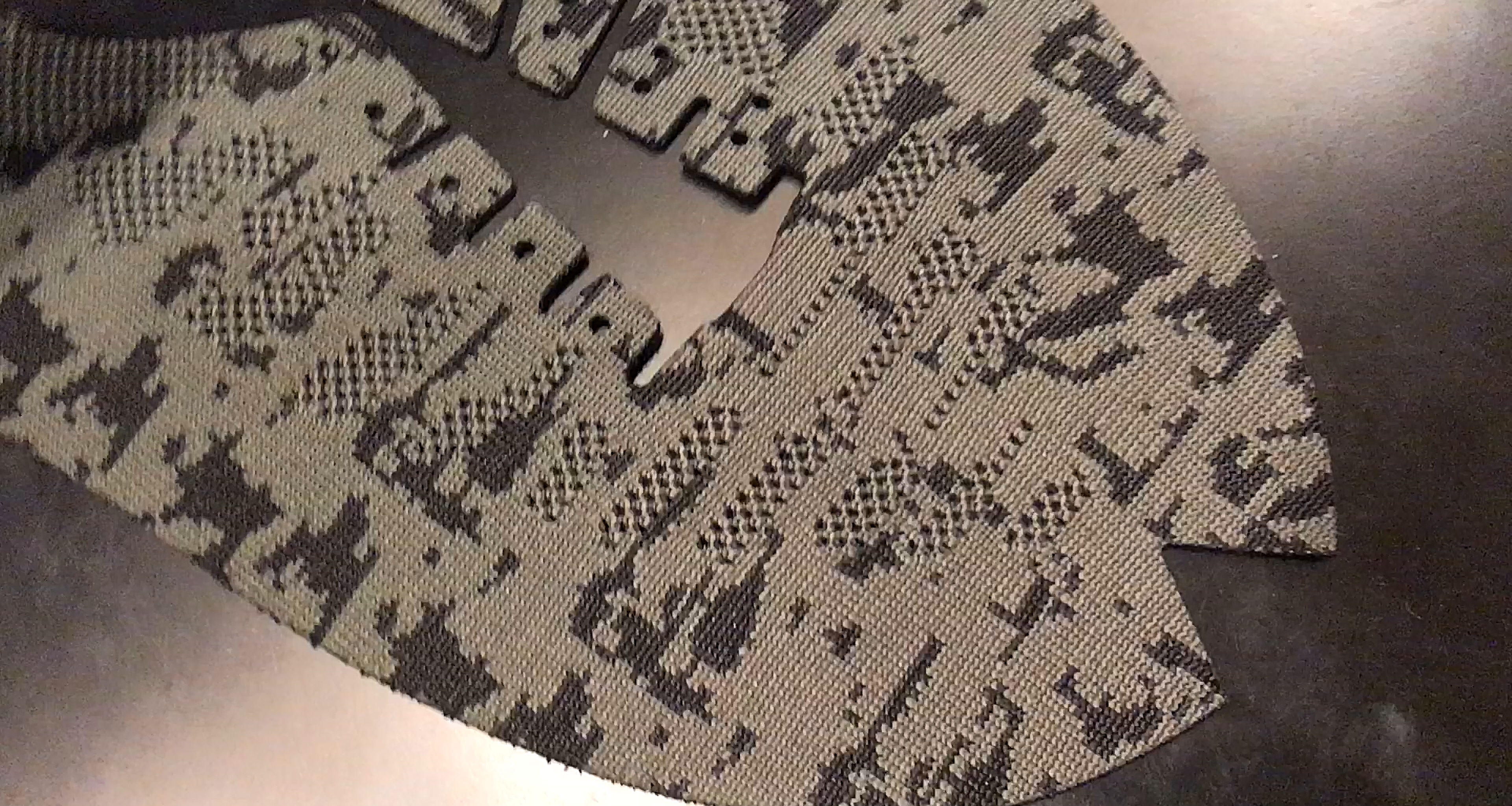
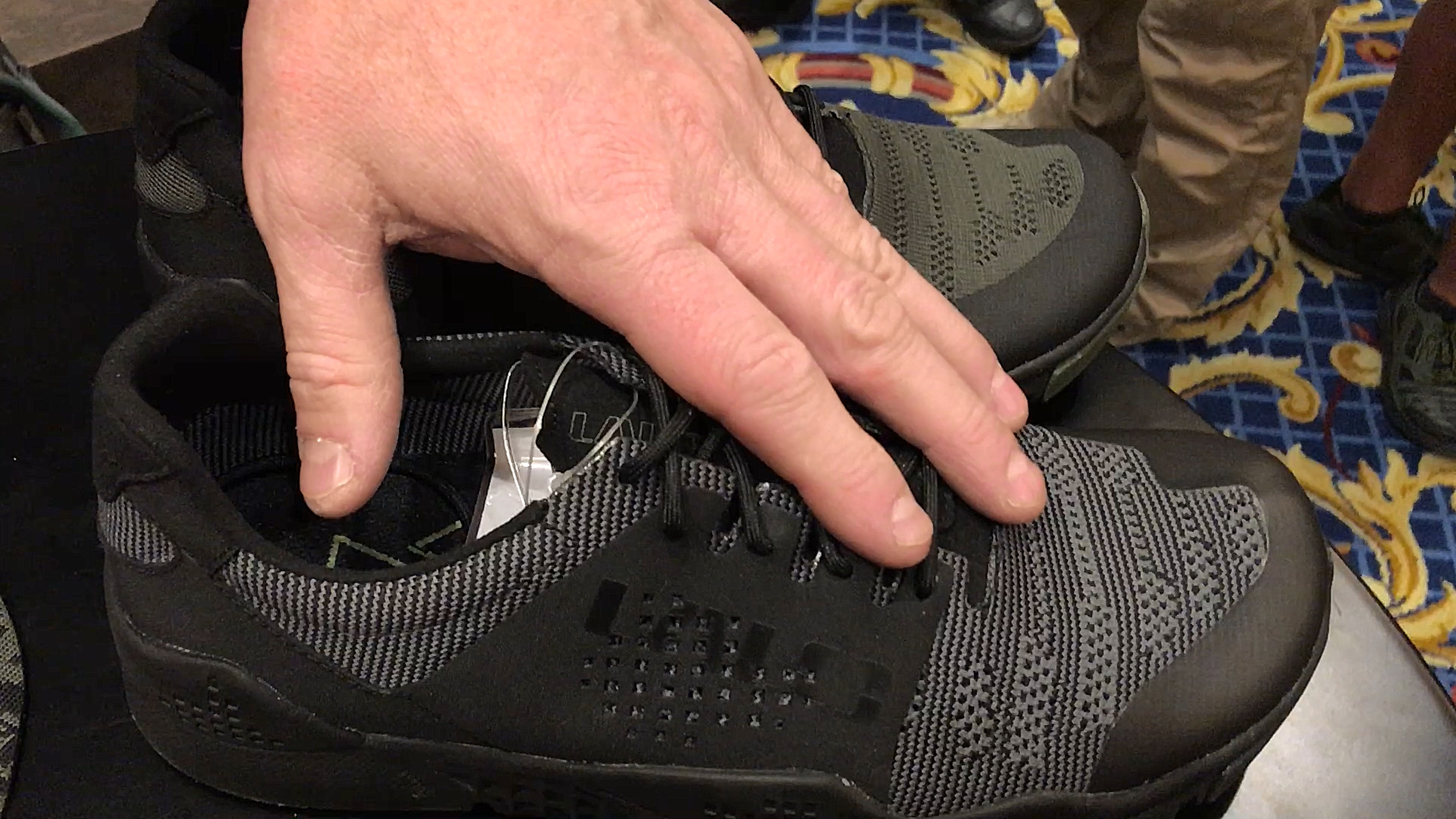
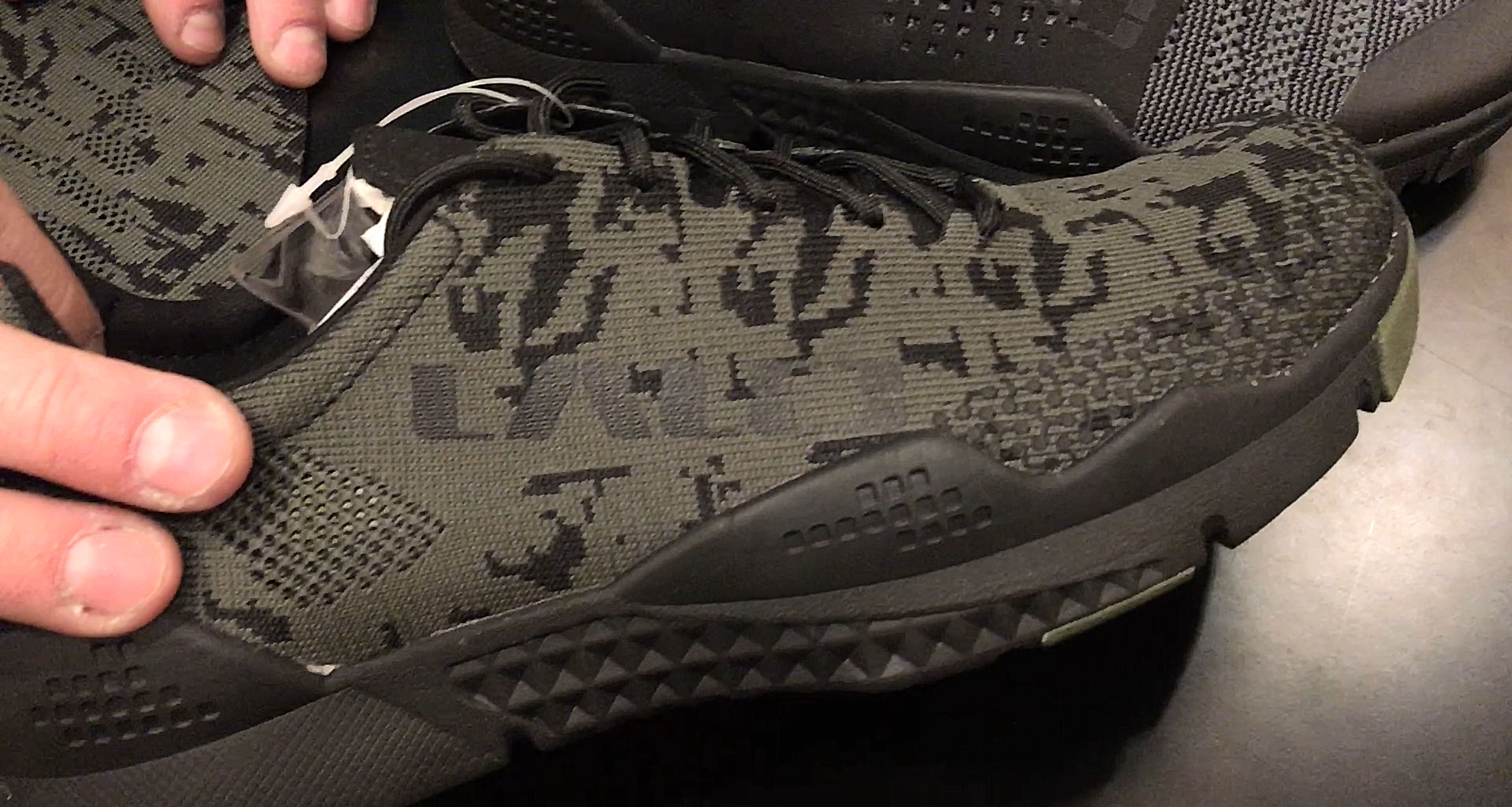
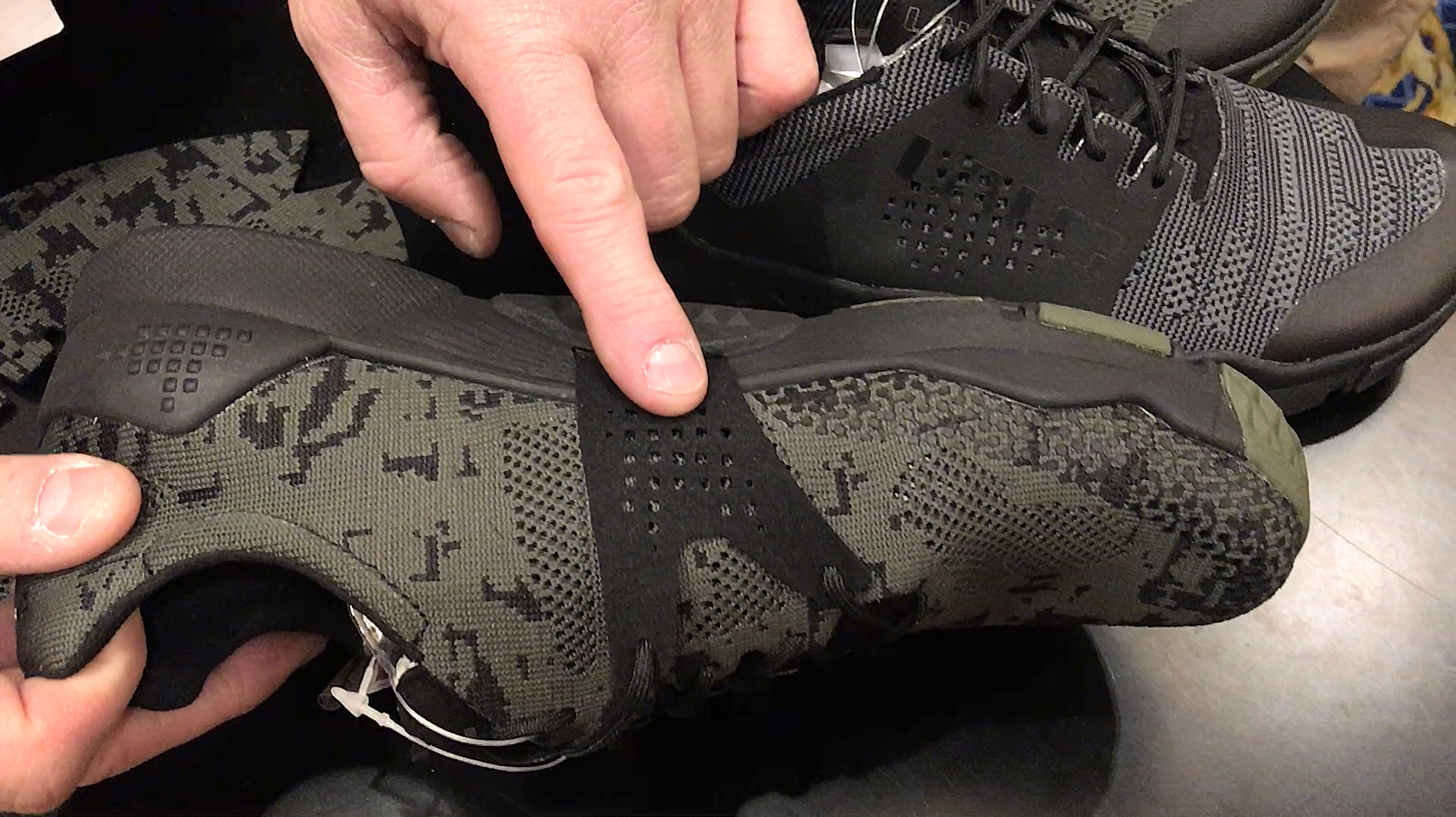
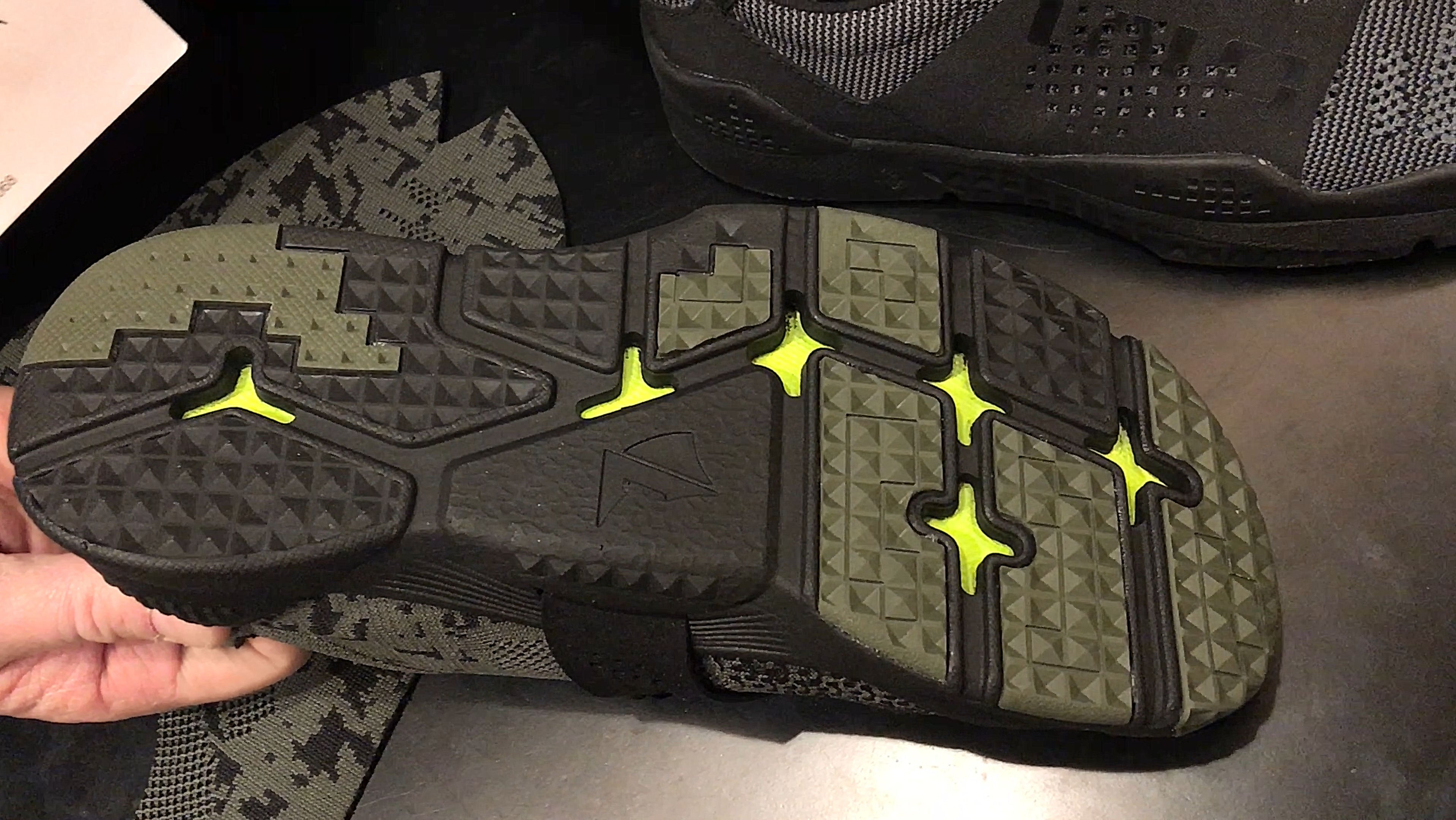
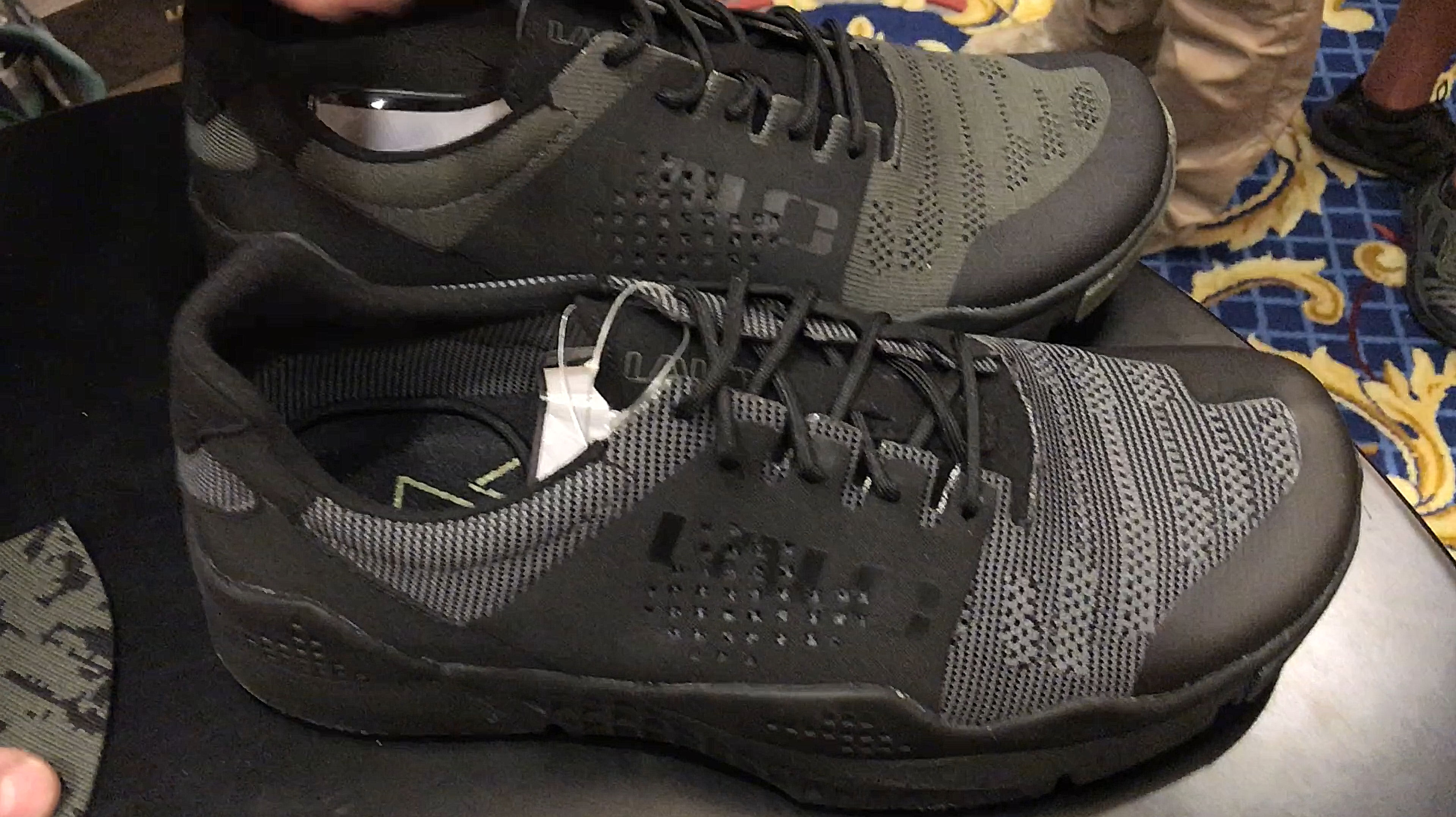
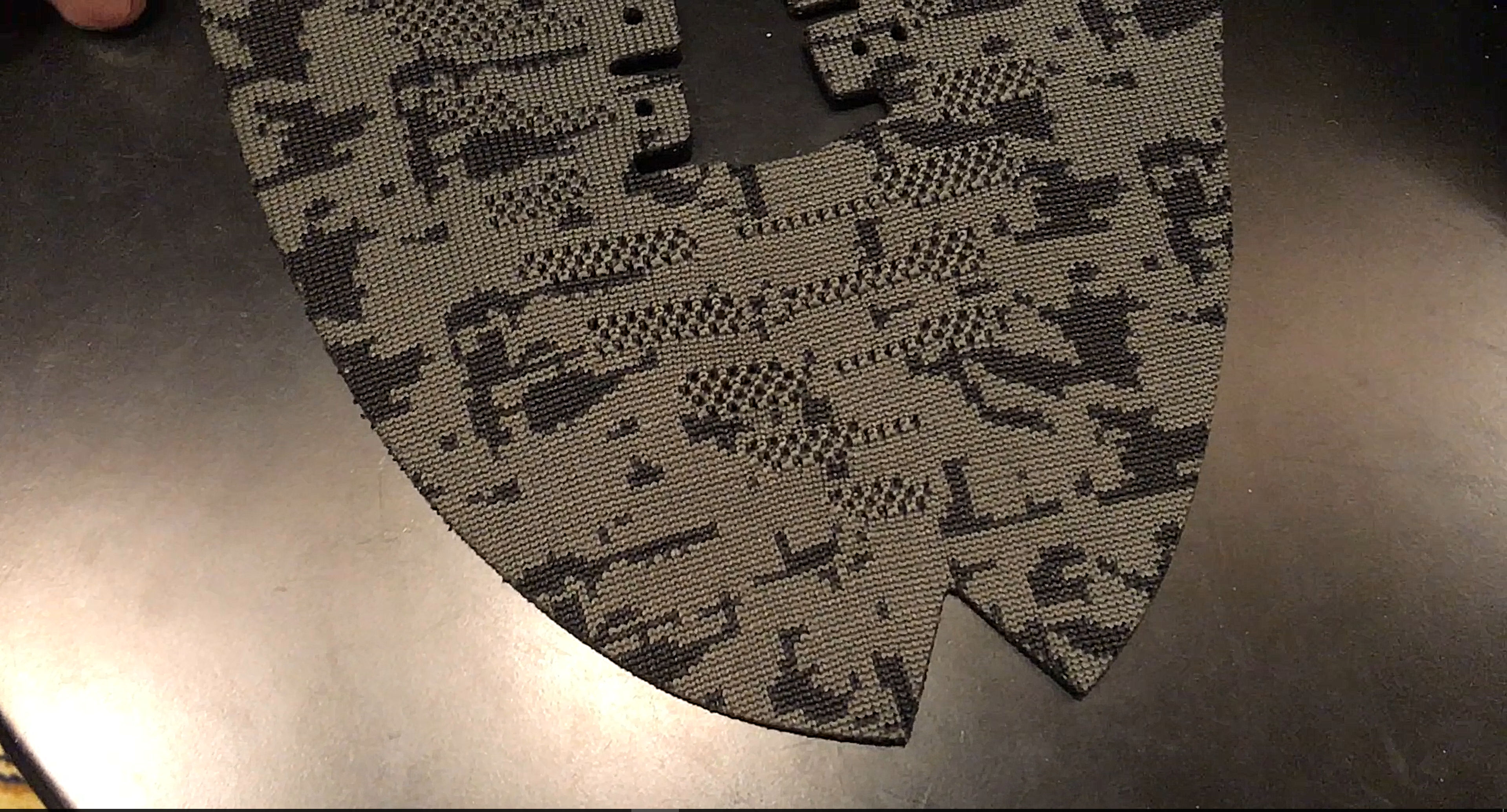
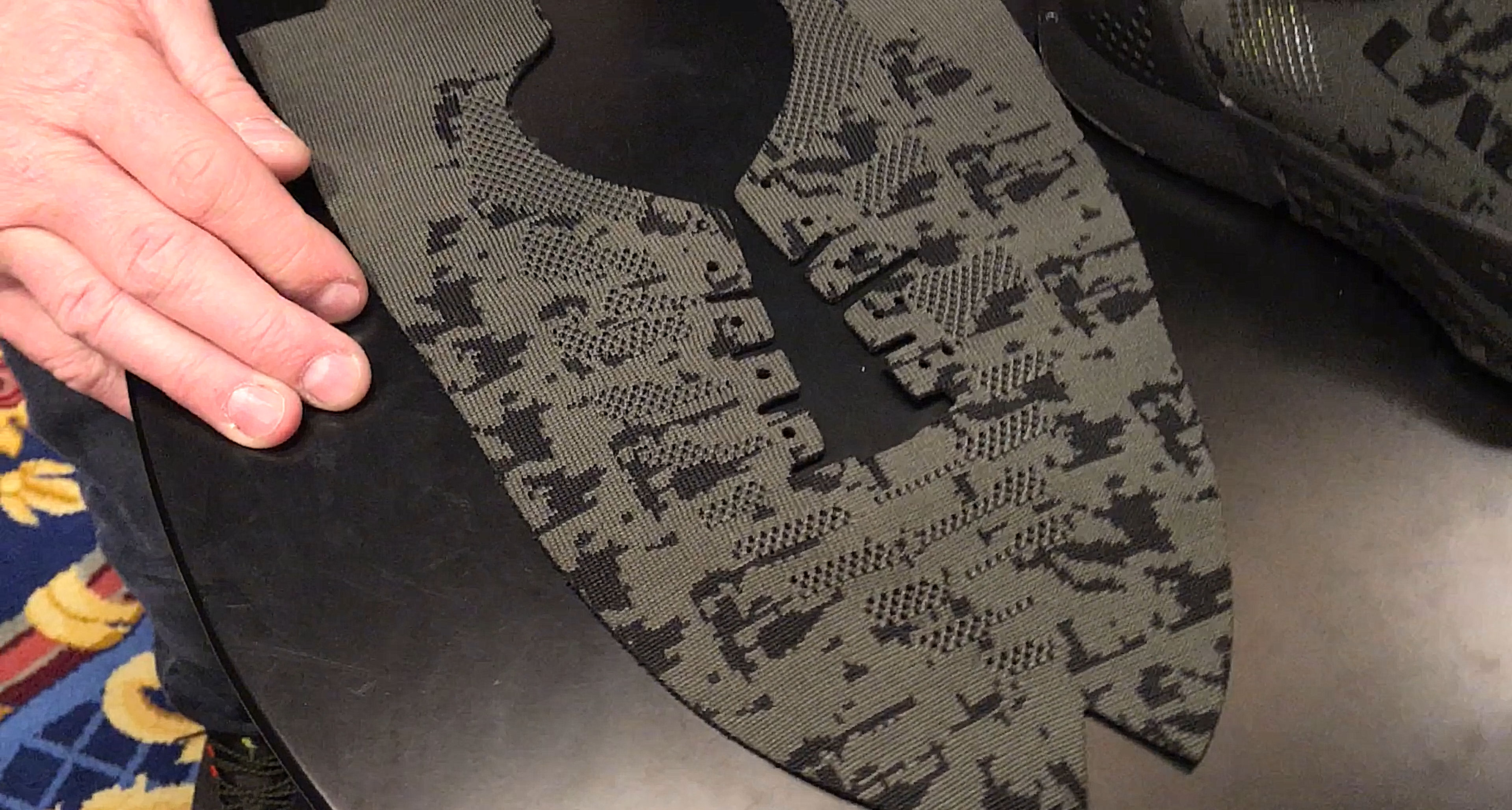
As long as we’re on the subject of LALO Tactical high-tech kicks (sneakers, i.e., running shoes, cross-trainers and weightlifting shoes), we should perhaps also mention the 2019 LALO Tactical Bloodbird and Grinder model prototypes with digital combat camo (camouflage) pattern woven uppers that company founder/president/CEO Jay Taylor showed us, which are the result of a happy accident, or “happy mistake” as DefenseReview (DR) and Mr. Taylor discuss in DR’s video below. Basically, the camo pattern Taylor requested was applied to the woven upper differently than he’d requested it, but he liked the result, so he’s enthusiastically rolling with it.

DR actually enjoys hearing about this kind of scenario, where sometimes the an accidental result is even better than what you were initially trying to achieve. Anyway, the 2019 woven-upper LALO Tactical Grinder and Bloodbird models will be available in the same colorways as the current 2018 models we just wrote about (Jungle and Black, Battleship Grey and Black, Black Ops Black on Black, and Black and Red).

DR digs ’em.

Editor’s Note: Defense Review is going to try to get ahold of some sample LALO Tactical sneakers to actually test them on the road and at the range, as soon as possible. We’d really like to get at least one pair onto DR writer/contributor and chief new-product tester Jeff Gurwitch’s feet. So, keep an eye out for a hands-on review from us.


Company Contact Info:

LALO Tactical
2150 W Washington #208
San Diego, CA 92110
Customer Service Phone: 619-876-5256
International Sales Phone: 619-876-5256 Ext. 105
Customer Service Email: [email protected]
International Sales Email: [email protected]
Website: https://lalo.com

Graphene origami ca structură plasmonică reglabilă mecanic pentru detectarea în infraroșu(Graphene origami as a mechanically tunable plasmonic structure for infrared detection)

s-au dezvoltat cu succes un filtru infrarosu acordabile facut din grafen, ceea ce ar permite un soldat să schimbe frecvența unui filtru, pur și simplu prin deformarea mecanică controlată a filtrului (de exemplu, grafen origami), și nu de înlocuind substanța cu ochelarii utilizați pentru a filtra un anumit spectru de culori.Cercetarea este finanțată de Biroul de Cercetări Științifice al Forțelor Aeriene, care este interesat de senzori care nu numai că sunt sensibili la diferite lungimi de undă IR, dar și controlabile și reglabile mecanic.

Posted: Apr 24, 2018

Graphene origami as a mechanically tunable plasmonic structure for infrared detection

(Nanowerk News) Soldiers often need to see through smoke, fog, dust or any other airborne obscurant and detect the presence of toxins or other chemicals in the field or on the front lines. To identify those chemicals, they use infrared (IR) sensors and spectroscopy, which allow a specific color of light to shine at a particular frequency corresponding to each chemical. Identifying each chemical will require a soldier to coat the goggle with a unique filter, enabling the chemical signature to come through at a specific frequency (i.e., a specific color).

Researchers at the University of Illinois, however, have successfully developed a tunable infrared filter made from graphene, which would allow a soldier to change the frequency of a filter simply by controlled mechanical deformation of the filter (i.e., graphene origami), and not by replacing the substance on the goggles used to filter a particular spectrum of colors.
The research is funded by the Air Force Office of Scientific Research, which is interested in sensors that are not only sensitive to different IR wavelengths, but also mechanically controllable and tunable. The results are published in Light: Science & Applications („Mechanically Reconfigurable Architectured Graphene for Tunable Plasmonic Resonances”).
Origami Graphene
Mechanically tunable light absorption wavelength with wrinkled graphene structures. A schematic illustration of the uniaxially wrinkled graphene structure (left panel) showing a reversible mechanical change of the wrinkled structure. Optical absorption spectra (right panel) for the wrinkled graphene structures with various aspect ratio of wrinkle height (h) to wavelength (λc). (Image: University of Illinois College of Engineering) (click on image to enlarge)
This application is another in a series of discoveries of „wonder material” graphene by SungWoo Nam, an Assistant Professor of Mechanical Science and Engineering at the University of Illinois at Urbana-Champaign.
„Typically when you place graphene on a substrate, it is extremely transparent and absorbs only about three percent of light,” Nam noted. „At certain angles, you can see it. We use this versatility to make other structures like flexible and transparent sensors out of graphene.”
Because it’s one-atom thin, graphene is normally used while flat. Nam’s research team asked a question: what would happen if through origami (paper-folding art), you wrinkled the graphene? Could you change the properties of graphene by altering its topography?
According to Nam, scientists haven’t tried this idea before with other conventional materials because they are brittle and not able to be bent without breaking. What’s unique about graphene is that it is not only thin, but it is resilient, meaning it doesn’t break easily when it is bent.
„Let’s say we create graphene wrinkles by mechanical deformation,” Nam said. „If you get a certain dimension, is there going be any changes in the way the light is going to be absorbed by the graphene? We wanted to link the dimensions of the wrinkled graphene to its optical absorption.”
Nam’s team discovered that indeed, wrinkled graphene absorbs light differently depending on the structure and dimensions through plasmonic resonances, thus producing different colors. In addition, unlike paper, which can’t easily be flattened after folding or crumpling, graphene can be re-stretched to become flat and wrinkle free again. Not only that but the amount of light absorption can be altered by a factor of approximately 10.
„By changing the shape, you can absorb the light of a different frequency by controlling plasmonic resonance conditions,” Pilgyu Kang, the first author of the paper and now an Assistant Professor at Mechanical Engineering Department at George Mason University, stated. „And by mechanically controlling the height and wavelength of the graphene wrinkles, I can excite different surface plasmons and thus absorb different frequency. At the end of the day, you get a tunable filter.”
By choosing graphene as a filter for infrared goggles, the user can turn a knob to mechanically stretch and compress the graphene. That allows for a change of the light wavelength being absorbed. So as an example of its application, a solider can thus easily tune the graphene filter to a desired wavelength to match the type of chemical he/she is looking for.
„In a conventional filter, once you make the filter, you are done,” Nam concluded. „No matter the size, there is one unique light wavelength. With graphene, depending on how much you stretch and release, you can communicate in different light wavelengths.”
Source: University of Illinois College of Engineering