Această caracteristică ar putea ajuta camuflajul robot în sine atunci când se mișcă. Și, deoarece schimbarea culorii este cea mai intensă în cazul în care presiunea materialului este cea mai ridicată, poate indica de asemenea unde este vulnerabilă la rupere
echipa de cercetare proiectând și dezvoltând o nouă tehnologie adaptabilă de camuflaj / cloaking vizual sub forma unei „metale suprafețe dielectrice extrem de subțiri pentru cloaking de covoare”
două componente principale sunt un polimer sensibil la presiune și un polimer electrochromic;au fabricat un material stretchable, schimbătoare de culoare, sensibil la presiune – în esență, cel mai apropiat lucru pe care tocmai la o piele artificială de chameleon
care ar putea deveni drone, avioane cu echipaj, vehicule terestre și, eventual, ofițeri de aplicare a legii și războinici de infanterie invizibili sau practic invizibili.
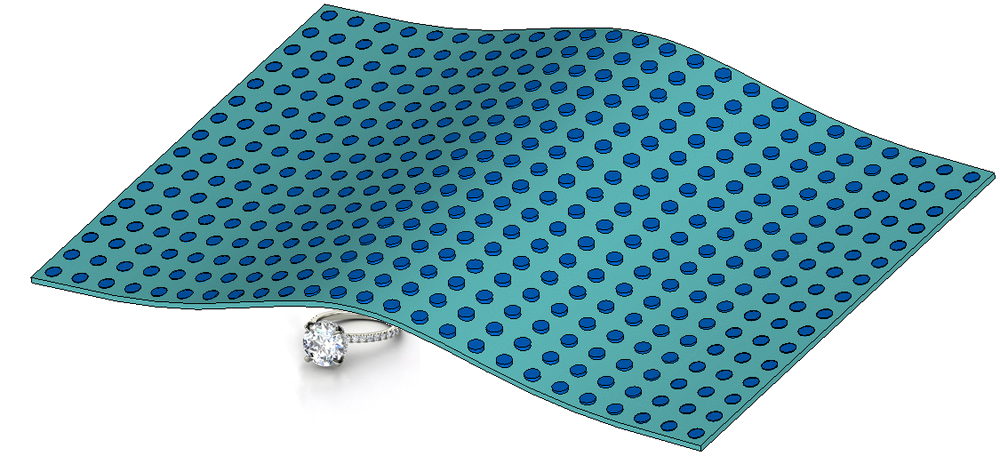
dezvoltând tehnica vizuală de stealth / camuflaj adaptabil / tehnologia vizuală de cloak – sau, după cum o vor spune, „metasuprafața dielectrică extrem de subțire pentru căptușeala covoarelor” – care ar putea face dronuri, avioane cu echipaj, vehicule terestre și chiar polițiști (LEO) războinici de infanterie invizibili sau practic invizibili. „Metazurface dielectric extrem de subțire pentru cloaking de covoare” este aparent doar limbaj fantezist pentru o foaie de teflon extrem de subțire „împodobită cu cercuri mici de ceramică foarte reflexivă”, care este mai ușoară și absorb mai puțină lumină decât modelele anterioare de metamateriale de îndoire a luminii.
UC San Diego Research Team Invents Teflon/Ceramic Metamaterial Visual Stealth/Adaptive Camouflage/Visual Cloaking Tech: Lighter, Slimmer, Better Invisibility Cloak for Future Warfare?
Anyway, since the Teflon sheet is non-light-absorptive, the object being cloaked looks completely flat, rather than generating a shadow. DefenseReview (DR) is going to try to confirm that the new cloaking tech is really multispectral, and cloaks objects in the near-IR (InfraRed)/night vision, thermal/IR light, and SWIR (Short-Wave InfraRed) light spectrums. The Inverse piece states the following:
The Homeland Defense and Security Information Analysis Center is, naturally, interested in using the new technology for drones — not just because they’re visually stealthy, but also because it avoids leaving an electronic or infrared signature, making it easier to fly below enemy radar.
However, Defense Review is skeptical about the above, particularly in the SWIR wavelength zone.
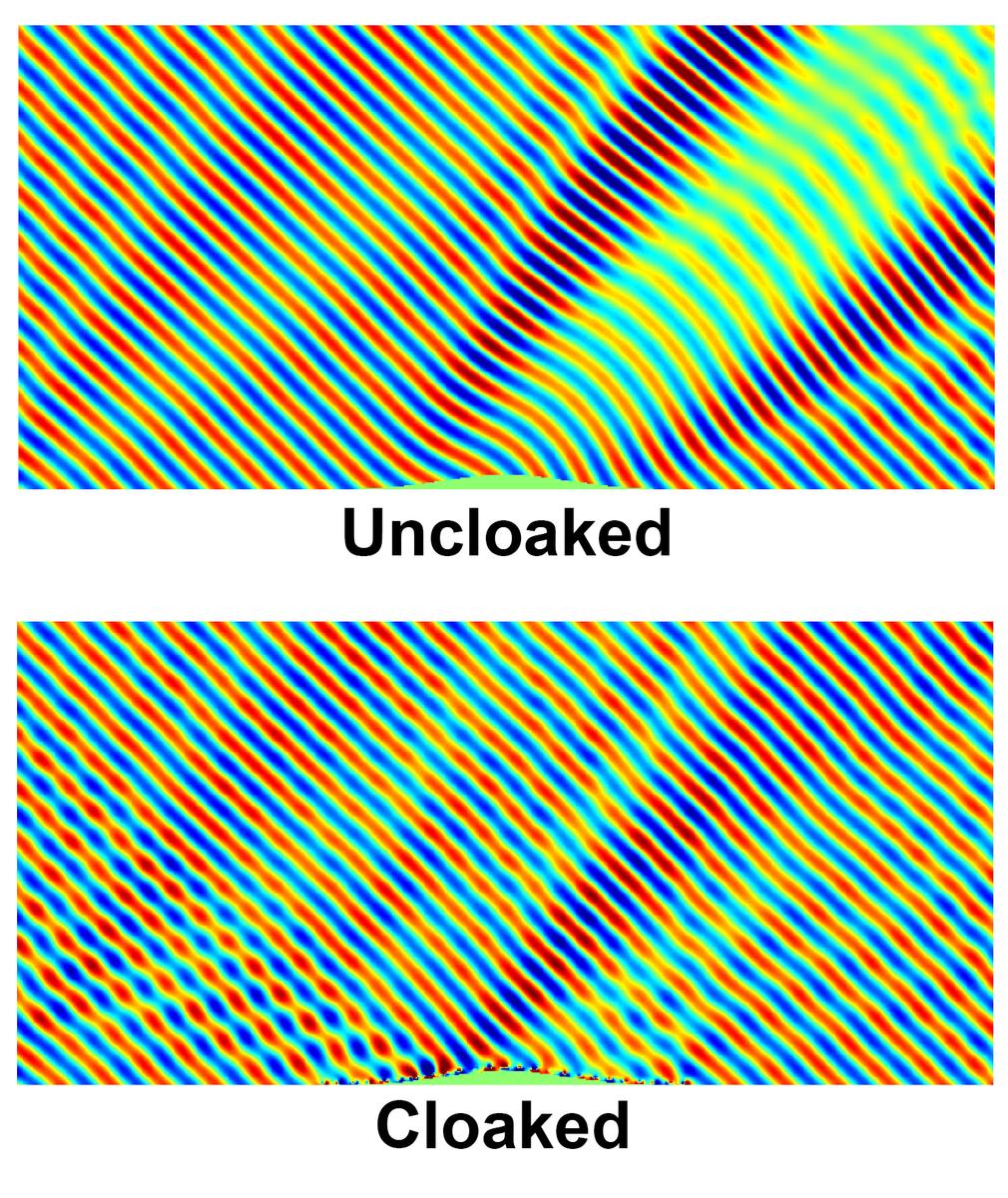
We demonstrate a novel and simple geometrical approach to cloaking a scatterer on a ground plane. We use an extremely thin dielectric metasurface to reshape the wavefronts distorted by a scatterer in order to mimic the reflection pattern of a flat ground plane. To achieve such carpet cloaking, the reflection angle has to be equal to the incident angle everywhere on the scatterer. We use a graded metasurface and calculate the required phase gradient to achieve cloaking. Our metasurface locally provides additional phase to the wavefronts to compensate for the phase difference amongst light paths induced by the geometrical distortion. We design our metasurface in the microwave range using highly sub-wavelength dielectric resonators. We verify our design by full-wave time-domain simulations using micro-structured resonators and show that results match theory very well. This approach can be applied to hide any scatterer under a metasurface of class C1 (first derivative continuous) on a ground plane not only in the microwave regime, but also at higher frequencies up to the visible.
Defense Review is going to try to get in touch with at least one of the people of the UCSD research team (comprised of Li Yi Hsu, Thomas Lepetit, and Boubacar Kante) to find out more about their (possibly multispectral) adaptive camo/visual stealth/cloaking tech, as soon as we can. DR’s published a fair amount of information on numerous visual stealth/adaptive camouflage/visual cloaking tech over the years, since it’s a prime area of interest for us, and we’re big fans of the movie Predator (1987). We’re particularly curious as to how this Teflon/ceramic metamaterial cloaking tech stacks up versus Hyperstealth Quantum Stealth (QS) light-bending adaptive camo for military combat/warfare applications.
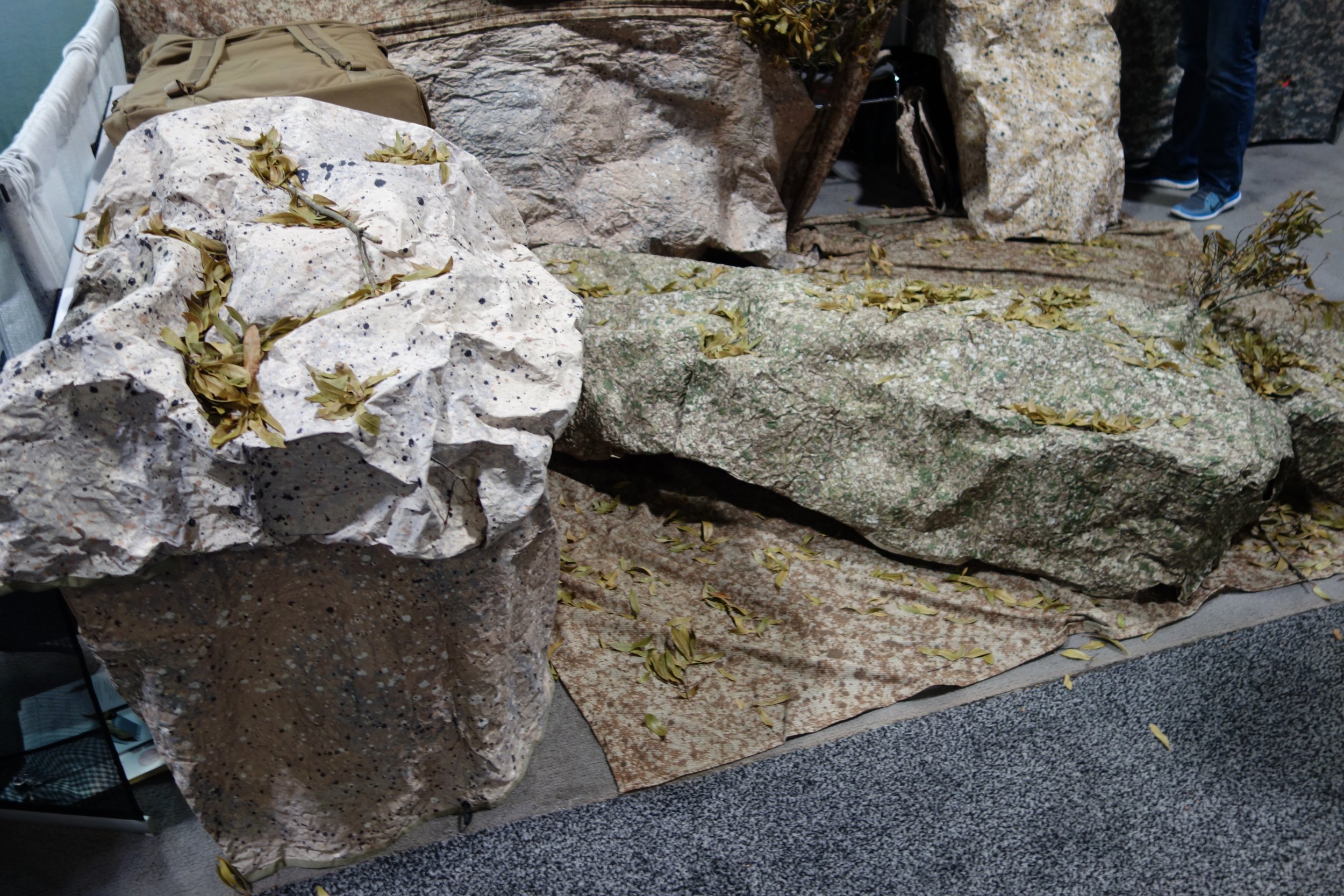
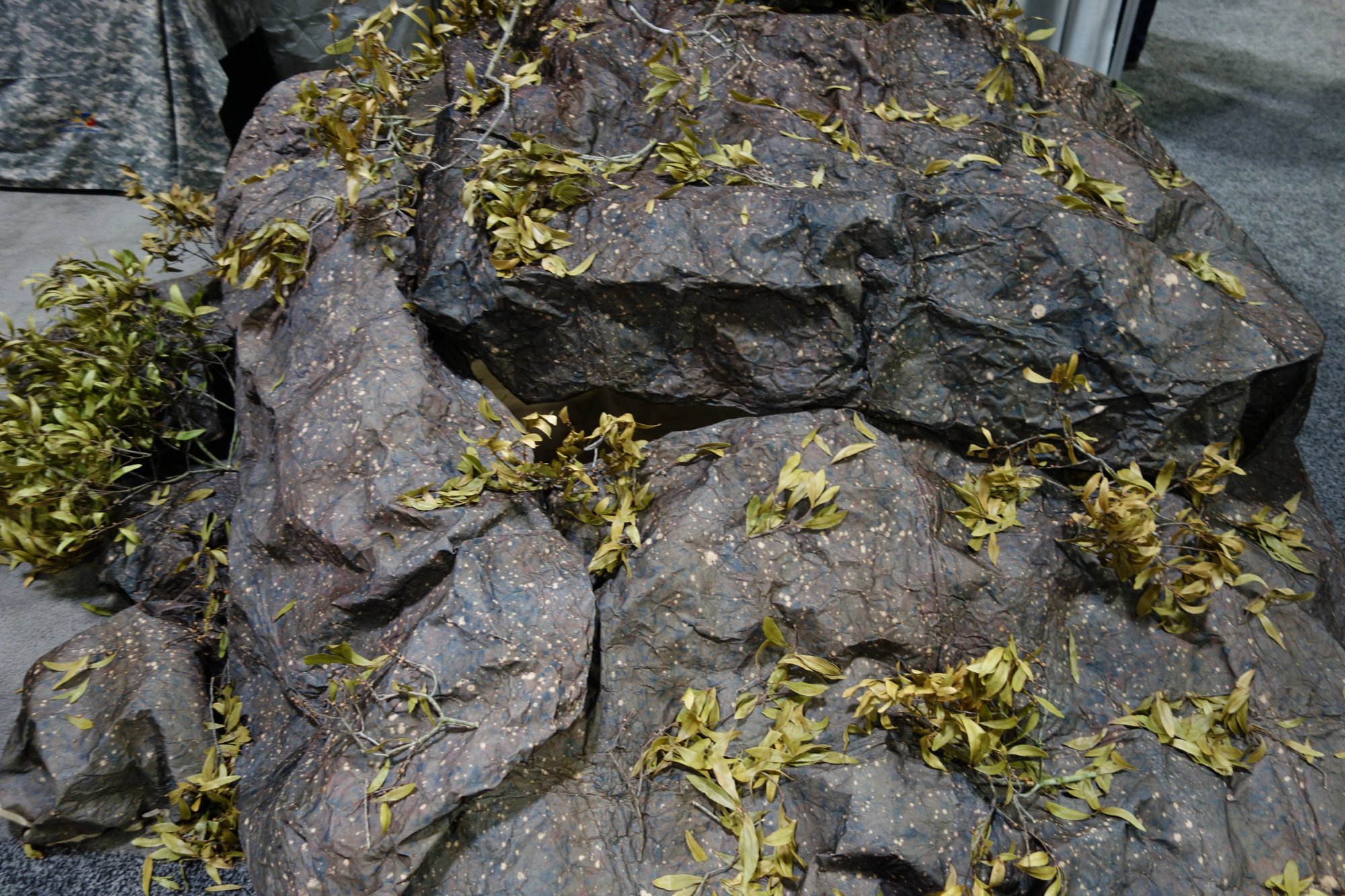
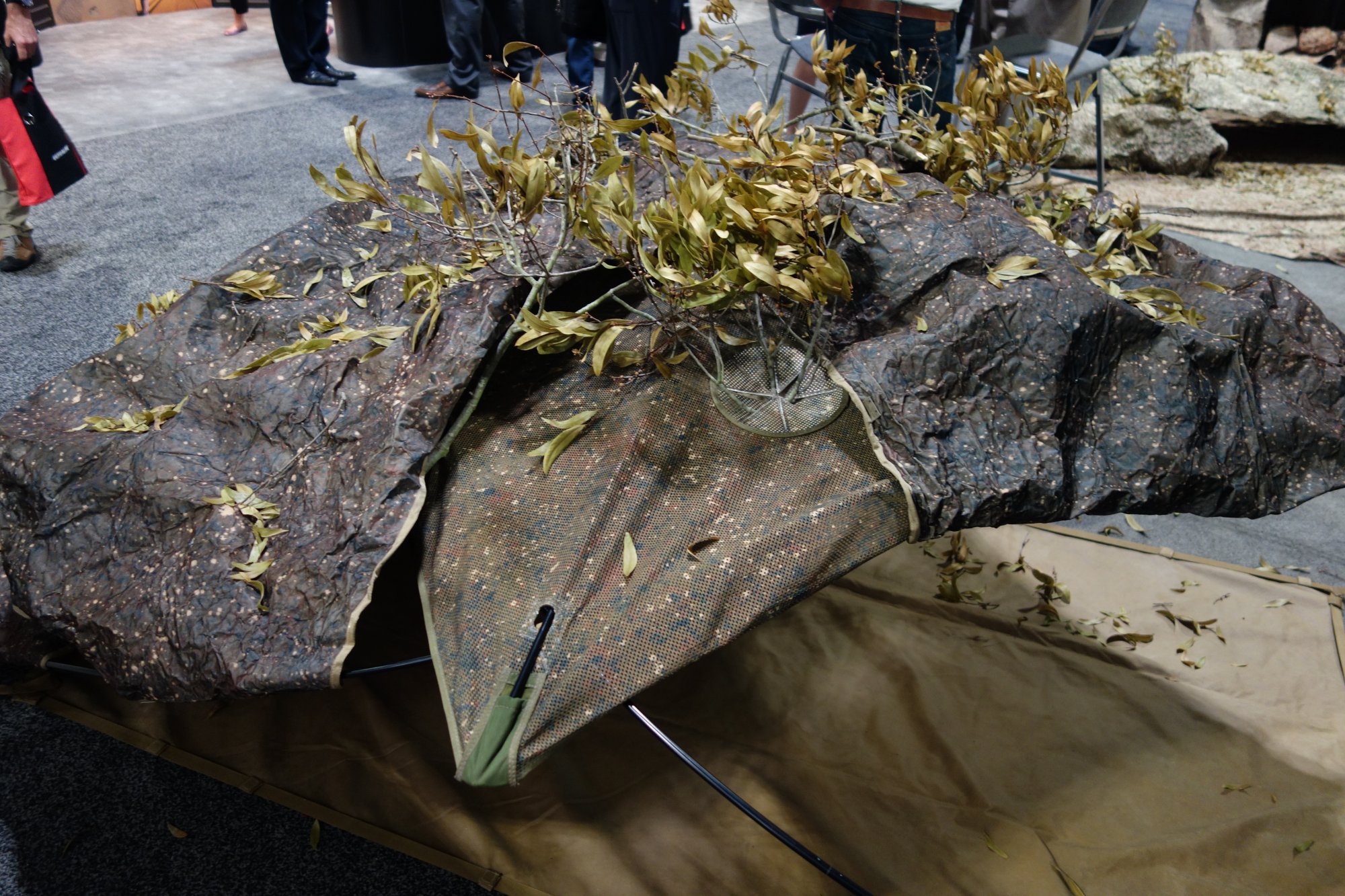
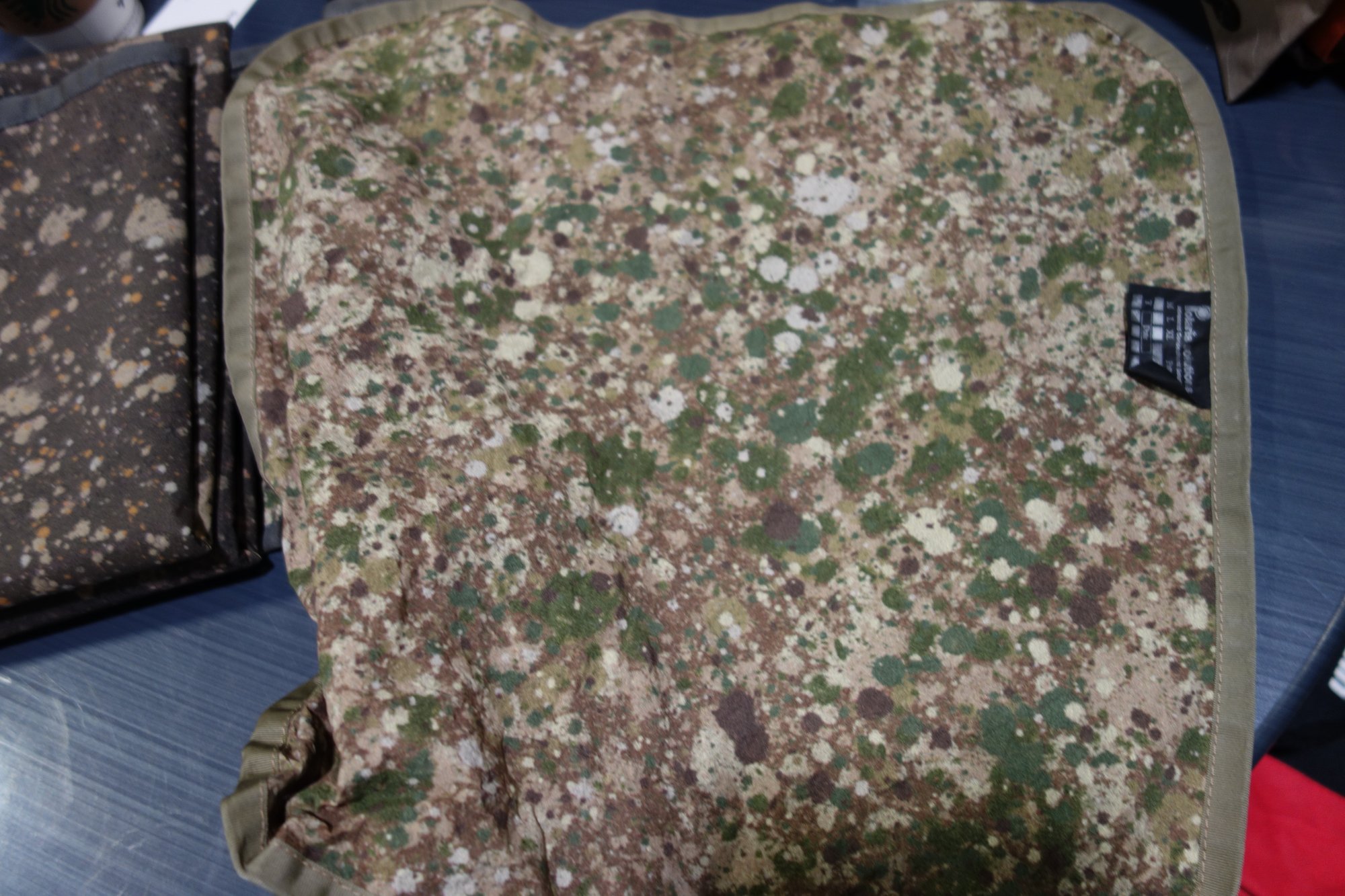
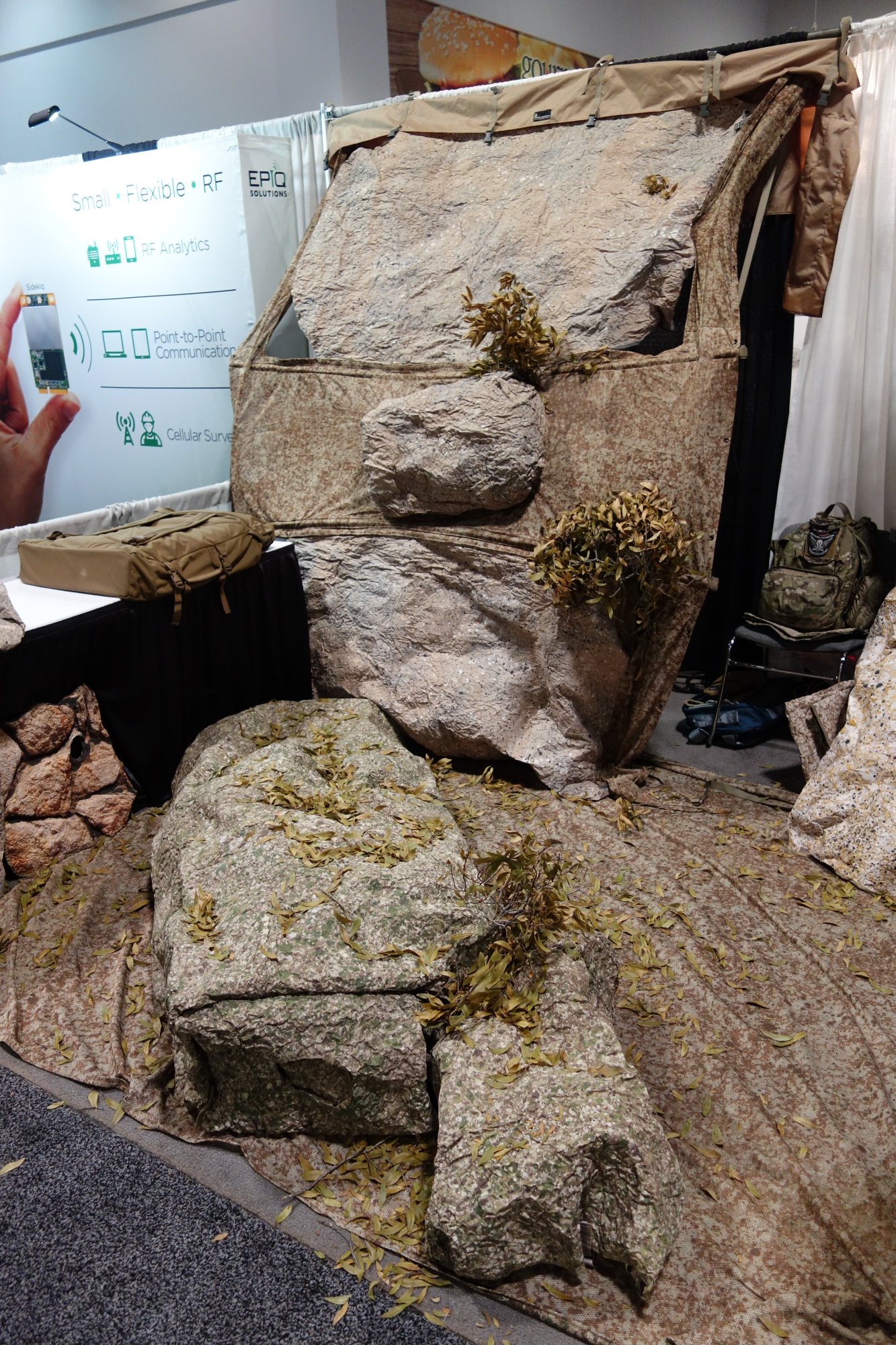
În primul rând, țesătura flexibilă este texturată cu un profil încrețit, astfel încât chiar și atunci când este așezată plat, are o anumită adâncime sau un aspect pe mai multe niveluri. În al doilea rând, materialul poate fi format în forme complexe și poate păstra aceste forme, pentru a imita toate tipurile de teren natural sau artificial. Orice model de camuflaj de luptă curent sau model de mediu natural preluat din fotografii poate fi aplicat materialului de bază 3D texturat, care, în înțelegerea DR, este fabricat în foi care pot forma aproape orice formă. Puteți observa din fotografiile însoțitoare că camuflajul VCS 3D poate fi aproape perfect asemănător / imitării mediului de luptă natural sau urban, indiferent dacă acesta este frunziș, roci / bolovani, zid de cărămidă etc. Compania se referă la scopul tehnologiei ca „multi – ascundere spectaculoasă „și” semnătura criptică și ascunderea criptică a câmpului de luptă … „și este minunat nedrept.
VATEC Concealment Solutions (VCS) Flexible Multispectral 3D Combat Camouflage System: Texturized Individual and Vehicle Camouflage by Polaris Solutions (Israel) and ReadyOne Industries Conceals Your Visible-Light and Thermal/IR (Infrared) Signatures from the Enemy!
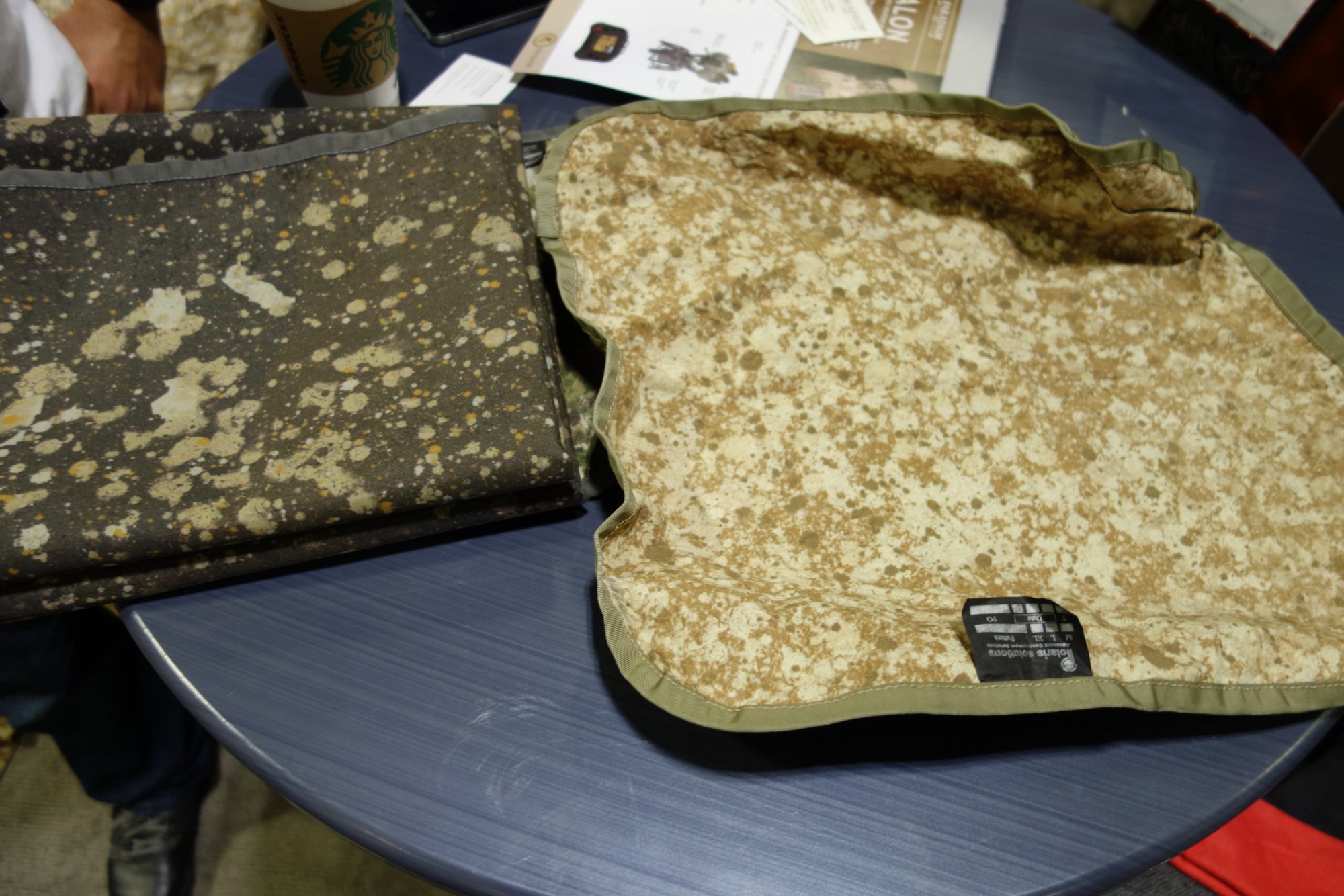
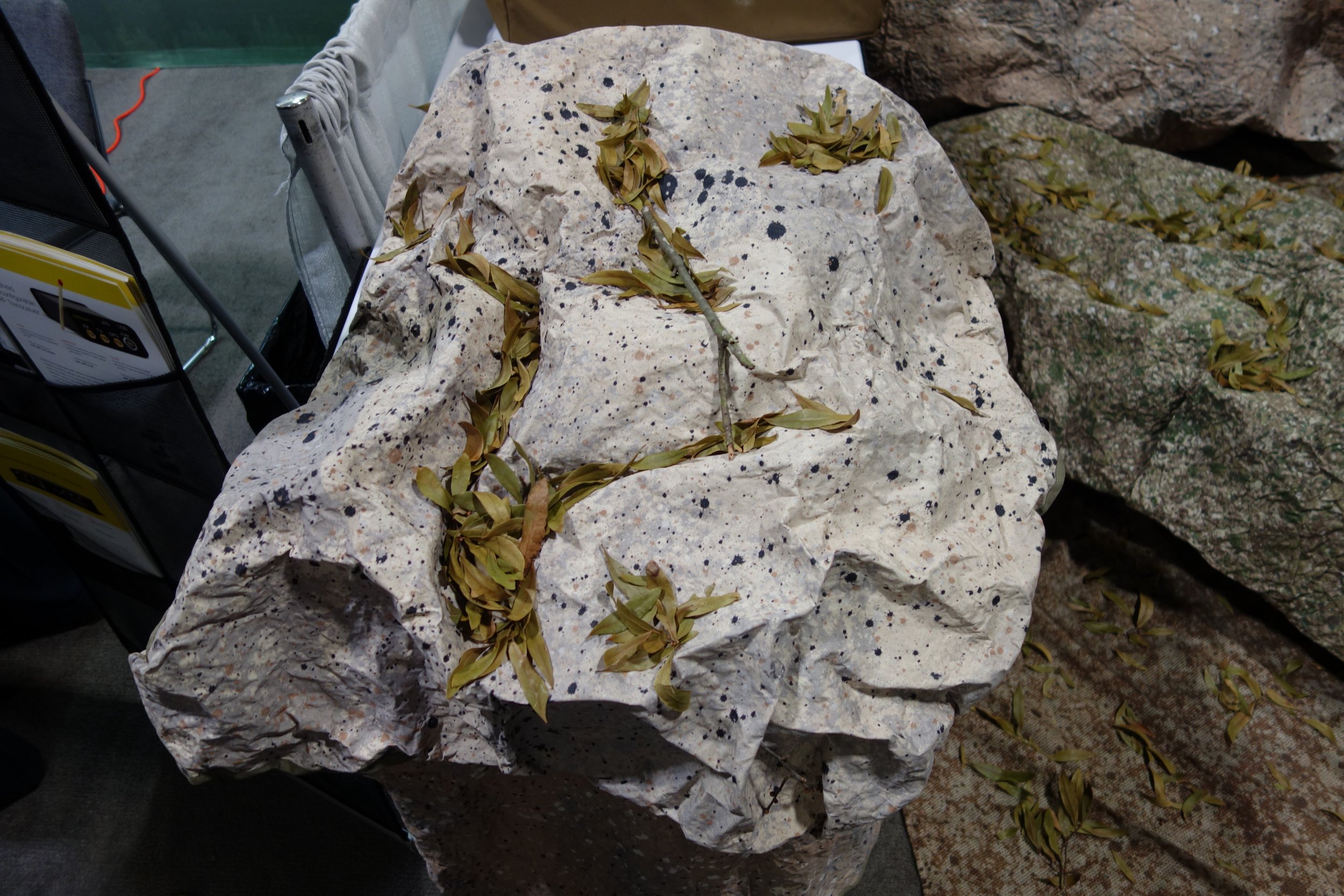
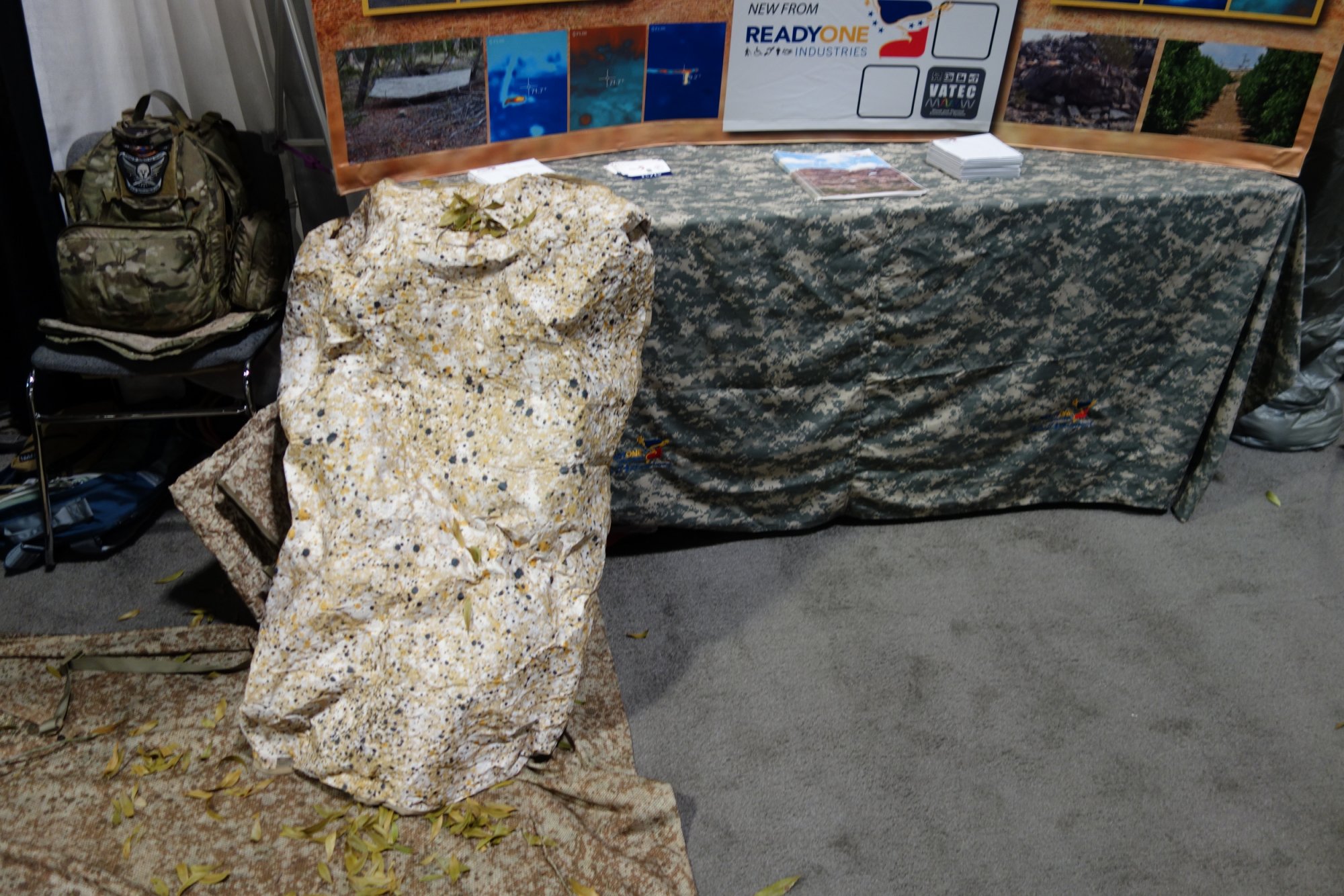
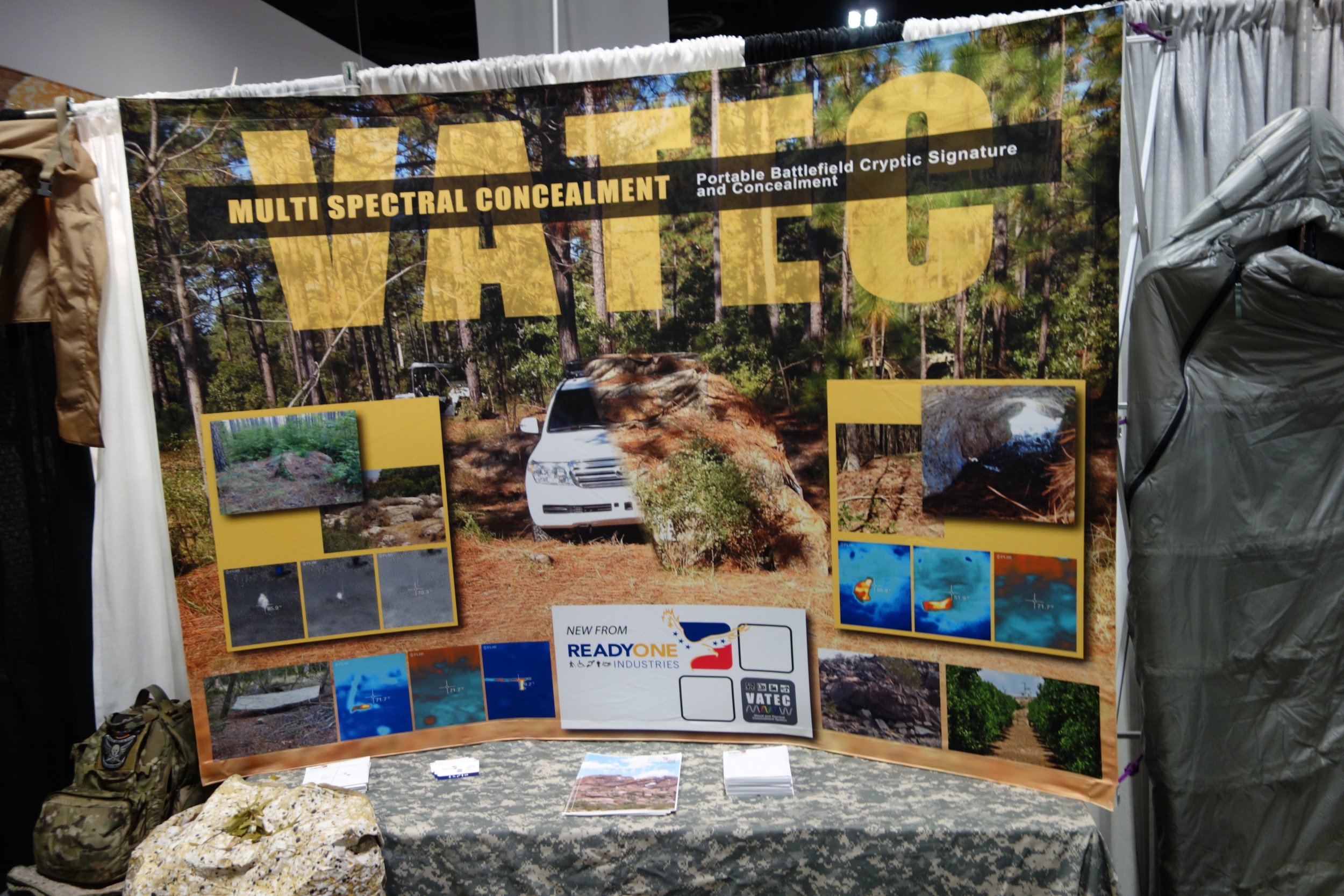
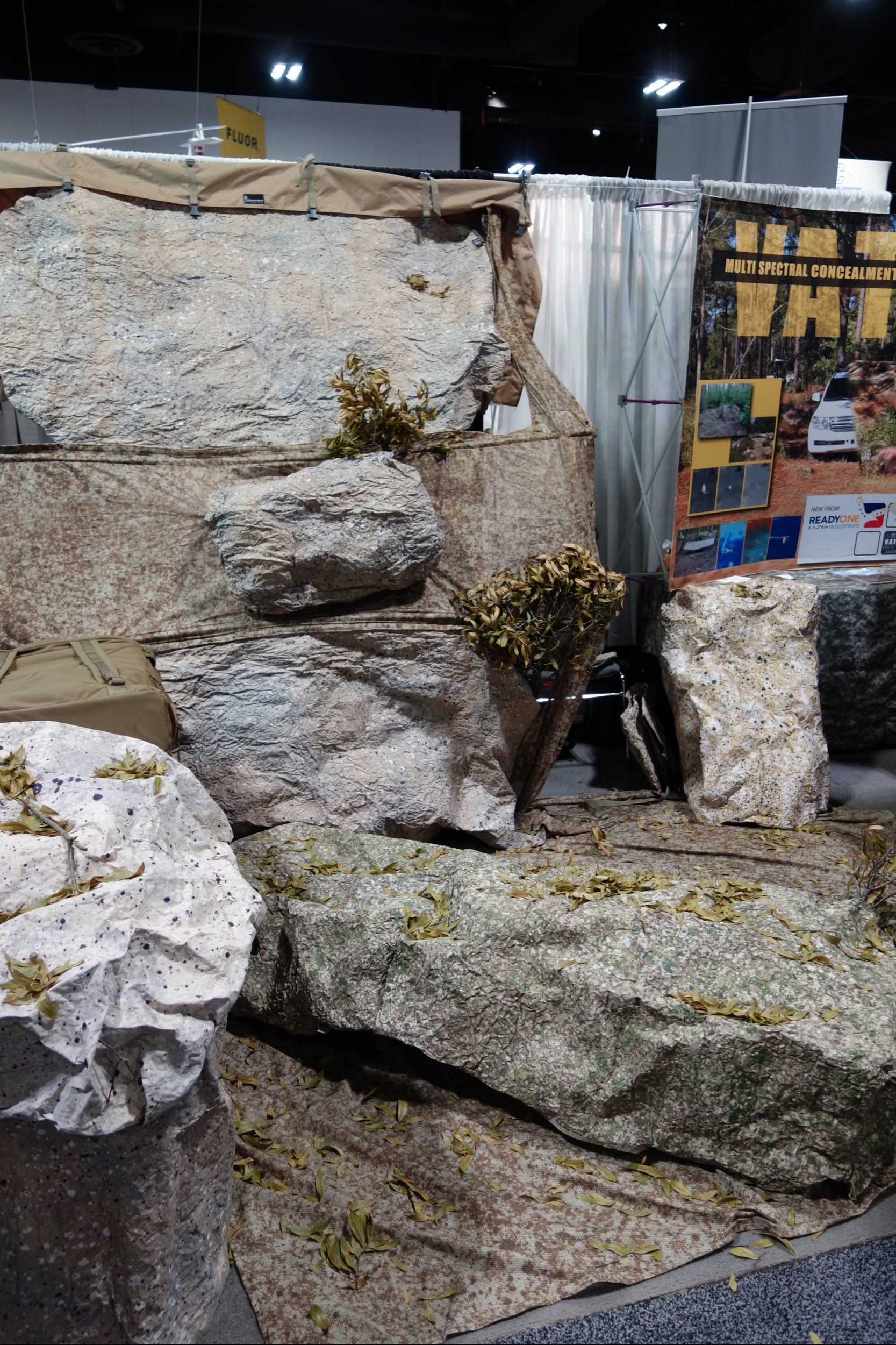
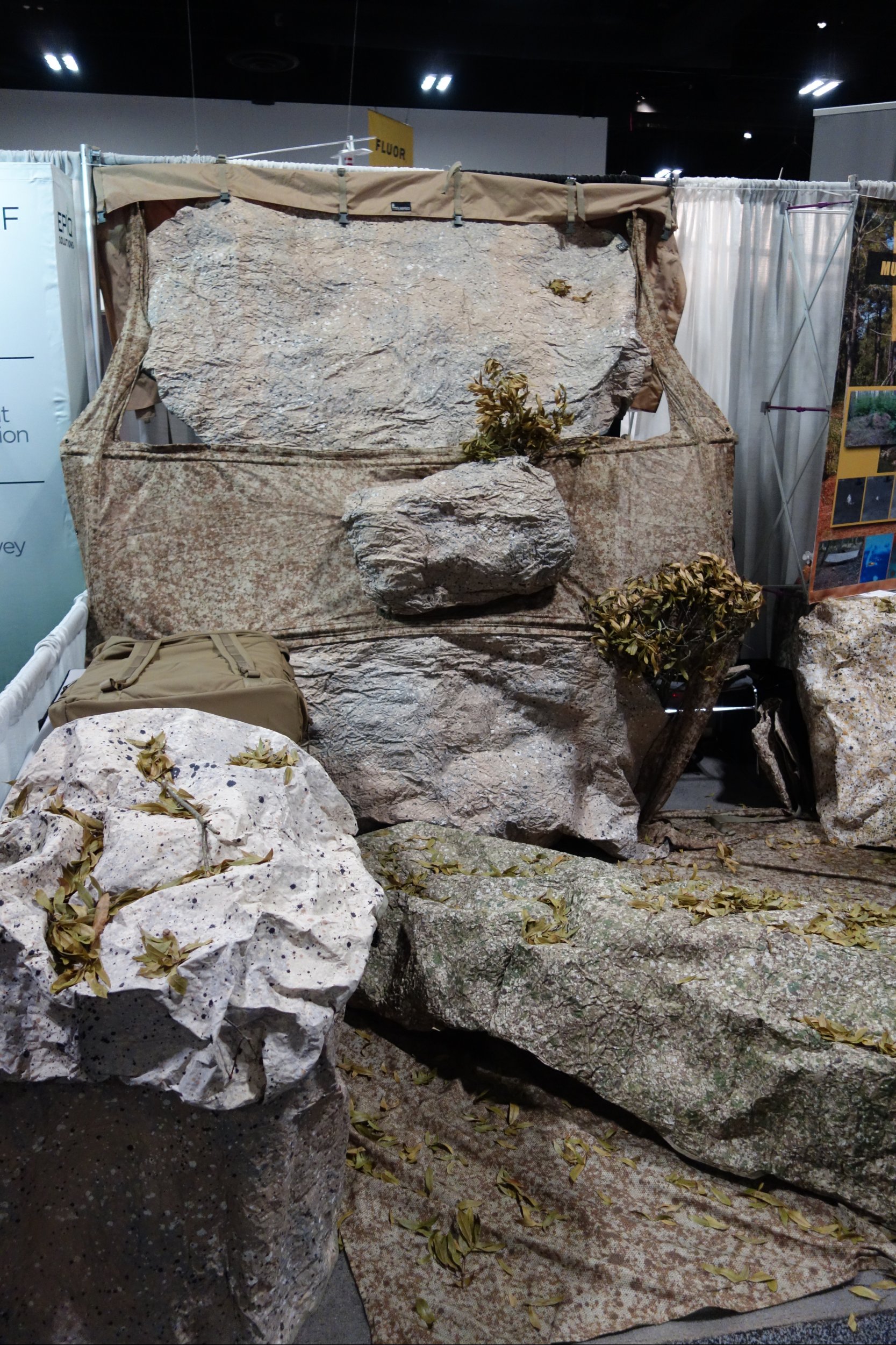
Speaking of IR (InfraRed) light tech at NDIA SOFIC 2015 (Special Operations Forces Industry Conference 2015), DefenseReview (DR) ran across some very interesting flexible 3D camouflage that’s multispectral, so it also works in the thermal/IR and near-IR/night-vision light spectrums, not just the visible light spectrum. Developed by Polaris Solutions in Israel and now manufactured and marketed by ReadyOne Industries under the VATEC Concealment Solutions (VCS) brand, the new 3-dimensional (or “tri-dimensional”) texturized flexible multi-spectral combat camouflage fabric material is actually three-dimensional in two aspects.
First, the flexible fabric itself is textured with a crinkly profile, so even when it’s laying flat, it’s got some depth, or multi-level aspect, to it. Second, the material can be formed into complex shapes, and keep those shapes, to mimic all types of natural or man-made terrain. Any current combat camouflage pattern or natural environment pattern taken from photographs can be applied to the core 3D-textured material, which, to DR’s understanding, is manufactured in sheets that can form just about any shape. You can see from the accompanying photographs that the VCS 3D camouflage can virtually perfectly match/mimic the natural or urban combat environment, whether it be foliage, rocks/boulders, a brick wall, etc. The company refers to the technology’s purpose as “multi-spectral concealment” and “portable battlefield cryptic signature and concealment”…and it’s wonderfully devious.
Anyway, it’s really cool, and DR finds it interesting that the Israelis came up with it, instead of us (United States). Then again, unlike us, Irael’s surrounded on all side by much larger enemy or frenemy states/countries, so they’ve got a much larger daily survival requirement to think about than we do. However, the good news is, it’s now being manufactured and marketed right here in the USA, so it’s Berry Compliant.
The ReadyOne Industries under the Polaris/VATEC 3D-textured multispectral camouflage fabric material can be integrated into uniforms and ghillie suits, sniper hides, vehicle camouflage, structural camouflage, you name it. Speaking of sniper hides, VATEC/ReadyOne’s Bill Fore told Defense Review that you can set up a sniper hide with it in about 25 minutes, which is pretty quick. Check out the video DR shot below to see just some of the things you can do with the VATEC combat camo.
Bill Fore
Director of Sales and Business Development
VATEC Concealment Solutions (VCS)
ReadyOne Industries
11460 Pellicano
El Paso, TX 79936
Phone: 915-858-7277 Ext. 1111
Email: [email protected]
Website 1: http://www.readyone.org
Website 2: http://www.vatec-us.com
O altă aplicație a acestui material ar fi protejarea obiectelor de la alte obiecte emițătoare din apropiere, permițând în același timp comunicarea electromagnetică între ele
tehnologia, compusă dintr-un „strat ultra-subțire de dielectric cu model de cupru conceput pentru lungimea de undă pe care doresc să o înveli” deosebit de utile pentru cloarea undelor radio, adică învelișul rețelelor de antene. Secțiunea cheie din întreaga piesă este următoarea:
New ‘Illusion Coating’ Adaptive Camouflage/Cloaking Tech Makes its Debut
Business Standardrecently published a piece on the latest development in adaptive-camouflage/cloaking technology. Dubbed “illusion coating” by its developers Douglas H Werner and Zhi Hao Jiang out of Pennsylvania State University, the technology, comprised of an “ultra-thin layer of dielectric with copper patterning designed for the wavelength they wish to cloak”, seems to be particularly useful for radio wave cloaking, i.e, the cloaking of antennae arrays. The key section in the whole piece is the following:
Another application of this material would be to protect objects from other emitting objects nearby while still allowing electromagnetic communication between them.
This was not possible with the conventional transformation optics-based cloaking method because the cloaking mechanism electromagnetically blocked the cloaked object from the outside, but this new coating allows the object surrounded to continue working while being protected.
That’s important, since the above-described “meta-surface coating” (with geometric copper patterns running over a flexible substrate material) can theoretically camouflage military radio communications systems from enemy detection and targeting while transmitting, which can keep those at the transmitting location from getting killed, and the equipment from getting destroyed.
Of course, the jury’s still out on whether or not Werner and Jiang’s tech actually works, or is vaporware designed to bring in U.S. government funding. DefenseReview (DR) is cautiously optimistic that aforementioned Werner and Jiang aren’t claiming a capability they can’t actually back up, ’cause, uhm, if they were, they’d both deserve a stern talking to.
Oh, one more section caught our attention:
Each illusion coating must be designed for the specific application, but the designs are optimised mathematically. This method of manufacture is low cost and well established.
Basically, the “Illusion Coating” can be printed lithographically, just like printed circuit boards, but each one’s going to be custom to fit the specific item its cloaking.
Defense Review’s been following various adaptive camouflage/cloaking technologies for years, and we’re always happy to report on a new one.
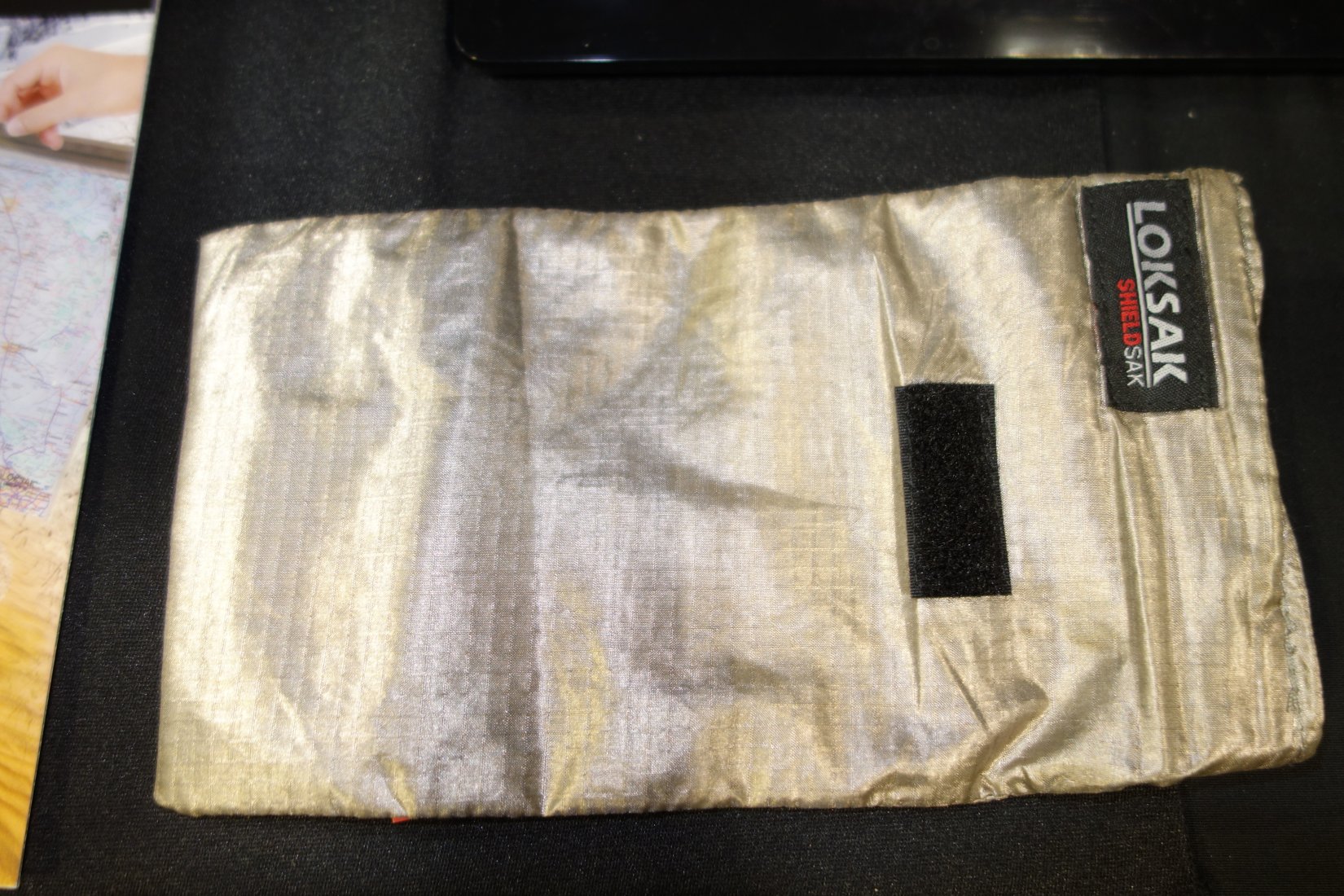
LOKSAK SHIELDSAK va apărea, de asemenea, la îndemână când trebuie să mergeți „în afara rețelei” în timpul operațiilor clandestine / ascunse. Doar lipiți materialele sensibile în interiorul pungii și devin instantaneu invizibile pentru orice amenințare de hacking RF. Odată ce ați intrat în SHIELDSAK, orice element care conține un cip ID, cum ar fi un pașaport sau un card de credit, nu poate fi scanat.
LOKSAK SHIELDSAK Fabric Faraday Cage/Anti-RF Protective Bag Family by LOKSAK: Flexible Fabric RF Fortress Provides Anti-Hacking/Anti-Tracking Radio Frequency Camouflage
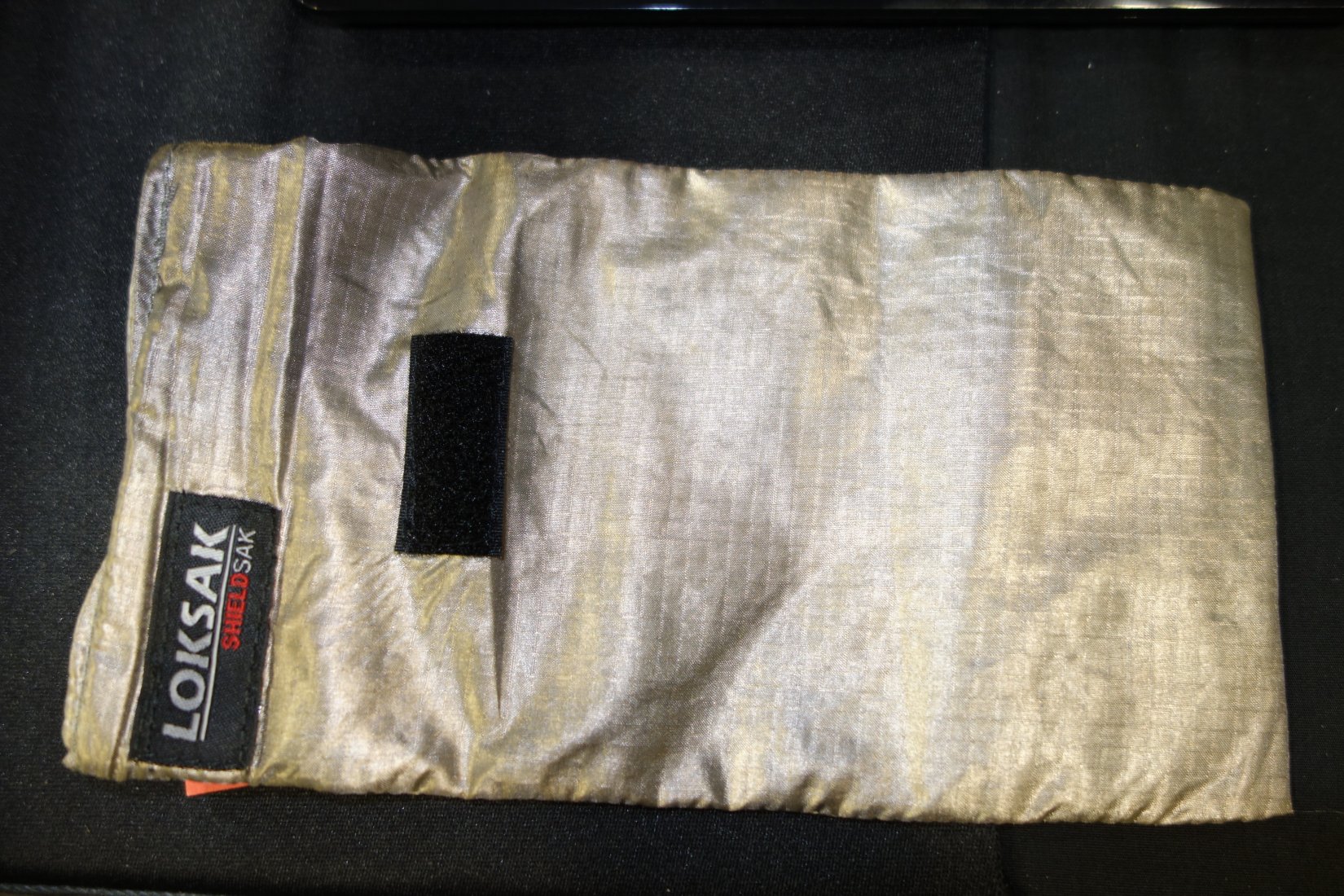
One of the fun and interesting aspects of attending tactical firearm, military defense, law enforcement, and security industry shows is the possibility of coming across great new products (firearm/shooting-related AND non-firearm/shooting related) that can just come in really handy in your everyday life, making your life easier, better, and/or safer, particularly during travel. DefenseReview (DR) recently ran across one of these great new little products at NDIA SOFIC 2014, the new SHIELDSAK fabric Faraday cage anti-RF (Radio Frequency) protective bag family. The SHIELDSAK bags are made by the good folks at LOKSAK, makers of the excellent aLOKSAKclear/translucent waterproof polymer barrier bags.
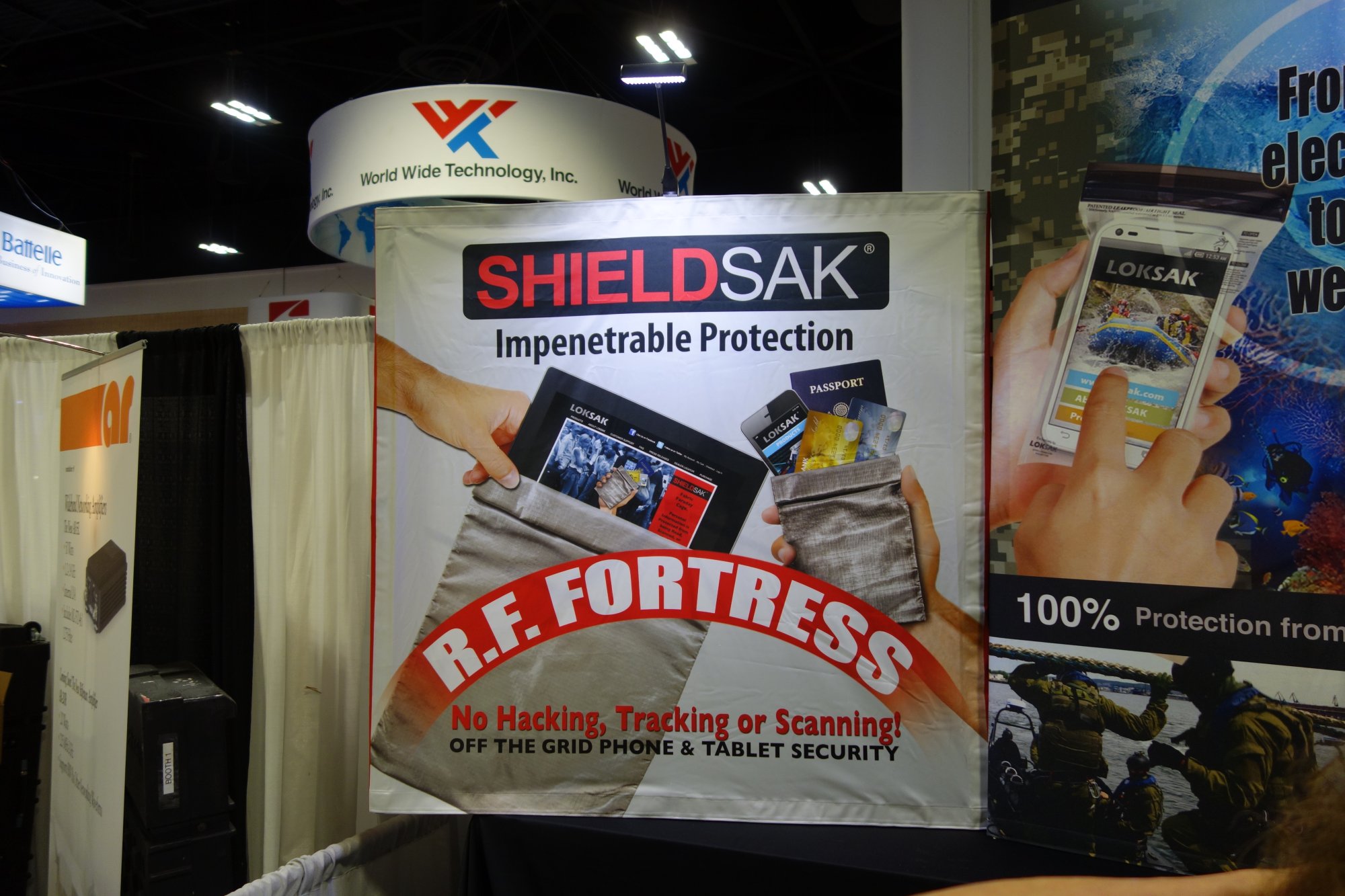
Billed as “impenetrable protection” and an “R.F. Fortress”, the LOKSAK SHIELDSAK anti-RF bags can protect any/all sensitive information on your smartphone , tablet computer (Microsoft Surface Pro 3, Apple iPad, etc.), credit cards, and anything else you can fit inside them against any/all RF/wireless hacking threats that may come your way.
The LOKSAK SHIELDSAK will obviously also come in handy when you need to go “off grid” during clandestine/covert ops. Just stick your sensitive materials inside the bag, and they become instantly invisible to any RF hacking threat. Once inside the SHIELDSAK, any item containing an ID chip, like a passport or credit card, can’t be scanned. And, any item with GPS, like a smartphone for example, can’t be tracked. So, with SHIELDSAK, there’s no hacking, and no tracking. It’s essentially anti-RF camouflage for your electronic devices and sensitive materials. Think of it as your very own little flexible Faraday fabric fortress of radio frequency solitude against all those evil, diabolical hacking, tracking and thieving baddies out there.
Made specficially for U.S. Military and Government end-users, SHIELDSAK anti-RF bags are “proven to block Radio Frequencies (“RF”), Infrared and Skim/Quick Scan Technology. SHIELDSAK has been tested by Keystone Compliance using the Mil-DTL-83528C Method.” In this endeavor, they’ve been tested against RF threats from 30 MHz to 10 GHz, and have achieved an average attenuation of 72 (dB).
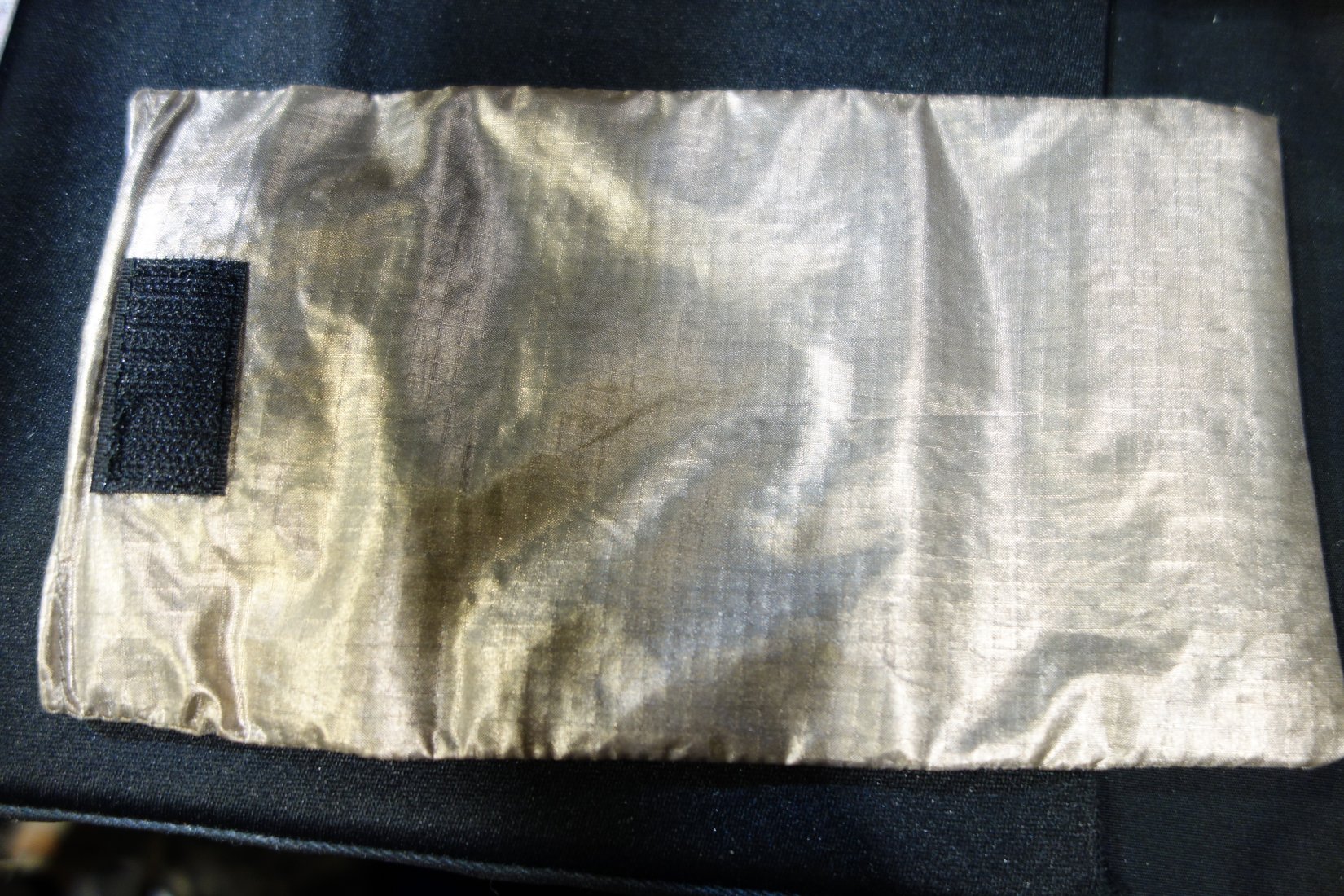
The secret to this anti-RF-hacking ability is SHIELDSAK’s ripstop metallic fabric. It contains a proprietary blend and matrix of metal fibers (a metal matrix, if you will) that creates the flexible fabric Faraday cage effect to block RF radio waves. So, the method to SHIELDSAK’s anti-RF-protective madness is in the metals, and the metals are what make the bags a little pricy ($69.89 USD for the SHIELDSAK Phone, and $157.19 USD for the SHIELDSAK Tablet). But, think about this, how much is your personal identity, financial and operational security worth to you? DR would hope it’s worth a lot more than the cost of the bags.
Defense Review has a SHIELDSAK Phone test/product sample that we’re going to carry around on travel and try to test on our own for both anti-RF effectiveness and durability. As of this writing, we’ve already conducted a simple call test with a smartphone that we placed inside it. Result? No ringing–and we had the ringer turned up all the way so we could hear it, if it did. The smartphone did not receive the call. We repeated the test twice (after doing a quick test call to make sure the phone was receiving calls normally) just to be sure.
So, the LOKSAK SHIELDSAK Phone appears to indeed work as advertised, at least against cell phone tower radio waves.
If you’d like a full test report on the LOKSAK SHIELDSAK technology, you can request it at [email protected].