Testarea nedistructivă: Privind în interiorul compozitelor

ehnica de testare nedistructivă trimite undele sonore în materialul compozit, returnând datele cu fiecare lovire a sondei. SANDIA a început să studieze compozite în urmă cu câțiva ani pentru a vedea dacă materialele ușoare ar putea fi folosite în aplicațiile de securitate națională. În timp ce un compozit dintr-un telefon mobil trebuie să dureze doar câțiva ani, „materialele tipice pentru aplicațiile de securitate națională trebuie să supraviețuiască timp de decenii. Acest lucru te face sa te gandesti altfel cu privire la unde si de ce ai folosi un material „, a spus Moore, care lucreaza in departamentul Structural Dynamics si X-ray / Nondestructive. „Trebuie să studiem ciclul de viață al unei componente. Avem tendința de a ne gândi profund la consecințele fracturii sau deformării și cum putem verifica ce sa întâmplat „. Lucrarea susține multe aspecte ale misiunii naționale de securitate a Sandia, inclusiv eficiența energetică și îmbunătățiri ale performanței vehiculelor ușoare sau a lamelor cu turbine eoliene, a declarat Briggs of Sandia Structura usoara a structurilor usoare din California. Compozitele combina materiale separate cu caracteristici diferite. Ele adesea constau dintr-un soft

Posted: Feb 01, 2016

Nondestructive testing: Looking inside composites

(Nanowerk News) Researcher David Moore holds a rectangle of hard carbon composite material, smooth with a faint woven pattern on its surface. The sample shows normal wear and tear until he turns it over to reveal a circular impact mark with cracks radiating from it.The question for Moore, his Sandia National Laboratories colleague Timothy Briggs in California and their teams is whether the impact caused significant, hidden damage inside the composite. They’re developing nondestructive ways to detect damage in composites, using traditional medical inspection techniques such as X-rays and sonograms and advanced methods including infrared imaging, ultrasonic spectroscopy and computed tomography.Sandia National Laboratories technologist Andrew Lentfer passes a roller probe over a composite as researcher David Moore checks data on a screenSandia National Laboratories technologist Andrew Lentfer passes a roller probe over a composite as researcher David Moore checks data on a screen. The nondestructive testing technique sends sound waves into the composite material, returning data with each swipe of the roller probe.Sandia began studying composites several years ago to see whether the lightweight materials could be used in national security applications. While a composite in a cell phone needs to last only a couple of years, “typically materials for national security applications must survive for decades. This makes you think differently about where and why you would use a material,” said Moore, who works in the Structural Dynamics and X-ray/Nondestructive Evaluation department. “We need to study the lifecycle of a component. We tend to think deeply about the consequences of fracture or deformation and how we can verify what happened.”The work supports many aspects of Sandia’s national security mission, including energy efficiency and performance improvements in lightweight vehicles or wind turbine blades, said Briggs of Sandia California’s Lightweight Structures organization.Composites join together separate materials with different characteristics. They often consist of a soft polymer matrix with reinforcing fibers like carbon, Kevlar or glass. Composites can use bundles of thinner-than-a-hair carbon strands that yield a high strength-to-weight ratio. The final shape and strength is obtained after heating the part in an industrial oven that sets the polymer resin and yields the qualities necessary for a structural component.Composites are increasingly important in aerospace and other industries because they’re strong and weigh less than metals. Most can be bonded to metal for such uses as aircraft wings, making planes lighter and less expensive to fly.Outside surface of a composite doesn’t hint at what’s inside“We have a rich history of understanding metals and their failure mechanisms,” Moore said. “Composite materials are very different.”If a service truck backs into a composite aircraft fuselage, an examination of the impact site might not detect damage under the surface. That highlights the reason for nondestructive techniques that can fully evaluate how composites react in various circumstances.The research team is assessing the accuracy of nondestructive methods and how they could be used on a production floor. “You have to know what could go wrong in the processing steps and how to circumvent those, and then you want to make sure if you’re going to make one or a hundred or a thousand that you’re making them the same way all the time,” Moore said.“Once we establish the limits of detectability, the threshold of good, bad and questionable, we’ll be able to say, ‘We want this composite bonded to this material with a defined quality and it shall be inspected with this technique,’” he said.Sandia’s Lightweight Structures Lab defines and consolidates materials to study, using particular stack sequences of composite material layers to tailor strength and stiffness. It works in concert with the National Security Campus in Kansas City, Missouri, in everything from developing process methods to building prototypes to qualifying designs for particular applications.After making composites, the fabrication lab cuts out specimens for instrumented experiments — abusing the carefully made sample to study deformation, fracture and damage growth. Briggs “pulls, stretches, torques and crushes them. He performs these mechanical experiments so we can understand the fracture mechanisms around failure,” Moore said. “Then we try to detect some of those failure modes.”Characterizing material properties helps computer modeling, simulation“The fundamental characterization of composites measures material properties and structural characteristics, which in turn provides information to validate computer modeling and simulation,” Briggs said.Data from these destructive tests is correlated with nondestructive evaluations from Moore’s team to understand what caused the material to respond the way it did, Briggs said. The effort hinges on close collaboration with Sandia’s materials characterization groups and modeling and simulation colleagues to help validate their computer-based simulations.Composites must support a particular weight and size. “Anyone can build a structure to carry the load, but we have to design our structures to fit within a geometric envelope and be lightweight,” Briggs said. “We cannot simply over-engineer to unrealistic levels. We have to be very smart and efficient with our designs, yet provide enough margin for long-term reliability.”Materials bonded in an oven or autoclave often have different thermal expansion rates — aluminum expands more than fiber-reinforced plastics, for example. Once a composite cools after curing, residual stresses can build up inside, particularly at interfaces. If the composite can’t handle those stresses, the bonds can fail.Sandia is developing advanced techniques to complete sample inspections in less than 5 minutes in some cases. “This is a way to gain a lot of information very quickly about the quality of the bonds,” Moore said.Team studies specific nondestructive techniquesHis team uses the deliberately mistreated composites to assess such inspection techniques as advanced ultrasonics, flashed or active thermography and computed tomography.Ultrasonic testing has been around for 60 years, but computers and other improvements now allow study of more complex applications. Technologist Andrew Lentfer demonstrates, scanning a piece of composite with a handheld ultrasonic roller that resembles a small paint roller with a hollow, water-filled barrel. As he scans the composite’s layers, a computer screen maps them in color: Yellow-green is OK; blue indicates weakness. Rollers can scan curved surfaces, even large ones like airplanes.Fibers and interfaces in a composite scatter ultrasonic waves moving through the material. Moore compares it to ocean waves: “If a wave hits a rock face in the ocean it moves around it; if a wave washes up on the sand it gets absorbed; and if it hits a seawall the wave energy is redirected quickly. Those are the same fundamentals we investigate: ultrasonic energy moving through a composite matrix.”Knowledge gained from characterizing materials helps develop new nondestructive techniques “so when we establish an inspection criteria, we have a better feel for what we can detect and what we cannot,” he said.Flashed thermography, commercially available for more than 20 years, flashes very high-energy light onto a surface for 15 microseconds, then an infrared camera watches how the surface cools. The process takes only minutes.“It’s very fast, but you have to understand the fundamentals of heat flow and how the material surface either gives off heat to its surroundings or transfers heat within itself,” Moore said.Studies use good, not-so-good composites to test differencesThe research uses composites with high-quality bonds and others deliberately made with weaker bonds. Differences in results help the team improve detection of defects or damage. A computer screen shows light or dark spots indicating possible problems, and an overlaid graph ties the depth of the potential problem to the time indicated on the image.“The question becomes, is that a concern? Is that a crack or not?” Moore said. “We’ll be able to answer those questions. If the defect propagates deep into the material, we may not detect it. It’s wise to understand the capabilities of the technique and then perform the math and science behind it.”Computed tomography systems are efficient for finding small defects. The technique rotates a sample 360 degrees while taking 1,000 images, similar to a medical CT scan, and generates an image from each thin slice of the object. Since each image taken is two dimensional, computer algorithms reconstruct, calculate, locate and display everything to represent the object in three dimensions.“Once the 3-D image is reconstructed, you look at the front surface and then start moving through the thickness to view what is below the surface,” Moore said. “This technology gives us a knowledge baseline and validates how the other techniques are performing.”Sandia must ensure designs meet requirements by specifying and qualifying an inspection technique, and now is writing inspection procedures for the National Security Campus, Moore said. “Once we establish criteria and limits of acceptability, the product definition can be established,” he said.

Source: Sandia National Laboratories

Read more: Nondestructive testing: Looking inside composites

O alternativă la platină: compuși ai azotului de fier ca catalizatori în grafen(An alternative to platinum: iron-nitrogen compounds as catalysts in graphene)

au produs un material catalitic eficient din punct de vedere al costurilor pentru celulele de combustie folosind un nou proces de preparare pe care l-au analizat în detaliu. Se compune din complexe de fier-azot încorporate în insulele mici de grafen cu numai câțiva nanometri în diametru

Posted: Jan 27, 2016

An alternative to platinum: iron-nitrogen compounds as catalysts in graphene

(Nanowerk News) Teams at Helmholtz Zentrum Berlin (HZB) and TU Darmstadt have produced a cost-effective catalyst material for fuel cells using a new preparation process which they analysed in detail. It consists of iron-nitrogen complexes embedded in tiny islands of graphene only a few nanometres in diameter. It is only the FeN4 centres that provide the excellent catalytic efficiency – approaching that of platinum. The results are interesting for solar fuels research as well and have been published in the Journal of the American Chemical Society („On an easy way to prepare Metal-Nitrogen doped carbon with exclusive presence of MeN4-type sites active for the ORR”).

Nano-island of graphene in which iron-nitrogen complexes are embedded
Nano-island of graphene in which iron-nitrogen complexes are embedded. The FeN4 complexes (shown in orange) are catalytically active. (Image: S. Fiechter/HZB)
Fuel cells convert the chemical energy stored in hydrogen (H2) into electrical energy by electrochemically “combusting” hydrogen gas with oxygen (O2) from the air into water (H2O), thereby generating electricity. As a result, future electric automobiles might be operated quite well with fuel cells instead of with heavy batteries. But for “cold” combustion of hydrogen and oxygen to function well, the anode and cathode of the fuel cell must be coated with extremely active catalysts. The problem is that the platinum-based catalysts employed for this contribute about 25 per cent of the total fuel-cell costs.
However, iron-nitrogen complexes in graphene (known as Fe-N-C catalysts) have been achieving levels of activity comparable to Pt/C catalysts for several years already. “Systematic investigation of Fe-N-C catalysts was difficult though, since most approaches for preparing the materials lead to heterogeneous compounds. These contain various species of iron compounds such as iron carbides or nitrides besides the intended FeN4 centres”, explains Sebastian Fiechter of HZB.
High density of catalytically active centres
“We had already developed a new preparation method at HZB a few years ago to produce an inexpensive catalyst material from organometallic compounds such as iron or cobalt porphyrin”, reports Peter Bogdanoff, HZB. Ulrike Kramm and Iris Herrmann-Geppert improved the process for producing it as part of their doctoral studies at HZB. As a result, the metal-N-C catalysts developed at HZB held the world record for the highest density of catalytically active centres of various nitro-metallic compounds up to about 2011. However, it remained unclear as to which inorganic compounds influenced the catalytic efficiency. The team was now able to determine this.
Purification process removes interfering compounds
The highlight in the current work is a purification process (a combination of thermal treatment with a subsequent etching step) by which the proportion of metallic compounds that interfere with catalytic activity can be substantially reduced, even for catalysts that are highly heterogeneous. The interesting thing here is that the activity increases enormously! Ulrike Kramm, who has since become a junior professor at TU Darmstadt, was successful in purifying several catalysts to such an extent that all the iron present in the graphene layers was exclusively in form of complexes made of iron and four nitrogen atoms (FeN4). The scientists thereby disproved the hypothesis debated among experts by which improvement in the activity of the FeN4 centres only resulted from promoters, as they are known, such as iron nanoparticles.
Now verified: FeN4 centres provide the high catalytic efficiency even without promoters
“To check this hypothesis, we employed numerous complex measurement techniques like Mößbauer spectroscopy, electron paramagnetic resonance spectroscopy and X-ray absorption spectroscopy at BESSY II. These enabled us to precisely survey the atomic structure of the catalytic centres”, Ulrike Kramm reports.
“The purification process enables us now to create catalysts having exclusively FeN4 centres. This allows us to subsequently select compounds to be added afterwards as promoters that further improve the activity level or stability of these catalysts”, as Ulrike Kramm summarises her research approach at TU Darmstadt.
Sebastian Fiechter and Peter Bogdanoff are continuing their research at HZB on novel catalysts, especially in regard to hydrogen generation using sunlight. “We can also use the insights into how these metal-N-C catalysts work in our on-going development of catalysing materials for solar-based hydrogen production at HZB,” says Fiechter.
Together, the research activities at HZB and TU Darmstadt could enable the development of a complete regenerative energy cycle, using solar hydrogen in low cost fuel cells, thus producing electricity without climate gas emission.
Source: Helmholtz Zentrum Berlin

Simplificarea celulelor solare cu un amestec nou de materiale(Simplifying solar cells with a new mix of materials)

O echipă internațională de cercetare a simplificat pașii de creare a celulelor solare de înaltă eficiență prin aplicarea unui nou amestec de materiale într-un design standard. Structurile de celule solare sunt utilizate în panouri solare pentru a transforma lumina solară în energie electrică.
Amestecul special de materiale – care ar putea fi de asemenea util în componentele semiconductoare – elimină necesitatea unui proces cunoscut sub numele de dopaj care să conducă proprietățile dispozitivului prin introducerea de atomi străini în contactele sale electrice. Acest proces de dopaj adaugă complexitate dispozitivului și îi poate degrada performanțele

Posted: Jan 27, 2016

Simplifying solar cells with a new mix of materials

(Nanowerk News) An international research team has simplified the steps to create highly efficient silicon solar cells by applying a new mix of materials to a standard design. Arrays of solar cells are used in solar panels to convert sunlight to electricity.

The special blend of materials–which could also prove useful in semiconductor components–eliminates the need for a process known as doping that steers the device’s properties by introducing foreign atoms to its electrical contacts. This doping process adds complexity to the device and can degrade its performance.
„The solar cell industry is driven by the need to reduce costs and increase performance,” said James Bullock, the lead author of the study, published this week in Nature Energy („Efficient silicon solar cells with dopant-free asymmetric heterocontacts”). Bullock participated in the study as a visiting researcher at the U.S. Department of Energy’s Lawrence Berkeley National Laboratory (Berkeley Lab) and UC Berkeley.
The Making of a Solar Cell
In this illustration, the top images show a cross-section of a solar cell design, called DASH, that uses a combination of moly oxide and lithium fluoride. This combination of materials allows the device to achieve high efficiency in converting sunlight to energy without the need for a process known as doping. The bottom images shows the dimensions of the DASH solar cell components. (© Nature Publishing Group)
„If you look at the architecture of the solar cell we made, it is very simple,” said Bullock, of Australian National University (ANU). „That simplicity can translate to reduced cost.”
Other scientists from Berkeley Lab, UC Berkeley, ANU and The Swiss Federal Institute of Technology of Lausanne (EPFL) also participated in the study.
Bullock added, „Conventional silicon solar cells use a process called impurity doping, which does bring about a number of limitations that are making further progress increasingly difficult.”
Most of today’s solar cells use crystalline silicon wafers. The wafer itself, and sometimes the layers deposited on the wafer, are doped with atoms that either have electrons to spare when they bond with silicon atoms, or alternatively generate electron deficiencies, or „holes.” In both cases, this doping enhances electrical conductivity.
In these devices, two types of dopant atoms are required at the solar cell’s electrical contacts to regulate how the electrons and holes travel in a solar cell so that sunlight is efficiently converted to electrical current that flows out of the cell.
Crystalline silicon-based solar cells with doped contacts can exceed 20 percent efficiency–meaning more than 20 percent of the sun’s energy is converted to electricity. A dopant-free silicon cell had not previously exceeded 14 percent efficiency.
The new study, though, demonstrated a dopant-free silicon cell, referred to as a DASH cell (dopant free asymmetric heterocontact), with an average efficiency above 19 percent. This increased efficiency is a product of the new materials and a simple coating process for layers on the top and bottom of the device. Researchers showed it’s possible to create their solar cell in just seven steps.
In this study, the research team used a crystalline silicon core (or wafer) and applied layers of dopant-free type of silicon called amorphous silicon.
Then, they applied ultrathin coatings of a material called molybdenum oxide, also known as moly oxide, at the sun-facing side of the solar cell, and lithium fluoride at the bottom surface. The two layers, having thicknesses of tens of nanometers, act as dopant-free contacts for holes and electrons, respectively.
„Moly oxide and lithium fluoride have properties that make them ideal for dopant-free electrical contacts,” said Ali Javey, program leader of Electronic Materials at Berkeley Lab and a professor of Electrical Engineering and Computer Sciences at UC Berkeley.
Both materials are transparent, and they have complementary electronic structures that are well-suited for solar cells.
„They were previously explored for other types of devices, but they were not carefully explored by the crystalline silicon solar cell community,” said Javey, the lead senior author of the study.
Javey noted that his group had discovered the utility of moly oxide as an efficient hole contact for crystalline silicon solar cells a couple of years ago. „It has a lot of defects, and these defects are critical and important for the arising properties. These are good defects,” he said.
Stefaan de Wolf, another author who is team leader for crystalline silicon research at EPFL in Neuchâtel, Switzerland, said, „We have adapted the technology in our solar cell manufacturing platform at EPFL and found out that these moly oxide layers work extremely well when optimized and used in combination with thin amorphous layer of silicon on crystalline wafers. They allow amazing variations of our standard approach.”
In the study, the team identified lithium fluoride as a good candidate for electron contacts to crystalline silicon coated with a thin amorphous layer. That layer complements the moly oxide layer for hole contacts.
The team used a room-temperature technique called thermal evaporation to deposit the layers of lithium fluoride and moly oxide for the new solar cell. There are many other materials that the research teams hopes to test to see if they can improve the cell’s efficiency.
Javey said there is also promise for adapting the material mix used in the solar cell study to improve the performance of semiconductor transistors. „There’s a critical need to reduce the contact resistance in transistors so we’re trying to see if this can help.”
Source: Lawrence Berkeley National Laboratory

Noi nanomateriale fluorescente se inspiră din sistemele de antenă ale instalațiilor(New fluorescent nanomaterials take inspiration from plant antenna systems)

a proiectat un set de nanomateriale fluorescente care s-au inspirat din sistemele de antenă ale plantelor.
Aceste noi materiale multifuncționale urmăresc să imite organismele fotosintetice ale plantelor. Aceste microorganisme constau din mii de molecule de clorofilă încorporate într-o matrice de proteine, care le furnizează o orientare / aranjament specific și o distanță eculară. Una dintre caracteristicile principale ale acestor sisteme este funcția antenei, care le permite să recolteze energia solară într-o gamă spectrală largă și să o transporte prin multiple procese eficiente de transfer de energie către un centru de reacție specific, energie.

Posted: Jan 26, 2016

New fluorescent nanomaterials take inspiration from plant antenna systems

(Nanowerk News) One of the biggest temptations facing a scientist is to try and reproduce natural phenomena which are so fascinating given their effectiveness and perfection. This is the aim being pursued by the UPV/EHU’s Molecular Spectroscopy Group which, coinciding with the International Year of Light, has designed a set of fluorescent nanomaterials which have taken their inspiration from the antenna systems of plants.

These new multifunctional materials aim to imitate the photosynthetic organisms of plants. These microorganisms consist of thousands of chlorophyll molecules embedded in a protein matrix, which provides them with a specific orientation/arrangement and intermolecular distance. One of the main characteristics of these systems is their antenna function, which enables them to harvest solar energy in a broad spectral range and transport it by means of multiple, efficient energy transfer processes to a specific reaction centre, where it is finally turned into chemical energy.
Jorge Bañuelos, Iñigo López Arbeloa, and Leire Gartzia
Jorge Bañuelos, Iñigo López Arbeloa, and Leire Gartzia.
It is a well-known fact that solar radiation is made up of many colours (blue, green, yellow, red, etc.), as borne out by the broad range of colours present in the rainbow. The aim of artificial antenna systems is to capture the greatest light range possible so that it can then be efficiently turned into electrical energy (activating of photovoltaic cells)or the emitting of red light, so useful in photonic applications, such as those of biomedical interest. In this respect, and with the aim of coming up with artificial antenna systems, the Molecular Spectroscopy Group has been developing new dyes and photoactive nanomaterials capable of absorbing a broad interval of chromatic radiation which can then be transformed into a red-only emission.
Energy donor and acceptor molecules coexist in these photoactive dyes and nanomaterials developed by the Molecular Spectroscopy Group. The former are highly photostable fluorescent molecules and are responsible for absorbing the light which they then transfer to the acceptor species, which will emit light. This strategy allows the limitations inherent in the red dyes to be reduced; these red dyes are characterised by their reduced light absorption and their low photostability and offer a great advantage in photonic and biophotonic applications as they allow the photostability of the system and detection sensitivity to be improved.
Three different alternatives have been chosen to develop these antenna systems: two of them are based on the encapsulation of fluorescent dyes in either inorganic or organic hosts, and the other one in the assembly of different dyes into a single molecular structure. “We have replaced the protein matrix of the natural systems by synthetic hosts of nanometric dimensions which protect the dyes and provide a significant arrangement that will help to make the energy transfer processes viable and efficient.
Furthermore, with respect to the photoactive part, which is responsible for interacting with the light, the chlorophyll molecules have been replaced by fluorescent molecules many of which have been tuned à la carte,” explained Leire Gartzia, author of the thesis the most salient results of which have been included in the paper published in International Reviews in Physical Chemistry(„Excitation energy transfer in artificial antennas: from photoactive materials to molecular assemblies”).
In the first of the alternatives, the solid matrix chosen to encapsulate the fluorescent dyes is of crystalline aluminosilicate known as Zeolite L., characterised by the fact that it has unidimensional channels and a suitable pore size (7Å) in which the molecules fit like a glove. “This produces a highly ordered nanomaterial that allows the light emission to be modulated to produce a red or white light depending on the control we exert on the efficiency of the energy transfer process,” added the researcher. This chameleon-like property turns them into materials capable of generating new light emitting diodes (LEDs), featuring white-light emitting diodes (WLED), which are so useful in lighting technologies such as liquid crystal displays (LCD).
The other matrix chosen to host dyes consists of polymer nanoparticles capable of hosting inside them extremely high dye concentrations without it becoming aggregated. “Confining the dyes reduces the photodegradation processes, considerably increases their useful service life and encourages the transfer of energy, which has enabled us not only to obtain an antenna system but also tunable red laser radiation that is efficient and long-lasting in stable aqueous suspensions,” pointed out Leire Gartzia.
Finally, they have developed antenna systems made up solely of organic molecules in which the energy donor and acceptor species are linked by a spacer ensuring short intermolecular distances, thus achieving efficiencies in the energy transfer processes of practically 100%. This has meant a great improvement in the harvesting of light across the visible spectrum, leading to exclusively stable bright red which means they are highly recommended as active hosts for tunable lasers in the zone close to the infrared. The main interest in this wavelength is its great tissue penetration capacity, a key in photodynamic therapy with uses in ophthalmology and dermatology and in cancer treatment, for example.
Source: University of the Basque Country

Sinteza microundelor „înscrie” grafenul spre perfecțiune(Microwave synthesis ‘zaps’ graphene to perfection)

Surprinzator, cercetatorii au descoperit ca lichidul lor ionic oligomeric ar putea dizolva suficiente foi exfoliate pentru a se transforma intr-un gel fizic – primul pentru grafenul curat. Acest material tridimensional are o structură intrinsecă, dependentă de câmpul magnetic, care poate duce la aplicații ale dispozitivelor.

Posted: Jan 22, 2016

Microwave synthesis ‘zaps’ graphene to perfection

(Nanowerk News) By employing microwave radiation and a special ionic liquid solvent, RIKEN researchers have developed a quick, efficient and potentially scalable way to produce large quantities of single-layer graphene (Nature Chemistry, „Ultrahigh-throughput exfoliation of graphite into pristine ‘single-layer’ graphene using microwaves and molecularly engineered ionic liquids”).

Graphene can move electrons at extraordinary speeds because of its unique, ultrathin arrangement of carbon atoms. But isolating this two-dimensional material has proved challenging. While early experiments famously used adhesive tape to separate graphite crystals into single-layer graphene, recent efforts have focused on techniques involving liquid-phase exfoliation that mechanically agitate graphite particles dispersed in a solvent. However, this kind of physical shaking makes it difficult to produce structurally intact graphene sheets in high yields.
graphene
A quick and efficient way to produce single-layer graphene using microwaves and ionic liquids has been found by RIKEN researchers.
Takuzo Aida from the RIKEN Center for Emergent Matter Science and colleagues from across Japan theorized that using everyday microwave ovens might improve graphene synthesis. “We envisioned that a perturbation that activates graphite without mechanical force would give highly efficient exfoliation,” explains Michio Matsumoto, a co-author of the study. “We chose to irradiate graphite with microwaves because graphite is a good absorber of microwaves and releases heat after irradiation.”
Successful exfoliation requires a way to keep the freshly peeled materials separated; otherwise, the graphene layers will recoalesce into larger particles. Ionic liquids—salts that remain in a liquefied state—are promising for this role because their charged nature generates strong attractions to graphitic surfaces. Previously, the RIKEN team used ionic liquids based on imidazolium, a positively charged, nitrogen-bearing ring, to exfoliate carbon nanotubes. But, preliminary studies revealed the need for a different chemical approach.
“The face-to-face stacking that binds graphene layers in graphite was too strong for conventional imidazolium compounds to prevent aggregation of graphite,” explains Matsumoto. “To overcome that stacking force, we designed new ionic liquids inspired by the biological concept of multivalent interactions.”
To make ionic ligands that can stick to multiple sites on a graphene layer, the researchers polymerized imidazolium and ethylene oxide atoms into short chains known as oligomers. When they mixed the oligomeric ionic liquid with graphite powder and heated the solution for 30 minutes in a microwave oven, the results were impressive—exfoliation occurred with a yield of 93 per cent and practically all of the graphene produced was in the form of single layers.
“This work brings large-scale synthesis of high-quality graphene one step closer,” says Matsumoto.
Surprisingly, the researchers found their oligomeric ionic liquid could dissolve enough of the exfoliated sheets to turn into a physical gel—a first for pristine graphene. This three-dimensional material has an intriguing, magnetic-field-dependent structure that may lead to device applications.
Source: RIKEN

Producția de nanotehnologii ar putea beneficia de o tehnică nouă de creștere nanosheet(

echivalentul microscopic al unei singure coli de hârtie, o foaie de date 2D este un material care este limitat la doar câteva straturi atomice într-o direcție. Nanomaterialele – materiale care sunt constrânse în cel puțin o dimensiune la maximum un număr de straturi atomice – au proprietăți fizice unice care modifică proprietățile lor electronice și chimice în raport cu materialele lor identice compozite dar convenționale și mai mari. „Ce este frumos cu un nanomaterial 2D este faptul că pentru că este o foaie, este mult mai ușor pentru noi să manipulăm în comparație cu alte tipuri de nanomateriale

Posted: Jan 21, 2016

Nanotechnology manufacturing could benefit from novel nanosheet growth technique

(Nanowerk News) After six years of painstaking effort, a group of University of Wisconsin-Madison materials scientists believe their breakthrough in growing tiny sheets of zinc oxide could have huge implications for the future of nanomaterial manufacturing—and in turn, on a host of electronic and biomedical devices.

The group, led by Xudong Wang, an associate professor of materials science and engineering at UW-Madison, and postdoctoral researcher Fei Wang, has developed a novel technique for synthesizing two-dimensional nanosheets from compounds that do not naturally form the atomic-layer-thick materials. It is the first time such a technique has been successful, and the researchers described their findings 20, January, 2016, in the journal Nature Communications(„Nanometre-thick single-crystalline nanosheets grown at the water–air interface”).
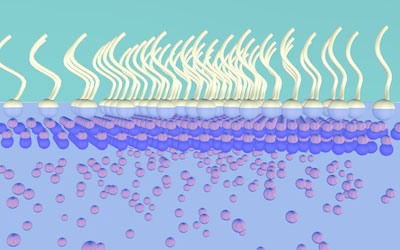
Schematic illustration of the formation of ZnO nanosheets directed by surfactant monolayer
Schematic illustration of the formation of ZnO nanosheets directed by surfactant monolayer.
Essentially the microscopic equivalent of a single sheet of paper, a 2D nanosheet is a material that is constrained to up to only a few atomic layers in one direction. Nanomaterials—materials that are constrained in at least one dimension to a maximum of a handful of atomic layers—have unique physical properties that alter their electronic and chemical properties in relation to their compositionally identical but conventional, and larger, material counterparts. “What’s nice with a 2D nanomaterial is that because it’s a sheet, it’s much easier for us to manipulate compared to other types of nanomaterials,” says Xudong Wang.
Until now, materials scientists were limited to working with naturally occurring 2D nanosheets. These natural 2D structures include graphene, a single layer of graphite, and a limited number of other compounds. Developing a reliable method to synthesize and manufacture 2D nanosheets from other materials has been a goal of materials researchers and the nanotechnology industry for years.
In their technique, the UW-Madison team applied a specially formulated surfactant—a detergent-like substance—onto the surface of a liquid containing zinc ions. Due to its chemical properties, the surfactant assembles itself into a single layer at the surface of liquid, with negatively charged sulfate ions pointed in the direction of the liquid. Those sulfate ions draw the positively charged zinc ions from within the liquid to the surface, and within a couple hours enough zinc ions are drawn up to form continuous zinc oxide nanosheets only a few atomic layers thick.
Xudong Wang first had the idea for using a surfactant to grow nanosheets during a lecture he was giving in a course on nanotechnology in 2009.
“The course includes a lecture about self-assembly of monolayers,” says Xudong Wang. “Under the correct conditions, a surfactant will self-assemble to form a monolayer. This is a well-known process that I teach in class. So while teaching this I wondered why we wouldn’t be able to reverse this method and use the surfactant monolayer first to grow the crystalline face.”
After five years of trial and error with different surfactant solutions, the idea finally paid off about a year ago.
“We are very excited about this,” says Xudong Wang. “This is definitely a new way to fabricate 2D nanosheets, and it has great potential for different materials and for many different applications.”
Already the researchers have has found that the 2D zinc oxide nanosheets they’ve grown are able to function as p-type semiconductor transistors, which is the opposite electronic behavior of naturally occurring zinc oxide. Researchers have for some time attempted to produce zinc oxide with reliable p-type semiconductor properties.
Zinc oxide is a very useful component of electronic materials, and the new nanosheets have potential for use in sensors, transducers and opto-electronics.
But the zinc oxide nanosheets are only the first of what could be a revolution in 2D nanomaterials. Already, the UW-Madison team is applying its surfactant method to growing 2D nanosheets of gold and palladium, and the technique holds promise for growing nanosheets from all sorts of metals that wouldn’t form them naturally.
“It brings a lot of new functional material to this 2D material category,” Xudong Wang says.
Source: University of Wisconsin-Madison


Amortizoarele de ultraviolete pe bază de sticlă acționează ca „scuturi biologice”(Glass-based ultraviolet absorbers act as ‘biological shields’)

un grup de cercetători din China a dezvoltat o nouă metodă de a crea materiale transparente, pe bază de sticlă, cu putere de absorbție UV și durate lungi de viață. Echipa a demonstrat că noul sticlă protejează efectiv celulele vii și coloranții organici și crede că ar putea fi dezvoltat și ca un scut transparent pentru protejarea electronicii în spațiu. Ele descriu rezultatele lor în Materialul optic Express ( „Compozit de sticlă ca absorbant UV robust pentru protecție biologică” ).Cercetatorii au folosit un oxid de metal – oxid de ceriu (IV) (CeO 2 ) – bine cunoscut pentru abilitatea sa de a absorbi fotonii UV pentru a ambarca absorbantul UV compozit pe baza de sticla.
Alte caracteristici cheie ale materialului compozit final sunt transparența optică a sticlei și capacitatea materialului de a suprima separarea electronilor generați fotografic și a găurilor. Caracteristica ulterioară încetinește o reacție indusă de lumină care ar conduce la defalcarea ulterioară a materialului sub expunere prelungită la radiațiile UV.

Posted: Jan 20, 2016

Glass-based ultraviolet absorbers act as ‘biological shields’

(Nanowerk News) If you’ve ever experienced a bad sunburn, you know the damage that ultraviolet (UV) light can cause to living cells (like your skin). Out in space, where the level of radiation from the sun can be even higher, it can damage sensitive electronics aboard in-flight spacecraft.

The dangers of UV light have prompted scientists to search for versatile materials that block UV and can withstand long radiation exposure times without falling apart. Now a group of researchers in China has developed a new method to create transparent, glass-based materials with UV-absorbing power and long lifetimes. The team demonstrated that the new glass effectively protects living cells and organic dyes, and believe it could also be developed as a transparent shield to protect electronics in space. They describe their results in Optical Materials Express („Glass composite as robust UV absorber for biological protection”).
UV-Induced Changes to Giant Cells
These images show UV-induced morphological changes of multinucleated giant cells, unprotected and protected by the group’s UV absorber. (Image: Shifeng Zhou/ South China University of Technology)
The researchers used a metal oxide –cerium (IV) oxide (CeO2) – well-known for its ability to absorb UV photons to craft the composite glass-based UV absorber.
Other key features of the final composite material are the optical transparency of the glass and the material’s ability to suppress the separation of photo-generated electrons and holes. The later feature slows down a light-induced reaction that would lead to the ultimate breakdown of the material under prolonged exposure to UV radiation.
The method the team developed is based on the self-limited nanocrystallization of glass.
„Self-limited nanocrystallization of glass can be achieved by taking advantage of the rigid environment of the solid-state matrix, rather than the conventional solution and vapor conditions to modulate the ionic migration kinetics,” explained Shifeng Zhou, School of Materials Science and Engineering, South China University of Technology, Guangzhou, China. „It allows us to create glass-ceramics embedded with a CeO2:fluorine (F) nanostructure.”
The viscous glass matrix involved poses a considerable constraint for oxide (O2-) and F– ion diffusion, so the group gradually etches trifluorocerium (CeF3) by O2- ions within an oxide matrix until F–doped CeO2 is generated in a controllable manner. It’s important to note that this technology is also routinely used to prepare other UV absorbers such as zinc oxide (ZnO) and titanium oxide (TiO2).
„This work establishes an effective approach for the functionalization of glass,” said Zhou. „And it allowed us to demonstrate the construction of a novel glass-based UV absorber.”
The group’s innovative approach for fabricating the UV absorber has important implications „for the construction of novel glass materials with new functions via microstructure engineering,” he added.
Among the group’s key discoveries was finding that the self-limited nanocrystallinization of glass is indeed an effective way to functionalize it. The special glass they created suppresses photocatalytic and catalytic activity, while boasting an extremely high UV-absorbing capacity.
„Our glass shows excellent optical quality, and it can be easily fabricated either in bulk form or as a film,” said Zhou. „It effectively protects organic dye and living cells from UV radiation damage.”
Potential applications for the group’s work include radiation hardening of electronic devices, serving as a biological shield, and preserving cultural artifacts and relics.
„In space, the high-energy radiation environment encountered by electronic equipment aboard spacecraft can be quite damaging,” noted Zhou. „Fortunately, in the future, if you add a radiation-blocking coating onto the surface of the package – a transparent glass/polymer material – the device would be well protected, and its service lifetime may be prolonged.”
In terms of applications as biological shields and to preserve cultural artifacts and relics, the special glass can „protect cells from UV-induced damage,” he added.
Going forward, the group plans to focus their efforts on developing other novel and effective glass-based UV absorbers, using the self-limited nanocrystallization method.
„We’ll explore ways for large-scale fabrication of this type of film, which is extremely important for practical applications,” said Zhou. „Our group will also further study the functionalization of glass based on its microstructure engineering, because we believe this fundamental research may have great significance for the glass industry.”
Source: The Optical Society