Detectarea rapidă a reziduurilor de pesticide cu nanoparticule(Rapid detection of pesticide residue with nanoparticles)

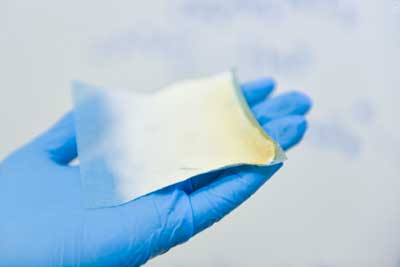
a dezvoltat nanoparticule magnetice acoperite cu polistiren pentru a detecta cantitățile de piretroide din probele de legume cu frunze. Aceste nanoparticule cu miezuri magnetice, atunci când sunt adăugate în scopuri de screening la o probă lichidă din culturi vegetale, pot atrage în mod eficient compușii piretroizi. Nanoparticulele pot fi apoi separate ușor de restul eșantionului prin mijloace magnetice pentru analiză.

Posted: Feb 21, 2018

Rapid detection of pesticide residue with nanoparticles

(Nanowerk News) NUS food scientists have developed polystyrene coated magnetic nanoparticles which allow rapid screening of trace amounts of pesticide residue in vegetable crops (Food Chemistry, „Pyrethroid residue determination in organic and conventional vegetables using liquid-solid extraction coupled with magnetic solid phase extraction based on polystyrene-coated magnetic nanoparticles”).

process involved in using the polystyrene coated magnetic nanoparticles to extract trace pesticide residues from vegetable samples
Figure illustrates the process involved in using the polystyrene coated magnetic nanoparticles (“micro magnets”) to extract trace pesticide residues from vegetable samples. (Image: Yu Xi)
Pesticides are often used in vegetable farming to increase crop yield by controlling agricultural pests that can damage crops. Pyrethroids are a type of synthetic pesticide which are widely applied to crops. However, there are increasing concerns with pyrethroid residue on vegetables as long-term exposure may lead to health issues.
A research team led by Prof YANG Hongshun from the Food Science & Technology Programme at the Department of Chemistry, NUS has developed polystyrene coated magnetic nanoparticles to detect trace amounts of pyrethroids in leafy vegetable samples. These nanoparticles with magnetic cores, when added for screening purposes to a liquid sample of vegetable crops, can effectively attract the pyrethroid compounds. The nanoparticles can then be separated easily from the rest of the sample by magnetic means for analysis.
Transmission electron microscopy image of the polystyrene coated magnetic nanoparticles
Transmission electron microscopy image of the polystyrene coated magnetic nanoparticles. The nanoparticles have a diameter of about 20 nm. (Image: NUS)
Conventional screening methods typically use tedious processes such as filtration and centrifugation to isolate and ascertain the presence of pyrethroids. The approach developed by Prof Yang and his team is a simpler process in which the extraction process can be completed within an hour. Possible applications could include vegetable screening and monitoring programmes to improve food supply safety.
Ms YU Xi, a Ph.D. student working on the project said, “In terms of the accuracy, the recovery rates in our experiments for five kinds of commonly used pyrethroids were greater than 91.6%, which is comparable to conventional methods. This method is also more cost effective as the nanoparticles can be washed and recycled after use.”
“Chemical residue in food products is an important food safety issue for consumers. This method offers a fast and effective way to screen vegetable samples for residue pesticides. It can potentially be adapted for other types of food samples. With small modifications, various food products such as fruits, nuts, meat and vegetable oils can also be tested using this method for possible food hazards,” added Prof Yang.
Source: National University of Singapore

Cristalele robotice care merg pe jos(Robotic crystals that walk n’roll)

Ei au dezvoltat cristale robotice care merg încet ca un vierme și se rostogolesc de 20.000 de ori mai repede decât viteza de mers pe jos. Aceste cristale organice în mișcare, au un potențial mare ca material pentru roboți moi în viitor, în special în domeniul medical.Cristalele noastre ar putea fi folosite ca un nou tip de material pentru roboți moi, cu o siguranță și confort îmbunătățite. În timp ce societatea noastră se îmbătrânește, trebuie să luăm în considerare relația simbiotică dintre oameni și roboți, deoarece roboții pot avea grijă de oameni, inclusiv de vârstnici, în viitorul apropiat „.

Posted: Feb 21, 2018

Robotic crystals that walk n’roll

(Nanowerk News) Scientists at Waseda University may have come a step closer to innovating soft robots to care for people. Its material, however, is something you may have never expected.

They have developed robotic crystals that walk slowly like an inchworm and roll 20,000 times faster than its walking speed. These autonomously moving, organic crystals have great potential as material for soft robots in the future, especially in the medical field.
soft robotics material
“The crystals are flexible, durable and lightweight,” says Hideko Koshima, a visiting professor at Waseda’s Research Organization for Nano & Life Innovation. “They could possibly be used as material for microrobots which transport substances in the microscopic region, for instance, carrying egg cells for infertility treatment or conducting invasive surgery.”
Their study was published in Nature Communications („Walking and rolling of crystals induced thermally by phase transition”).
Crystals have been expected to play an important role as locomotive material for soft robots, and its mechanical motion has been explored in terms of bending and expansion/contraction. However, more variety in movements was sought for.
Previously in 2016, Koshima’s research group reported that chiral azobenzene crystals, which were also used in the recent study, bend with exposure to light. During this investigation, the crystals were found to undergo phase transition at 145°C without fracturing, even after repeated heating and cooling.
soft robotics material
Based on these findings, they designed the robotic crystals demonstrating two different modes of locomotion: walking and rolling.
Using an infrared thermography camera and a digital optical microscope, the group observed that thin, long plate-like crystals with thickness gradient in the longitudinal direction walked slowly like an inchworm through repeated bending and straightening under heating and cooling cycles near the transition temperature on a hot plate, moving 1.5mm in 30 minutes. On the other hand, thinner, longer plate-like crystals with width gradient rolled 3.1mm in 0.2 seconds, accelerated by tilted bending then flipping, under only one process of heating and cooling.
“The driving force behind the walking and rolling locomotion was generated from the unsymmetrical shape of the crystals,” Koshima explains.
Although the scientists would need to further study how to precisely control the direction and speed of the robotic crystals for practical application, this finding opens a door to a new field of crystal robotics, and on a larger scale, brings us a step closer to addressing issues related to population aging.
“Currently, robots are rigid and heavy, making them unsuitable for daily interaction with humans,” points out Koshima. “Our crystals could be used as a new kind of material for soft robots with improved safety and comfort. As our society ages, we must consider the symbiotic relationship between humans and robots, since robots may look after people, including the elderly, in the near future.”
Koshima is now attempting to produce robotic crystals which undergo phase transition at a much lower temperature.
Source: Waseda University

Tuning surse de lumină cuantică(Tuning quantum light sources)

au modificat chimic tuburi mici de atomi de carbon. Aceste tuburi sunt primul material care emite fotoni singuri la temperatura camerei și lungimi de undă ale telecomunicațiilor. Nici un alt sistem de materiale nu a putut să îndeplinească simultan aceste două condiții critice de operare

Posted: Feb 21, 2018

Tuning quantum light sources

(Nanowerk News) Knowing the details of the quantum world—electrons and packets of light called photons—could radically improve computers and sensors. A critical component to making devices that harness the quantum world is a source that emits a regular stream of single photons.

Scientists at the Center for Integrated Nanotechnologies and their colleagues chemically modified tiny tubes of carbon atoms. These tubes are the first material to emit single photons at room temperature and telecom wavelengths. No other material system has been able to meet these two critical operational conditions simultaneously (Nature Photonics, „Tunable room-temperature single-photon emission at telecom wavelengths from sp3 defects in carbon nanotubes”).
The schematic shows the emission of a single photon (red) from a chemically modified carbon nanotube when excited by green light
The schematic shows the emission of a single photon (red) from a chemically modified carbon nanotube when excited by green light. (Image: Xiaowei He, Center for Integrated Nanotechnologies, Los Alamos)
This critical combination of features makes integrating devices that exploit the quantum world with existing optical networks a very real possibility. That is, the carbon nanotubes that allow for ultra secure data encryption could be used with today’s telecom network. The carbon nanotubes could also be integrated into devices for more sensitive sensors and future quantum computers.
The ability to integrate fiber-based quantum information technology into existing optical networks would be a significant step towards applications in quantum communication. To achieve this, quantum light sources must be able to emit single photons at telecommunication wavelengths and at room temperature.
This combination of features has been elusive until now, despite two decades of research efforts. Some systems (e.g., self-assembled quantum dots) emit at telecommunication wavelengths but require cryogenic cooling. Other systems (for example, diamond nitrogen-vacancy centers) operate at room temperature but can only emit in the visible spectral range.
Scientists at the Center for Integrated Nanotechnologies and their collaborators have produced functionalized carbon nanotubes that have both of these critical features. Carbon nanotubes had been previously identified as a promising quantum light source; however, the unstable photon emissions they generated were problematic.
The answer uncovered by scientists at the Center for Integrated Nanotechnologies was to chemically modify the nanotubes through aryl-diazonium reactions. This introduced defects to the nanotubes that allowed for controllable single-photon emission at both room temperature and telecommunication wavelengths. The team also demonstrated that the emission wavelength was tunable. Just as the tension and length of a violin string can be adjusted to achieve different frequencies, the diameter of the functionalized carbon nanotubes can be varied to generate different emission wavelengths.
Not only do these results have significance for basic science, including functionalization chemistry and quantum metrology, but they also open the door to exciting developments in quantum technologies.
Source: U.S. Department of Energy, Office of Science

Computerele ajută la descoperirea unui material nou, ieftin pentru a face LED-urile cu o calitate ridicată a culorilor(Computers aid discovery of new, inexpensive material to make LEDs with high color quality)

un nou material fosfor pentru LED-uri albe care este ieftin și ușor de făcut. Cercetatorii au construit prototipuri de becuri cu LED-uri albe, folosind noul fosfor. Prototipurile au avut o calitate mai bună a culorii decât multe LED-uri comerciale prezente pe piață.
Noul fosfor – realizat din elementele stronțiu, litiu, aluminiu și oxigen (o combinație denumită „SLAO”)

Posted: Feb 19, 2018

Computers aid discovery of new, inexpensive material to make LEDs with high color quality

(Nanowerk News) A team led by engineers at the University of California San Diego has used data mining and computational tools to discover a new phosphor material for white LEDs that is inexpensive and easy to make. Researchers built prototype white LED light bulbs using the new phosphor. The prototypes exhibited better color quality than many commercial LEDs currently on the market.

Researchers published the new phosphor on Feb. 19 in the journal Joule („Mining Unexplored Chemistries for Phosphors for High-Color-Quality White-Light-Emitting Diodes”).
SLAO Phosphor
Under UV light, the SLAO phosphor emits either green-yellow or blue light depending on the chemical activator mixed in. (Image: David Baillot/UC San Diego Jacobs School of Engineering)
Phosphors, which are substances that emit light, are one of the key ingredients to make white LEDs. They are crystalline powders that absorb energy from blue or near-UV light and emit light in the visible spectrum. The combination of the different colored light creates white light.
The phosphors used in many commercial white LEDs have several disadvantages, however. Many are made of rare-earth elements, which are expensive, and some are difficult to manufacture. They also produce LEDs with poor color quality.
Researchers at UC San Diego and Chonnam National University in Korea discovered and developed a new phosphor that avoids these issues. It is made mostly of earth-abundant elements; it can be made using industrial methods; and it produces LEDs that render colors more vividly and accurately.
The new phosphor–made of the elements strontium, lithium, aluminum and oxygen (a combination dubbed „SLAO”)–was discovered using a systematic, high-throughput computational approach developed in the lab of Shyue Ping Ong, a nanoengineering professor at the UC San Diego Jacobs School of Engineering and lead principal investigator of the study. Ong’s team used supercomputers to predict SLAO, which is the first known material made of the elements strontium, lithium, aluminum and oxygen. Calculations also predicted this material would be stable and perform well as an LED phosphor. For example, it was predicted to absorb light in the near-UV and blue region and have high photoluminescence, which is the material’s ability to emit light when excited by a higher energy light source.
LED Phosphor Color Quality Comparison
Untouched shots lit by (left) an LED containing a conventional phosphor and (right) a prototype LED containing the new SLAO phosphor. (Image: Yoon Hwa Kim and Wong Bin Im/Chonnam National University in Korea)
Researchers in the lab of Joanna McKittrick, a materials science professor at the Jacobs School of Engineering, then figured out the recipe needed to make the new phosphor. They also confirmed the phosphor’s predicted light absorption and emission properties in the lab.
A team led by materials science professor Won Bin Im at Chonnam National University in Korea optimized the phosphor recipe for industrial manufacturing and built white LED prototypes with the new phosphor. They evaluated the LEDs using the Color Rendering Index (CRI), a scale that rates from 0 to 100 how accurate colors appear under a light source. Many commercial LEDs have CRI values at around 80. LEDs made with the new phosphor yielded CRI values greater than 90.

The computational quest for a new material

Thanks to the computational approach developed by Ong’s team, discovery of the phosphor took just three months–a short time frame compared to the years of trial-and-error experiments it typically takes to discover a new material.
„Calculations are quick, scalable and cheap. Using computers, we can rapidly screen thousands of materials and predict candidates for new materials that have not yet been discovered,” Ong said.
Ong, who leads the Materials Virtual Lab and is a faculty member in the Sustainable Power and Energy Center at UC San Diego, uses a combination of high-throughput calculations and machine learning to discover next-generation materials for energy applications, including batteries, fuel cells and LEDs. The calculations were performed using the National Science Foundation’s Extreme Science and Engineering Discovery Environment at the San Diego Supercomputer Center.
In this study, Ong’s team first compiled a list of the most frequently occurring elements in known phosphor materials. To the researchers’ surprise, they found that there are no known materials containing a combination of strontium, lithium, aluminum and oxygen, which are four common phosphor elements. Using a data mining algorithm, they created new phosphor candidates containing these elements and performed a series of first-principles calculations to predict which would perform well as a phosphor. Out of 918 candidates, SLAO emerged as the leading material. It was predicted to be stable and exhibit excellent photoluminescence properties.
„It’s not only remarkable that we were able to predict a new phosphor compound, but one that’s stable and can actually be synthesized in the lab,” said Zhenbin Wang, a nanoengineering Ph.D. candidate in Ong’s research group and co-first author of the study.
The phosphor’s main limitation is its less than ideal quantum efficiency–how efficiently it converts incoming light to light of a different color–of about 32 percent. However, researchers note that it retains more than 88 percent of its emission at typical LED operating temperatures. In commercial LEDs, there’s usually a tradeoff with color quality, Ong noted. „But we want the best of both worlds. We have achieved excellent color quality. Now we are working on optimizing the material to improve quantum efficiency,” Ong said.
Source: University of California – San Diego

Ecranul de piele ultra-elastic, foarte elastic, prezintă citiri electrocardiogramă(Ultrathin, highly elastic skin display shows electrocardiogram readings)

Un nou ultrastensiv, elastic, care se potrivește perfect pe piele, poate arăta forma de undă în mișcare a unei electrocardiograme înregistrate de un senzor de electrod care se respiră. Combinat cu un modul de comunicare fără fir, acest sistem integrat de senzori biomedicali – numit „electronica pielii” – poate transmite date biometrice către nor.Senzorul de piele nanomesh poate fi purtat pe piele continuu timp de o săptămână fără a provoca inflamații. Deși acest senzor, dezvoltat într-un studiu anterior, a fost capabil să măsoare temperatura, presiunea și mioelectricitatea (proprietățile electrice ale mușchilor), a înregistrat cu succes o electrocardiogramă pentru prima dată în ultimele cercetări.

Posted: Feb 19, 2018

Ultrathin, highly elastic skin display shows electrocardiogram readings

(Nanowerk News) A new ultrathin, elastic display that fits snugly on the skin can show the moving waveform of an electrocardiogram recorded by a breathable, on-skin electrode sensor. Combined with a wireless communication module, this integrated biomedical sensor system – called „skin electronics” – can transmit biometric data to the cloud.

This latest research by a Japanese academic-industrial collaboration, led by Professor Takao Someya at the University of Tokyo’s Graduate School of Engineering, is slated for a news briefing and talk („Continuous Health-Monitoring With Ultraflexible On-Skin Sensors)” at the AAAS Annual Meeting in Austin, Texas on February 17th.
Ultrathin Deformable Skin Display Withstands Stretching
The soft, flexible skin display is about 1 millimeter thick, and consists of a 16 x 24 array of micro LEDs and stretchable wiring mounted on a rubber sheet. It can withstand repeated stretching, by as much as 45 percent of its original length, without showing any loss in function of its electrical and mechanical properties. (Image: Takao Someya Research Group)
Thanks to advances in semiconductor technology, wearable devices can now monitor health by first measuring vital signs or taking an electrocardiogram, and then transmitting the data wirelessly to a smartphone. The readings or electrocardiogram waveforms can be displayed on the screen in real time, or sent to either the cloud or a memory device where the information is stored.
The newly-developed skin electronics system aims to go a step further by enhancing information accessibility for people such as the elderly or the infirm, who tend to have difficulty operating and obtaining data from existing devices and interfaces. It promises to help ease the strain on home healthcare systems in aging societies through continuous, non-invasive health monitoring and self-care at home.
The new integrated system combines a flexible, deformable display with a lightweight sensor composed of a breathable nanomesh electrode and wireless communication module. Medical data measured by the sensor, such as an electrocardiogram, can either be sent wirelessly to a smartphone for viewing or to the cloud for storage. In the latest research, the display showed a moving electrocardiogram waveform that was stored in memory.
The skin display, developed by a collaboration between researchers at the University of Tokyo’s Graduate School of Engineering and Dai Nippon Printing (DNP), a leading Japanese printing company, consists of a 16 x 24 array of micro LEDs and stretchable wiring mounted on a rubber sheet.
„Our skin display exhibits simple graphics with motion,” says Someya. „Because it is made from thin and soft materials, it can be deformed freely.”
The display is stretchable by as much as 45 percent of its original length.
It is far more resistant to the wear and tear of stretching than previous wearable displays. It is built on a novel structure that minimizes the stress resulting from stretching on the juncture of hard materials, such as the micro LEDs, and soft materials, like the elastic wiring – a leading cause of damage for other models.
Thumbs-up Icon On Skin Display
An integrated „skin electronics” system allows health monitoring at home and gives doctors remote access to biometric data transmitted wirelessly to a medical cloud. It promises to enhance self-care and accessibility of medical information to various segments of the population, including children and the elderly. A thumbs-up image on the skin display serves as an indicator of good health. (Image: Takao Someya Research Group)
It is the first stretchable display to achieve superior durability and stability in air, such that not a single pixel failed in the matrix-type display while attached snugly onto the skin and continuously subjected to the stretching and contracting motion of the body.
The nanomesh skin sensor can be worn on the skin continuously for a week without causing any inflammation. Although this sensor, developed in an earlier study, was capable of measuring temperature, pressure and myoelectricity (the electrical properties of muscle), it successfully recorded an electrocardiogram for the first time in the latest research.
The researchers applied tried-and-true methods used in the mass production of electronics – specifically, screen printing the silver wiring and mounting the micro LEDs on the rubber sheet with a chip mounter and solder paste commonly used in manufacturing printed circuit boards. Applying these methods will likely accelerate the commercialization of the display and help keep down future production costs.
DNP is looking to bring the integrated skin display to market within the next three years by improving the reliability of the stretchable devices through optimizing its structure, enhancing the production process for high integration, and overcoming technical challenges such as large-area coverage.
„The current aging society requires user-friendly wearable sensors for monitoring patient vitals in order to reduce the burden on patients and family members providing nursing care,” says Someya. „Our system could serve as one of the long-awaited solutions to fulfill this need, which will ultimately lead to improving the quality of life for many.”
Source: University of Tokyo

Biocompatibile fibre de nanotehnologie anti-ardere care acționează ca „bandaje vii”(Biocompatible anti-burn nanotechnology fibers that act as ‘living bandages’)

Echipa de cercetători în domeniul nanotehnologiei a reușit să creeze „bandaje” din mai multe straturi fabricate din fibre biodegradabile și nanofilme bioactive multifuncționale, care [bandaje] previne cicatrizarea și accelerează regenerarea țesuturilor.Adăugarea efectului antibacterian prin introducerea de nanoparticule de argint sau prin îmbinarea antibioticelor, precum și creșterea activității biologice la suprafața grupelor hidrofilice (-COOH) și a proteinelor din plasmă sanguină au oferit materialului proprietăți unice de vindecare.
Sa observat o accelerare semnificativă a procesului de vindecare, regenerarea cu succes a țesutului normal acoperit cu piele și prevenirea cicatrizării pe pielea arsă sau deteriorată la aplicarea acestor bandajeri din materialul dezvoltat într-o zonă afectată

Posted: Feb 16, 2018

Biocompatible anti-burn nanotechnology fibers that act as ‘living bandages’

(Nanowerk News) In regenerative medicine, and particularly in burn therapy, the effective regeneration of damaged skin tissue and the prevention of scarring are usually the main goals. Scars form when skin is badly damaged, whether through a cut, burn, or a skin problem such as acne or fungal infection.

Scar tissue mainly consists of irreversible collagen and significantly differs from the tissue it replaces, having reduced functional properties. For example, scars on skin are more sensitive to ultraviolet radiation, are not elastic, and the sweat glands and hair follicles are not restored in the area.
The solution of this medical problem was proposed by the researchers from the NUST MISIS Inorganic Nanomaterials Laboratory, led by PhD Anton Manakhov, a senior researcher. The team of nanotechnology scientists has managed to create multi-layer ‘bandages’ made of biodegradable fibers and multifunctional bioactive nanofilms, which [the bandages] prevent scarring and accelerate tissue regeneration.
Multi-layer bandages made of biodegradable fibers and multifunctional bioactive nanofilms
Multi-layer bandages made of biodegradable fibers and multifunctional bioactive nanofilms. (Image: NUST MSIS)
The addition of the antibacterial effect by the introduction of silver nanoparticles or joining antibiotics, as well as the increase of biological activity to the surface of hydrophilic groups (-COOH) and the blood plasma proteins have provided unique healing properties to the material.
A significant acceleration of the healing process, the successful regeneration of normal skin covering tissue, and the prevention of scarring on the site of burnt or damaged skin have been observed when applying these bandages made of the developed material to an injured area. The antibacterial components of multifunctional nanofibers decrease inflammation, and the blood plasma with an increased platelet level — vital and multi-purposed for every element in the healing process — stimulates the regeneration of tissues. The bandages should not be removed or changed during treatment as it may cause additional pain to the patient. After a certain period of time, the biodegradable fiber simply “dissolves” without any side effects.
“With the help of chemical bonds, we were able to create a stable layer containing blood plasma components (growth factors, fibrinogens, and other important proteins that promote cell growth) on a polycaprolactone base. The base fibers were synthesized by electroforming. Then, with the help of plasma treatment, to increase the material`s hydrophilic properties, a polymer layer containing carboxyl groups was applied to the surface. The resulting layer was enriched with antibacterial and protein components”, noted Elizabeth Permyakova, one of the project members and laboratory scientists.
The research team has already conducted a series of pre-clinical trials jointly with the Research Institute of Experimental and Clinical Medicine (Novosibirsk, Russia). In vitro results have shown that with the application of these innovative bandages the regeneration process has been accelerated twice as quickly. In the near future, the team expects to get results of in vivo drug testing.
Source: NUST MSIS

Experimentele de precizie relevă lacune în teoria lui van der Waals(Precision experiments reveal gaps in van der Waals theory)

Descoperirea grafenului, cu raportul său ridicat de rezistență la greutate, flexibilitate, conductivitate electrică și capacitatea de a forma o barieră impenetrabilă, a condus la o explozie de interes în solidele 2D. TiS 2 este un material arhetipal van der Waals, cu straturi care conțin foi de titan și sulf care interacționează prin legături chimice puternice, unde electronii sunt împărțiți între atomi, rezultând o structură relativ fixă. Între aceste foi, interacțiunile S … S van der Waals atrage straturile unul către altul, permițându-le să se dezvolte, formând materiale solide

Posted: Feb 16, 2018

Precision experiments reveal gaps in van der Waals theory

(Nanowerk News) The discovery of graphene, with its high strength-to-weight ratio, flexibility, electrical conductivity, and ability to form an impenetrable barrier, led to an explosion of interest in 2D solids. Weak, long-range interactions give 2D solids some of their most interesting behaviors; therefore, understanding these interactions is crucial for further developing these materials. However, experimental support for theoretical modelling of the van der Waals interactions that hold these materials’ layers together has been wanting.

Now, an international research group led by the University of Tsukuba and Aarhus University has performed synchrotron X-ray diffraction experiments on titanium disulfide (TiS2)—a transition metal dichalogenide (TMD) material with a layered 2D structure—and compared the results with theoretical calculations. Their benchmark work was recently published in Nature Materials („X-ray electron density investigation of chemical bonding in van der Waals materials”).
Precision experiments reveal gaps in van der Waals theory
“The interaction between layers in van der Waals materials such as TiS2 has a significant bearing on their modification, processing, and assembly,” study co-author Eiji Nishibori says. “By modelling experimental synchrotron data and comparing it with density functional theory calculations, we revealed surprising information about the nature of the electron sharing between layers in these materials.”
TiS2 is an archetypal van der Waals material, with layers comprising sheets of titanium and sulfur interacting through strong chemical bonds, where electrons are shared between atoms, resulting in a relatively fixed structure. Between these sheets, long-range S…S van der Waals interactions attract the layers to one another allowing them to build up, forming solid materials. These interactions are known to be much weaker than those within the 2D sheets, however, using high-energy synchrotron X-ray radiation to precisely measure a single TiS2 crystal, the researchers were able to show that the interlayer interactions are in fact stronger than theory indicates, and involve significant electron sharing.
“This work provides a fundamental understanding of an exciting class of materials with numerous potential applications in technologies such as ion batteries, catalysis, and superconductors,” lead author Hidetaka Kasai says. “Our experiments are the first to reveal the true nature of the interactions that make 2D materials so interesting, and we hope they will underpin many future developments in this area.”
The outstanding agreement of the synchrotron diffraction data with theoretical calculations in describing the intralayer Ti-S interactions, supports the validity of these new-found differences for the long-range interactions across the interlayer gaps. The findings are expected to substantially contribute to the fundamental understanding of weak chemical bonding in 2D layered materials in general, and to the development of TMD materials.
Source: University of Tsukuba

Părul urs polar inspiră textile termice îmbunătățite din nanotehnologie(Polar bear hair inspires nanotechnology enhanced thermal textile)

Textilul țesut cu fibre biomimetice are o izolație termică excelentă, o capacitate activă de electro-încălzire când este dopat cu nanotuburi de carbon (CNT), o bună uzură și o respirabilitate, făcându-l un material promițător pentru izolarea termică și gestionarea termică personală.Textile țesute cu astfel de fibre biomimetice prezintă o excelentă proprietate de izolare termică, precum și o bună aerisire și uzură.
Pe lângă izolarea pasivă a pierderilor de căldură, materialul textil ar putea funcționa și ca încălzitor care poate fi purtat cu materiale electrotehnice, cum ar fi CNT, pentru a determina reacția termică rapidă și electrofilarea uniformă, menținând în același timp caracterul moale și poros pentru o uzură confortabilă.

osted: Feb 16, 2018

Polar bear hair inspires nanotechnology enhanced thermal textile

(Nanowerk News) Inspired by the microstructure and thermal insulation function of the polar bear hair, scientists have used a freeze-spinning technique to continuously fabricate silk fibroin solution into a fiber with aligned porous microstructure.

The textile woven with the biomimetic fibers has an excellent thermal insulation, active electroheating capacity when doped with carbon nanotubes (CNTs), good wearability and breathability, making it a promising material for thermal insulation and personal thermal management.
This work by researchers at Zhejiang University in China has been reported in Advanced Materials („A Thermally Insulating Textile Inspired by Polar Bear Hair”).
Polar bear hair inspires thermal textile
Polar bear hair with hollow core and aligned shell, and continuous and large-scale fabrication of biomimetic porous fiber. a) Photograph of a polar bear. b,c) SEM images showing the hollow core and aligned shell of a polar bear hair, respectively. d) Schematic illustration of the “freezespinning” technique, combining “directional freezing” with “solution spinning” to realize continuous and large-scale fabrication of biomimetic fibers with aligned porous structure, mimicking the polar bear hair. The silk fibroin solution extruded from a pump-controlled syringe is gradually frozen when it passes through a cold copper ring. Collected by a motor, the frozen fiber is further freeze-dried to reserve its porous structure and subsequently woven into a textile. e) Optical image showing a porous fiber collected in a roll. f,g) Optical (f) and SEM (g) images showing a woven textile of biomimetic porous fiber. The fiber diameter is around 200 µm. (© Wiley-VCH Verlag) (click on image to enlarge)
The team uses a freeze-spinning method to realize continuous and large-scale fabrication of fibers with aligned porous structure, mimicking polar bear hairs, which is difficult to achieve by other methods.
Textile woven with such biomimetic fibers shows an excellent thermal insulation property as well as good breathability and wearability.
In addition to passively insulate heat loss, the textile could also function as a wearable heater, when doped with electroheating materials such CNTs, to induce fast thermal response and uniform electroheating while maintaining its soft and porous nature for comfortable wearing.
By Michael is author of two books by the Royal Society of Chemistry: Nano-Society: Pushing the Boundaries of Technology and Nanotechnology: The Future is Tiny.