NATO este în curs de elaborare a unor orientări clare privind utilizarea atacurilor cibernetice pentru angajarea inamicului, luând în considerare posibilitatea de a adopta o abordare mai robustă
Senzorii cu un dispozitiv de identificare RFID se află în centrul IOT. Această nouă dezvoltare poate oferi diverse aplicații, cum ar fi monitorizarea wireless fără fir fără baterii, pentru procesele de fabricație care sunt sensibile la umiditate, siguranță alimentară, asistență medicală și deșeuri nucleare.
Posted: Jan 08, 2018
Graphene sensors embedded into RFIDs for wireless humidity sensing
(Nanowerk News) Researchers at The University of Manchester have devised graphene sensors embedded into RFIDs, which have the potential to revolutionise the Internet of Things (IoT).
By layering graphene-oxide (a derivative of graphene) over graphene to create a flexible heterostructure the team have developed humidity sensors for remote sensing with the ability to connect to any wireless network.
Graphene was the world’s first two-dimensional material isolated in 2004 at The University of Manchester, it is stronger than steel, lightweight, flexible and more conductive than copper.
Since then a whole family of other 2D materials have been discovered and continues to grow.
Using graphene and other 2D materials, scientists can layer these materials, similar to stacking bricks of Lego in a precisely chosen sequence known as van der Waals heterostructures to create high-performance structures tailored to a specific purpose.
Sensors with a RFID enabler are at the heart of the IoT. This new development can provide various applications such as battery-free smart wireless monitoring for manufacturing processes that are sensitive to moisture, food safety, healthcare and nuclear waste.
The developed technique has the potential to simplify how the information is gathered through its wireless system, nor is it is limited to a particular wireless network and has the ability to be compatible with networks including WiFi and 5G.
Dr Zhirun Hu who led the work said: The excitement does not end with this new application here, but leads to the future possibilities of integrations of this technique with other 2D materials to open up a new horizon of wireless sensing applications.
Professor Sir Kostya Novoselov, who won the Nobel Prize in Physics and coordinated the project, added: It is the first example of the printable technology where several 2D materials come together to create a functional device immediately suitable for industrial applications. The Internet of Things is the fast growing segment of technology, and I’m sure that 2D materials will play an important role there.
În al doilea rând, utilizează o căptușeală din poliester „alimentat de [Cocona] 37.5® Active Particle Technology”, o țesătură tehnică cu particule de carbon, pe care Vertx a rebrandat-o ca VaporCore ™. Catchy. Țesătura de particule de carbon 37,5 / VaporCore are un efect de refacere a mirosului, blocare a mirosului și reflexie IR (infraroșu), astfel încât să vă mențină mai rece și mai uscat, să vă păstrați mirosul mai bine și, de fapt, purtați-o, deoarece reflectă energia IR a corpului dumneavoastră înapoi în voi
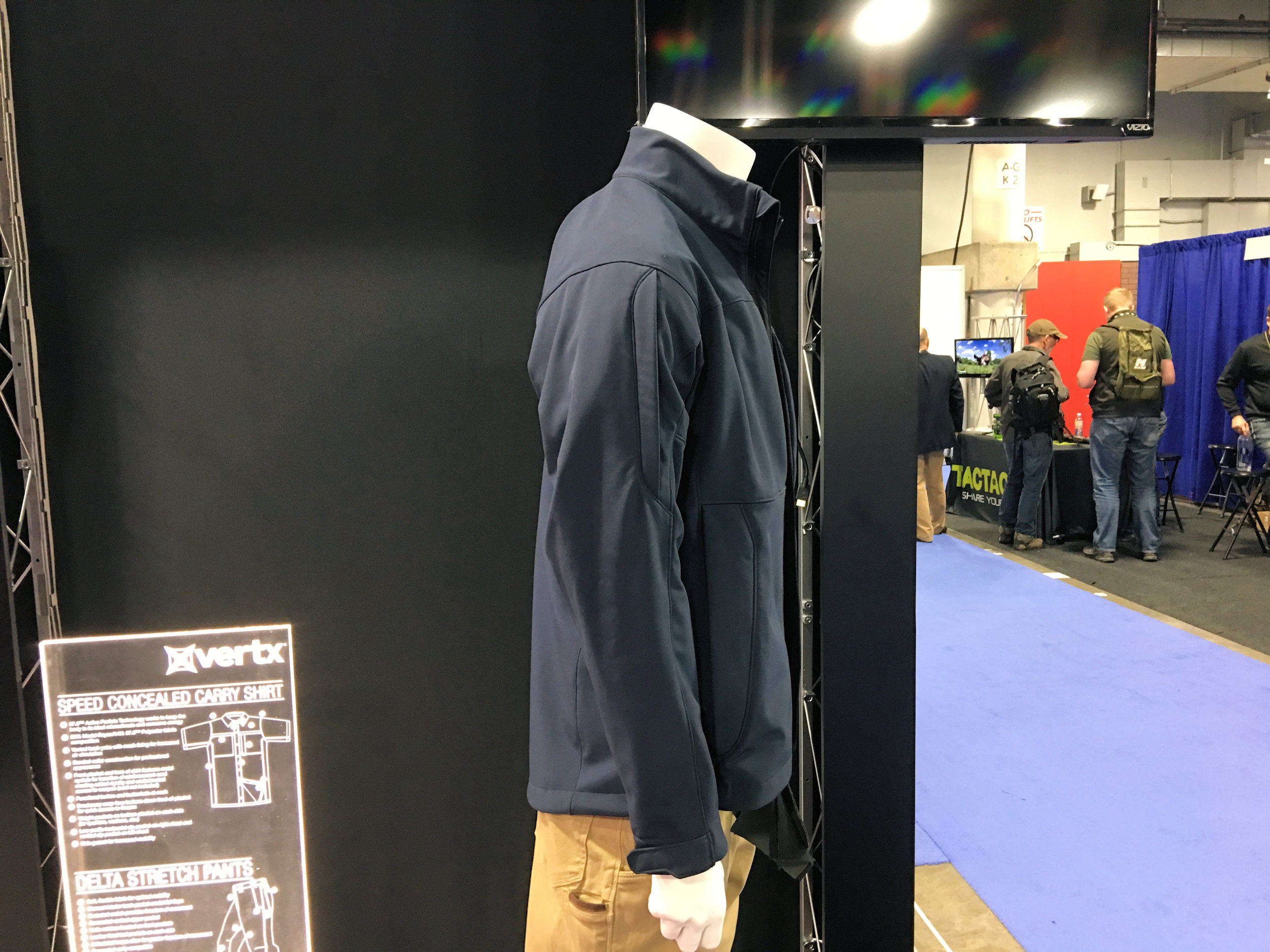
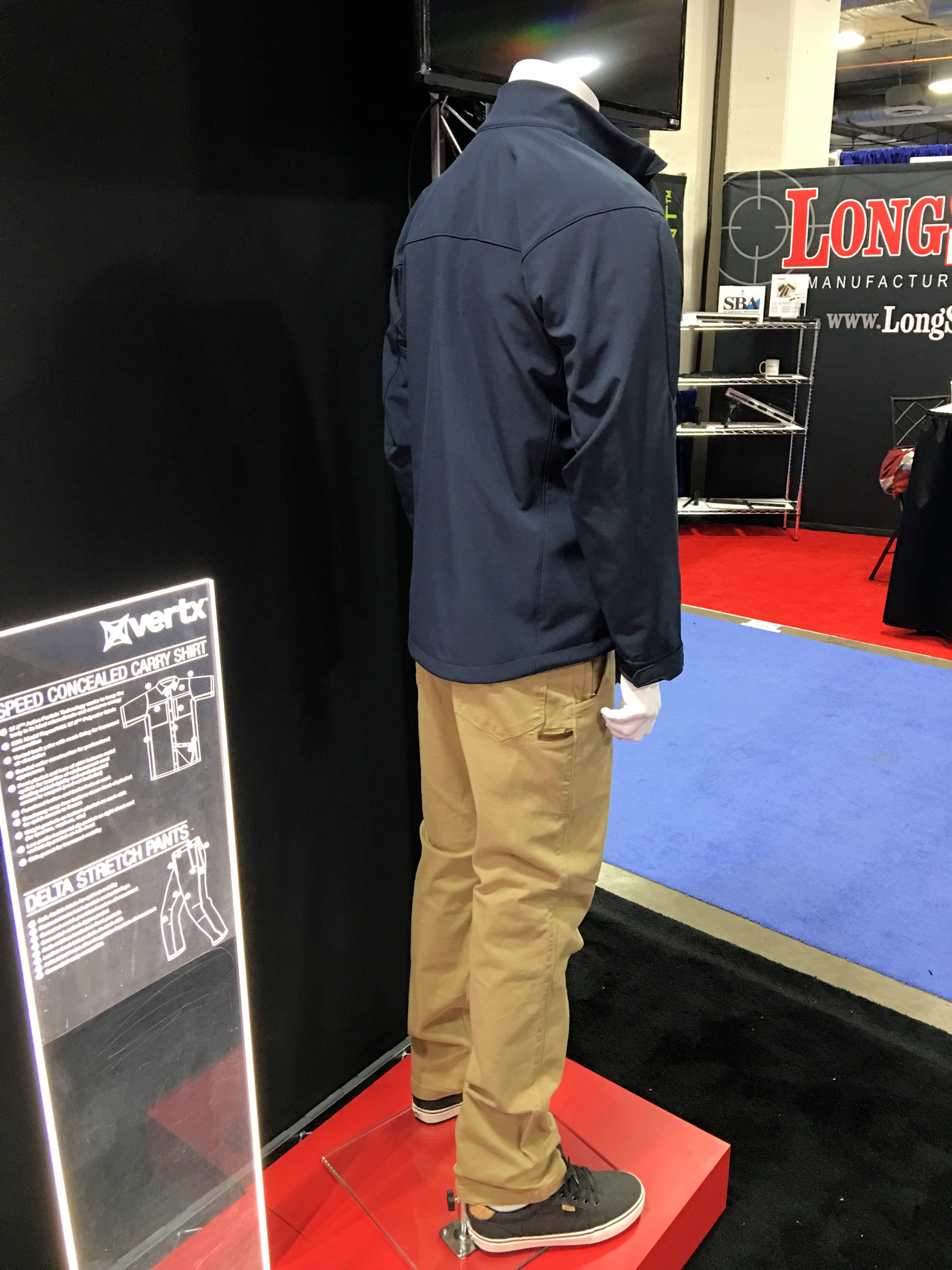
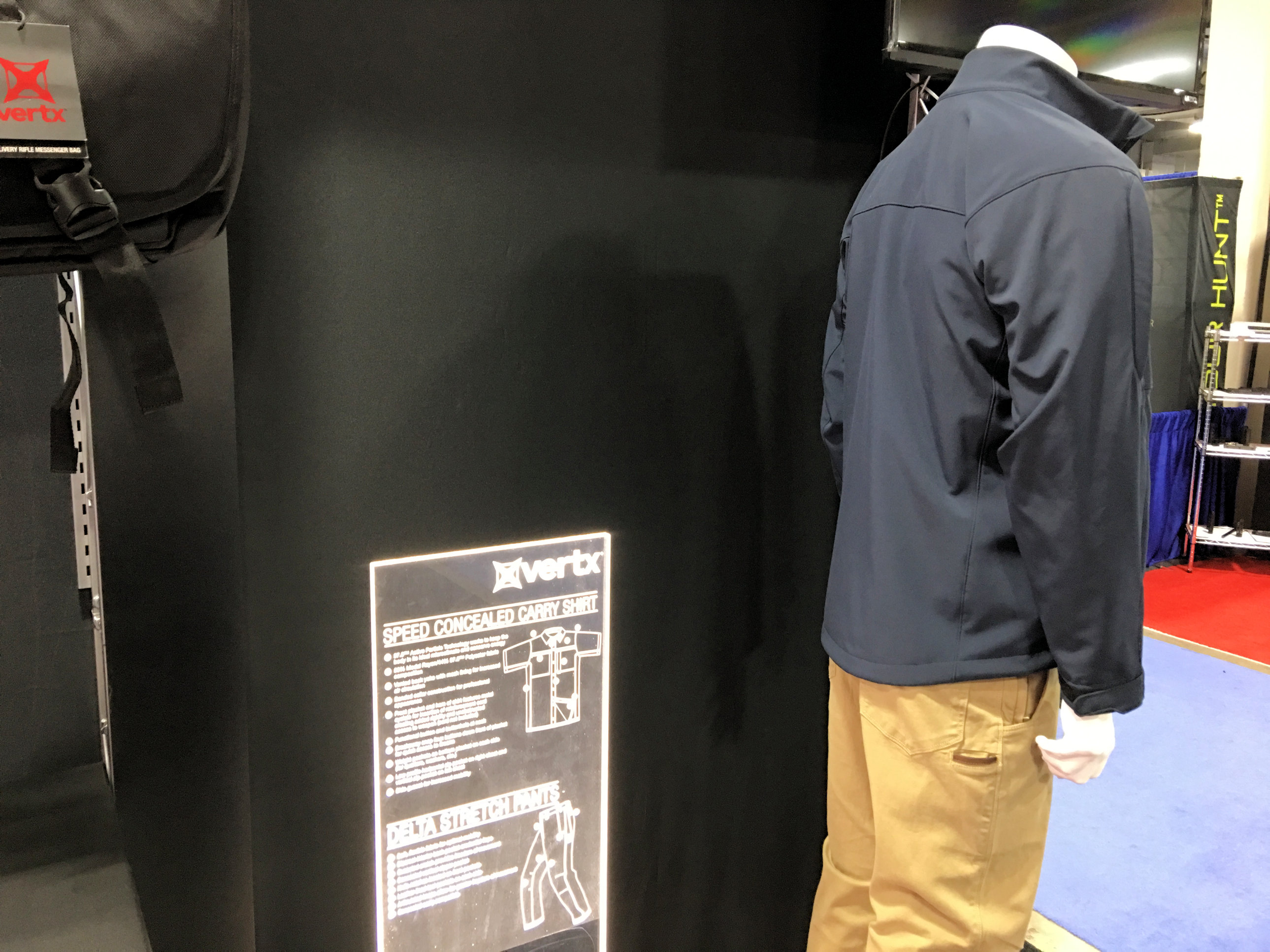
Vertx Downrange Soft Shell Jacket: Lo-Pro/Lo-Vis Combat/Tactical Jacket with with VaporCore Moisture-Wicking and Infrared (IR) Energy-Reflecting Fabric Tech for Concealed Carry (CCW) and Urban Combat/Tactical Ops! (Video!)
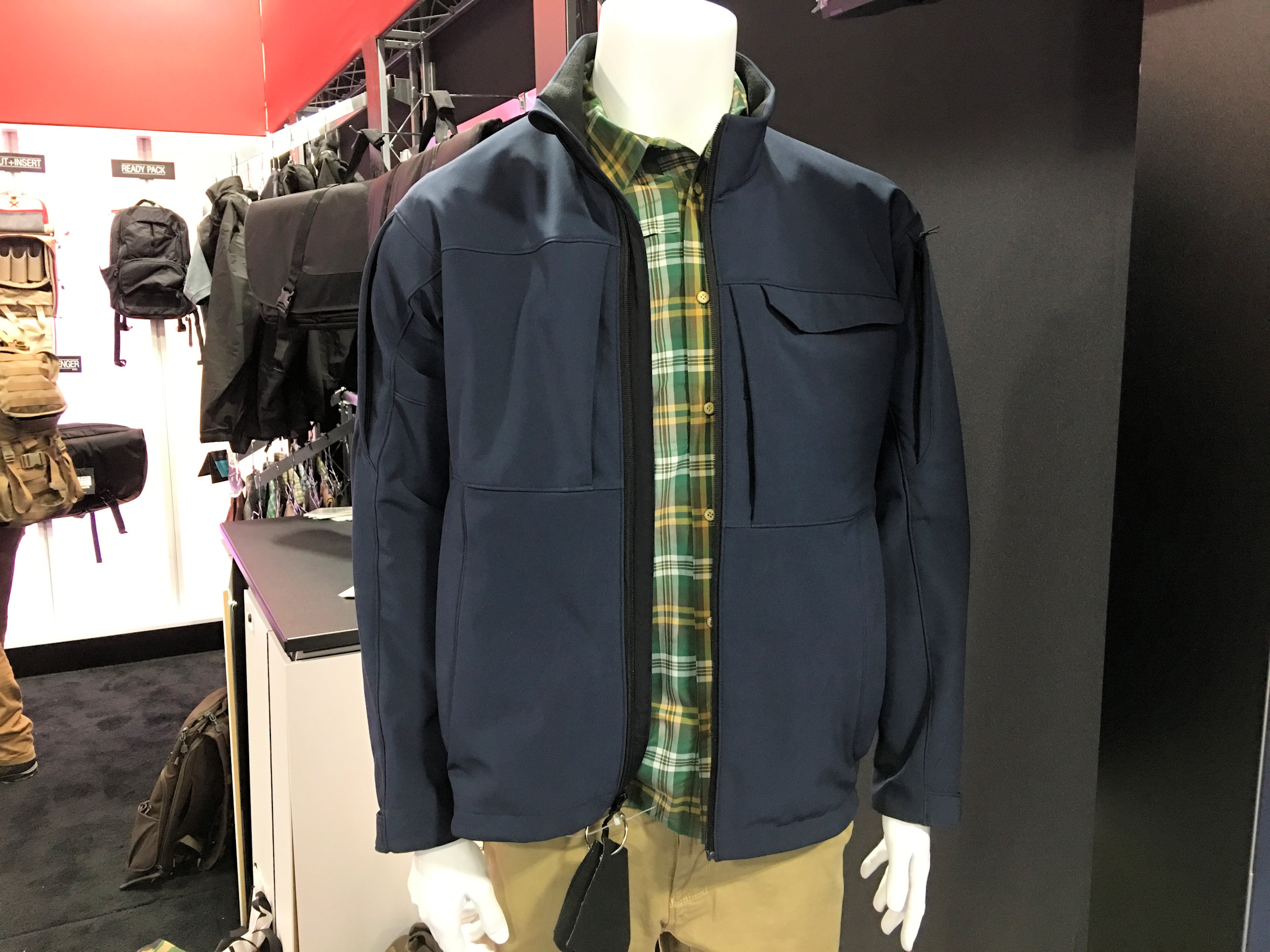
We here at DefenseReview (DR) DO like our technical clothing, and in that spirit, Vertx is making a very cool lo-pro/lo-vis (low-profile/low-visibility) softshell combat/tactical jacket for concealed carry (CCW) called the Vertx Downrange Soft Shell Jacket, and just about every aspect of it is pretty interesting. First, the jacket just looks good, with a minimalist, utilitarian non-“tactical” visual design aesthetic. It basically looks like a very modern high-tech performance technical jacket designed for conquering the outdoors, an adventure jacket, if you will, and it looks expensive, even though it really isn’t for what you’re getting. Second, it utilizes a polyester lining “powered by [Cocona] 37.5® Active Particle Technology” carbon-particle technical fabric that Vertx has rebranded as VaporCore™. Catchy. The 37.5/VaporCore carbon-particle fabric is mosture-wicking, odor-blocking, and IR (Infrared)-reflective, so it keeps you cooler and drier, keeps you smelling better, and, in effect, re-engergizes you while you’re wearing it, as it reflects your body’s IR energy back into you. Pretty cool.
Third, the Downrange Soft Shell Jacket’s outer softshell fabric is both water-repellant and 4-way stretch for additional utility, comfort and freedom of movement. Fourth, there’s lots of pockets both inside and outside. The external chest and arm pockets are covered/recessed under folds and flaps for a non-snag slick outer profile. And, as if all that’s not enough, the Downrange Soft Shell Jacket comes in some really great colors, including Shadow Grey, Bering Blue, Burnt Ash, and Slate Grey.
DR got a chance to see the Bering Blue variant of the Vertx Down Range Softshell Jacket at SHOT Show 2017, and we really liked the color, both from a pure aesthetic aspect, and because it’s non-“tactical”. However, we also particularly like the Burnt Ash color scheme, as it looks like a nice mix between grey and olive drab (OD) green. We can’t wait to see that color in person.
Defense Review digs this jacket–oh, and it’s currently on sale (as of this writing)!
The following information comes directly from the Vertx website:
“DOWNRANGE SOFT SHELL JACKET
An essential asset to the prepared professional
The Vertx® Downrange Softshell Jacket is an essential asset to the prepared professional whether in a training or operational environment. As functional as it is technical, the jacket provides 7 external pockets and 1 internal chest pocket for ample storage capacity. The polyester shell provides excellent water repellency, while the inclusion of spandex material and gusseted side panels allows freedom of movement. The polyester lining features VaporCore™, powered by 37.5® Active Particle Technology, which maintains your core body temperature allowing you to perform better, longer.
$154.95 $179.95
Specifications:
1 | Two strategically placed bicep pockets for ease of access
2 | Fleece lined hand pockets with zipper closures
3 | Snap-button chest pocket with flap for quick access to small items
4 | Two vertical zippered chest pockets for secure storage
5 | Internal left chest pocket with zipper closure
6 | Elongated tail for better back coverage while active
7 | Gusseted side panels for freedom of movement
8 | Drawcord adjustments hidden in hand pockets
9 | Adjustable Velcro cuff tabs
10 | Fleece lined interior for warmth
11 | Water repellent shell”
Simulările efectuate de oamenii de știință de la Universitatea Rice arată că nanomaterialele de carbon pot fi optimizate pentru a înlocui platina scumpe în catozi pentru celulele de combustie care generează electricitate.
Posted: Jan 05, 2018
How to optimize nanomaterials for fuel-cell cathodes
(Nanowerk News) Nitrogen-doped carbon nanotubes or modified graphene nanoribbons may be suitable replacements for platinum for fast oxygen reduction, the key reaction in fuel cells that transform chemical energy into electricity, according to Rice University researchers.
The findings are from computer simulations by Rice scientists who set out to see how carbon nanomaterials can be improved for fuel-cell cathodes. Their study reveals the atom-level mechanisms by which doped nanomaterials catalyze oxygen reduction reactions (ORR).
Simulations by Rice University scientists show how carbon nanomaterials may be optimized to replace expensive platinum in cathodes for electricity-generating fuel cells. (Image: Yakobson Research Group)
Simulations by Rice University scientists show how carbon nanomaterials may be optimized to replace expensive platinum in cathodes for electricity-generating fuel cells. Courtesy of the Yakobson Research Group
Simulations by Rice University scientists show how carbon nanomaterials may be optimized to replace expensive platinum in cathodes for electricity-generating fuel cells. Courtesy of the Yakobson Research Group
Theoretical physicist Boris Yakobson and his Rice colleagues are among many looking for a way to speed up ORR for fuel cells, which were discovered in the 19th century but not widely used until the latter part of the 20th. They have since powered transportation modes ranging from cars and buses to spacecraft.
The Rice researchers, including lead author and former postdoctoral associate Xiaolong Zou and graduate student Luqing Wang, used computer simulations to discover why graphene nanoribbons and carbon nanotubes modified with nitrogen and/or boron, long studied as a substitute for expensive platinum, are so sluggish and how they can be improved.
Doping, or chemically modifying, conductive nanotubes or nanoribbons changes their chemical bonding characteristics. They can then be used as cathodes in proton-exchange membrane fuel cells. In a simple fuel cell, anodes draw in hydrogen fuel and separate it into protons and electrons. While the negative electrons flow out as usable current, the positive protons are drawn to the cathode, where they recombine with returning electrons and oxygen to produce water.
The models showed that thinner carbon nanotubes with a relatively high concentration of nitrogen would perform best, as oxygen atoms readily bond to the carbon atom nearest the nitrogen. Nanotubes have an advantage over nanoribbons because of their curvature, which distorts chemical bonds around their circumference and leads to easier binding, the researchers found.
The tricky bit is making a catalyst that is neither too strong nor too weak as it bonds with oxygen. The curve of the nanotube provides a way to tune the nanotubes’ binding energy, according to the researchers, who determined that “ultrathin” nanotubes with a radius between 7 and 10 angstroms would be ideal. (An angstrom is one ten-billionth of a meter; for comparison, a typical atom is about 1 angstrom in diameter)
They also showed co-doping graphene nanoribbons with nitrogen and boron enhances the oxygen-absorbing abilities of ribbons with zigzag edges. In this case, oxygen finds a double-bonding opportunity. First, they attach directly to positively charged boron-doped sites. Second, they’re drawn by carbon atoms with high spin charge, which interacts with the oxygen atoms’ spin-polarized electron orbitals. While the spin effect enhances adsorption, the binding energy remains weak, also achieving a balance that allows for good catalytic performance.
The researchers showed the same catalytic principles held true, but to lesser effect, for nanoribbons with armchair edges.
“While doped nanotubes show good promise, the best performance can probably be achieved at the nanoribbon zigzag edges where nitrogen substitution can expose the so-called pyridinic nitrogen, which has known catalytic activity,” Yakobson said.
“If arranged in a foam-like configuration, such material can approach the efficiency of platinum,” Wang said. “If price is a consideration, it would certainly be competitive.”
Center au gasit un catalizator care curata nitrati toxici din apa de baut prin transformarea lor in aer si apa.am descoperit ca expunerea catalizatorilor la solutii care contin nitrati determina oxidarea indiului. Dar cand am adaugat apa cu hidrogen saturata, paladiul a determinat ca unii oxigen sa se lege cu hidrogenul si sa formeze apa, ceea ce a dus la mentinerea indiului intr-o stare redusa in care este liber sa spargi mai multe nitrati „.
Posted: Jan 05, 2018
Nanocatalyst cleans toxic nitrates from drinking water
(Nanowerk News) Engineers at Rice University’s Nanotechnology Enabled Water Treatment (NEWT) Center have found a catalyst that cleans toxic nitrates from drinking water by converting them into air and water.
Many areas of the United States are at risk for nitrate and nitrite contamination of drinking water due to overuse of agricultural fertilizers. (Image: USGS)
“Nitrates come mainly from agricultural runoff, which affects farming communities all over the world,” said Rice chemical engineer Michael Wong, the lead scientist on the study. “Nitrates are both an environmental problem and health problem because they’re toxic. There are ion-exchange filters that can remove them from water, but these need to be flushed every few months to reuse them, and when that happens, the flushed water just returns a concentrated dose of nitrates right back into the water supply.”
Wong’s lab specializes in developing nanoparticle-based catalysts, submicroscopic bits of metal that speed up chemical reactions. In 2013, his group showed that tiny gold spheres dotted with specks of palladium could break apart nitrites, the more toxic chemical cousins of nitrates.
“Nitrates are molecules that have one nitrogen atom and three oxygen atoms,” Wong explained. “Nitrates turn into nitrites if they lose an oxygen, but nitrites are even more toxic than nitrates, so you don’t want to stop with nitrites. Moreover, nitrates are the more prevalent problem.
“Ultimately, the best way to remove nitrates is a catalytic process that breaks them completely apart into nitrogen and oxygen, or in our case, nitrogen and water because we add a little hydrogen,” he said. “More than 75 percent of Earth’s atmosphere is gaseous nitrogen, so we’re really turning nitrates into air and water.”
Nitrates are toxic to infants and pregnant women and may also be carcinogenic. Nitrate pollution is common in agricultural communities, especially in the U.S. Corn Belt and California’s Central Valley, where fertilizers are heavily used, and some studies have shown that nitrate pollution is on the rise due to changing land-use patterns.
Both nitrates and nitrites are regulated by the Environmental Protection Agency, which sets allowable limits for safe drinking water. In communities with polluted wells and lakes, that typically means pretreating drinking water with ion-exchange resins that trap and remove nitrates and nitrites without destroying them.
From their previous work, Wong’s team knew that gold-palladium nanoparticles were not good catalysts for breaking apart nitrates. Co-author Kim Heck, a research scientist in Wong’s lab, said a search of published scientific literature turned up another possibility: indium and palladium.
“We were able to optimize that, and we found that covering about 40 percent of a palladium sphere’s surface with indium gave us our most active catalyst,” Heck said. “It was about 50 percent more efficient than anything else we found in previously published studies. We could have stopped there, but we were really interested in understanding why it was better, and for that we had to explore the chemistry behind this reaction.”
In collaboration with chemical engineering colleagues Jeffrey Miller of Purdue University and Lars Grabow of the University of Houston, the Rice team found that the indium speeds up the breakdown of nitrates while the palladium apparently keeps the indium from being permanently oxidized.
“Indium likes to be oxidized,” Heck said. “From our in situ studies, we found that exposing the catalysts to solutions containing nitrate caused the indium to become oxidized. But when we added hydrogen-saturated water, the palladium prompted some of that oxygen to bond with the hydrogen and form water, and that resulted in the indium remaining in a reduced state where it’s free to break apart more nitrates.”
Wong said his team will work with industrial partners and other researchers to turn the process into a commercially viable water-treatment system.
“That’s where NEWT comes in,” he said. “NEWT is all about taking basic science discoveries and getting them deployed in real-world conditions. This is going to be an example within NEWT where we have the chemistry figured out, and the next step is to create a flow system to show proof of concept that the technology can be used in the field.”
Cercetatorii de la MIT au dezvoltat un proces care poate produce fibre ultrafine – al caror diametru este masurat in nanometri sau miliarde de metru – care sunt extrem de puternice si dure. Aceste fibre, care ar trebui să fie ieftine și ușor de realizat, ar putea fi materiale alese pentru multe aplicații, cum ar fi armura protectoare și nanocompozite.
Posted: Jan 05, 2018
New technique produces strong, resilient nanofibers for many applications
(Nanowerk News) Researchers at MIT have developed a process that can produce ultrafine fibers — whose diameter is measured in nanometers, or billionths of a meter — that are exceptionally strong and tough. These fibers, which should be inexpensive and easy to produce, could be choice materials for many applications, such as protective armor and nanocomposites.
The new process, called gel electrospinning, is described in a paper by MIT professor of chemical engineering Gregory Rutledge and postdoc Jay Park. The paper appears online and will be published in the February edition of the Journal of Materials Science („Ultrafine high performance polyethylene fibers”).
New ultra-fine fibers created by the MIT team are seen in a Scanning Electron Microscope (SEM) image. (Image: MIT)
In materials science, Rutledge explains, “there are a lot of tradeoffs.” Typically researchers can enhance one characteristic of a material but will see a decline in a different characteristic. “Strength and toughness are a pair like that: Usually when you get high strength, you lose something in the toughness,” he says. “The material becomes more brittle and therefore doesn’t have the mechanism for absorbing energy, and it tends to break.” But in the fibers made by the new process, many of those tradeoffs are eliminated.
“It’s a big deal when you get a material that has very high strength and high toughness,” Rutledge says. That’s the case with this process, which uses a variation of a traditional method called gel spinning but adds electrical forces. The results are ultrafine fibers of polyethylene that match or exceed the properties of some of the strongest fiber materials, such as Kevlar and Dyneema, which are used for applications including bullet-stopping body armor.
“We started off with a mission to make fibers in a different size range, namely below 1 micron [millionth of a meter], because those have a variety of interesting features in their own right,” Rutledge says. “And we’ve looked at such ultrafine fibers, sometimes called nanofibers, for many years. But there was nothing in what would be called the high-performance fiber range.” High-performance fibers, which include aramids such as Kevlar, and gel spun polyethylenes like Dyneema and Spectra, are also used in ropes for extreme uses, and as reinforcing fibers in some high-performance composites.
“There hasn’t been a whole lot new happening in that field in many years, because they have very top-performing fibers in that mechanical space,” Rutledge says. But this new material, he says, exceeds all the others. “What really sets those apart is what we call specific modulus and specific strength, which means that on a per-weight basis they outperform just about everything.” Modulus refers to how stiff a fiber is, or how much it resists being stretched.
Compared to carbon fibers and ceramic fibers, which are widely used in composite materials, the new gel-electrospun polyethylene fibers have similar degrees of strength but are much tougher and have lower density. That means that, pound for pound, they outperform the standard materials by a wide margin, Rutledge says.
In creating this ultrafine material, the team had aimed just to match the properties of existing microfibers, “so demonstrating that would have been a nice accomplishment for us,” Rutledge says. In fact, the material turned out to be better in significant ways. While the test materials had a modulus not quite as good as the best existing fibers, they were quite close — enough to be “competitive,” he says. Crucially, he adds, “the strengths are about a factor of two better than the commercial materials and comparable to the best available academic materials. And their toughness is about an order of magnitude better.”
The researchers are still investigating what accounts for this impressive performance. “It seems to be something that we received as a gift, with the reduction in fiber size, that we were not expecting,” Rutledge says.
He explains that “most plastics are tough, but they’re not as stiff and strong as what we’re getting.” And glass fibers are stiff but not very strong, while steel wire is strong but not very stiff. The new gel-electrospun fibers seem to combine the desirable qualities of strength, stiffness, and toughness in ways that have few equals.
Using the gel electrospinning process “is essentially very similar to the conventional [gel spinning] process in terms of the materials we’re bringing in, but because we’re using electrical forces” and using a single-stage process rather than the multiple stages of the conventional process, “we are getting much more highly drawn fibers,” with diameters of a few hundred nanometers rather than the typical 15 micrometers, he says. The researchers’ process combines the use of a polymer gel as the starting material, as in gel spun fibers, but uses electrical forces rather than mechanical pulling to draw the fibers out; the charged fibers induce a “whipping” instability process that produces their ultrafine dimensions. And those narrow dimensions, it turns out, led to the unique properties of the fibers.
These results might lead to protective materials that are as strong as existing ones but less bulky, making them more practical. And, Rutledge adds, “they may have applications we haven’t thought about yet, because we’ve just now learned that they have this level of toughness.”