vor prezenta proprietăți speciale” , Note Kachorovskii.
Faptul că grafenul se poate întinde în mod normal sau anormal în funcție de forța aplicată în perspectivă va ajuta, de exemplu, la crearea de senzori de sunet hipersensibili.
„Undele sonore întind membrana grafenului și, în funcție de gradul de întindere, grafenul modifică semnificativ rezistența electrică.” Calculele arată că sensibilitatea unui astfel de detector poate fi gigantică, în plus, viteza sonoră este semnificativ mai mare decât în materialele „normale”. Valoarea altor constante elastice, de exemplu modulul lui Young, ramane acelasi. De aceea, atunci cand grafenul devine intins la starea de auxetic, sunetul se raspandeste foarte repede, ceea ce ne permite sa cream senzori ultra-rapizi care pot detecta schimbare foarte rapidă a oscilațiilor
Posted: Apr 19, 2018
Graphene changes elastic properties depending on applied force
(Nanowerk News) A group of scientists, including specialists from Landau Institute for Theoretical Physics (ITF), described a universal characteristic, in which many unique graphene properties are „hidden”. It turned out that abnormal graphene behavior can be fully characterised by Poisson ratio, which determines material capability to shrink or extend in transverse dimension. Moreover,scientists found key factors that can influence this characteristic. The results are published in Physical Review B („Stress-controlled Poisson ratio of a crystalline membrane: Application to graphene”).
a) Folded elements of auxetic materials straighten out, increasing its transverse dimension under stretching. b) Products made of any materials, folded according to the rules of the miura-ori: a folding system, which makes it possible to straighten the construction in one movement, also possess auxetic properties. c) Sneakers sole made up of overlapping triangles behaves like an auxetic under pressure. (Image: Article authors)
Graphene is a two-dimensional sheet consisting of one layer of carbon atoms. Due to its unusual properties, today graphene is considered one of the most promising materials for new non-silicon elastic electronics. One of the most interesting things about graphene is the relation between its unique elastic and electrical properties. For instance, graphene shows extremely high mobility of electric charges, which can change drastically under elastic stress. Physicists tried to find a universal physical characteristic fully reflecting this unusual behaviour. This would make it possible to use graphene more effectively, as well as create new materials with required exotic properties. However, until recently researchers could not find any such parameter.
The key to understanding this question lied in the unusual behavior of graphene under stretching. Most common materials shrink in transverse direction while stretching: a rubber band is a typical example. However, about a hundred years ago, the German physicist Voldemar Voight discovered that pyrite crystals, on the contrary, extend under stretching. Such materials were called auxetics, and in the late 1970s scientists obtained first artificial auxetic. The secret of such materials comes from their unusual geometry. Although in a relaxed state auxetic structural elements are folded, when stretching is applied they unfold and grow in size.
Auxetics have a number of unusual features that will help improve existing technologies and create new ones. „Conventional materials expand when heated and this impairs their original properties through various mechanical stresses and disturbances. Auxetics can, on the contrary, shrink. So there is an idea to create combined materials with zero expansion ratio using auxetics. As the temperature rises, the conventional compound of such materials will tend to expand, but auxetic compound will compensate for this,” comments Valentin Kachorovskii, a leading researcher at The Ioffe Institute and ITF.
The feature determining material capability to shrink or extend in transverse dimension under tension is called the Poisson ratio. In auxetics it is negative, in ordinary materials – positive. „Scientists were long interested in graphene Poisson ratio,” says Kachorovskii. „For a long time we thought that it was equal to the universal negative value -?. However, a number of recent numerical calculations showed that graphene Poisson ratio could be both positive and negative. At first glance, results of various calculations contradict each other completely.”
Direct experimental verification of this parameter is difficult. Graphene is hard to obtain in isolation: it is usually „grown” on various substrates, and their characteristics mask the true value of graphene Poisson ratio. What is more, samples of isolated graphene are so small that it is practically impossible to attach brackets for controlled stretching. At the same time, researchers and engineers who develop new carbon-based technologies need to know exactly whether graphene is auxetic or not.
Authors of the new work managed to „reconcile” contradictory results of previous calculations and find parameters that exactly determine the Poisson ratio of graphene. Physicists found out that it is a variable value depending on tensile force applied. „With a very large force, graphene behaves like a normal material, demonstrating positive Poisson ratio. However, when the applied force decreases, we find ourselves in an area where graphene exhibits typically auxetic properties,” notes Kachorovskii.
Scientists explained this unusual link between Poisson ratio and stretching. On popular images graphene is shown as a two-dimensional sheet of carbon atoms, usually flat. However, in reality so-called bending waves run along this „sheet”. They tend to turn graphene from a flat state into a crumpled state. „This is called a crumpling transition,” Kachorovskii explains.
„For a long time the theory of membranes predicted that due to this phenomenon two-dimensional crystals such as graphene could not exist in principle. They would always strive to shrink into a ball. As we see, this assumption was a mistake since along the surface of graphene ordinary compression-extension waves run along with bending ones. Nonlinear interaction between two wave types does not allow the membrane to shrink into a ball. Even though, the dimension of such crystals does not actually equal to two. Due to crumpling transition, it is in an intermediate state between two and three dimensions.”
Membrane striving to curl due to ordinary compression-extension waves competes with the effect of smoothing transverse waves due to an external applied force. This results in a changing sign of Poisson ratio. In other words, if the external force is high, the abnormal auxetic properties are suppressed and Poisson ratio is positive. As the scientists showed, the unusual properties of graphene are based on that slightly crumpled resting state.
„In folds of transverse bending waves additional energy is stored, which accounts for graphene abnormal elasticity and other unusual properties. For example, when heated graphene begins to shrink in the longitudinal direction, since the entire extension goes to transverse folds,” continues Kachorovskii. „And universal characteristic which determines exactly graphene behavior is Poisson ratio. With its help, you can describe and predict a large number of properties of graphene and other materials.”
What is more, current work contains explanation why previous studies of the Poisson ratio of graphene had contradictory results. „We derived an analytically complete system of equations for the elastic balance of graphene sheet. It turns out that there are two modes of behavior for graphene membrane. In the usual one, all the properties of graphene are determined by standard formulas and Poisson ratio is positive. At the same time, for samples larger than so-called Ginzburg length, an abnormal elasticity regime is realized, leading to negative Poisson ratio”, adds Kachorovskii. For graphene, Ginzburg’s length ranges from 40 to 70 angstroms. The size of samples used in practice is certainly greater, therefore it is possible to see the most unusual auxetic behavior.
The explanation of this phenomenon is also connected with waves of different types, which interact with each other in a very complicated manner. „Ginzburg length characterizes the scale at which these interactions can no longer be neglected as they begin to abnormally shift the material. For example, such large-scale interaction does not allow two-dimensional crystals to shrink into a ball”, explains Kachorovskii. Different substances have different Ginzburg lengths and knowing them is extremely important for the development of new materials.
„Often people create new materials without calculating Ginzburg length and then they try to find something unusual in their properties. But our work shows that if Ginzburg length is as large as 1 kilometer, for example, regular sized samples will not show any special properties”, Kachorovskii notes.
The fact that graphene can stretch normally or abnormally depending on the applied force in perspective will help create hypersensitive sound sensors, for example.
„Sound waves stretch graphene membrane, and depending on the degree of stretching graphene noticeably changes the electrical resistance. Calculations show that sensitivity of such detector can be gigantic. In addition, in auxetics the sound velocity is noticeably higher than in „normal” materials. The value of other elastic constants, for example, the Young’s modulus remains the same. Therefore, when graphene becomes stretched to the state of auxetic, the sound in it spreads very quickly. This allows us to create ultra-fast sensors which can detect a very rapid change of oscillations”, summarizes Kachorovskii.
Source: AKSON Russian Science Communication Association
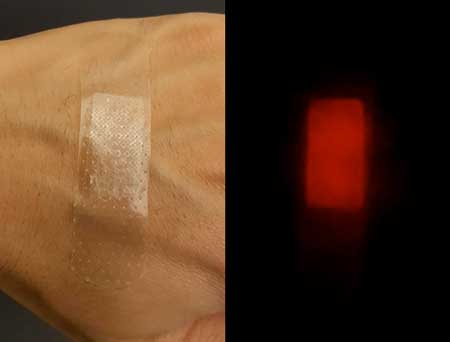
Un material hibrid de mătase atacă bacteriile atunci când este iluminat de o lumină verde, datorită cercetătorilor de proteină fluorescenți de departe roșii transferați la machiajul lor genetic.Materialul complet natural ar fi mai sigur decât mijloacele convenționale fotocatalitic sau activat cu lumină pentru a ucide agenții patogeni daunatori, cum ar fi bacteriile, care utilizează semiconductori potențial biohazard și necesită lumină ultravioletă care provoacă cancer pentru activare.Tehnologia de procesare a mătăsii fluorescente (mKate2) poate fi aplicată dezvoltării de bandaje inteligente pentru vindecarea rănilor pe pielea umană
O alternativă de mătase proiectată de Universitatea Purdue și Institutul Național de Cercetări Agricole coreene ar folosi biomateriale plasmonice asemănătoare biomaterialelor și lumină vizibilă, care, de asemenea, ajută la vindecarea rănilor și la reabilitarea mediului, inclusiv purificarea aerului și a apei.
Posted: Apr 19, 2018
Far-red fluorescent silk can kill harmful bacteria as biomedical and environmental remedy
(Nanowerk News) A silk hybrid material attacks bacteria when illuminated by a green light, thanks to a far-red fluorescent protein researchers transferred to its genetic makeup.
The all-natural material would be safer than conventional photocatalytic, or light-activated, means to kill harmful pathogens such as bacteria, which use potentially biohazardous semiconductors and require cancer-causing ultraviolet light for activation.
A silk alternative engineered by Purdue University and the Korean National Institute of Agricultural Research would instead use plasmonic photocatalyst-like biomaterials and visible light, which also aid in wound healing and environmental remediation including air and water purification. Their findings published in Advanced Science („Green-light-activated photoreaction via genetic hybridization of far-red fluorescent protein and silk”).
The processing technology of fluorescent (mKate2) silk can be applied to developing smart medical bandages for wound healing on the human skin. (Image: Jung Woo Leem, Purdue University)
„Silk is an ancient and well-known biomaterial,” said Young Kim, Purdue associate professor of biomedical engineering. „It doesn’t have any issues with the human body. And the nice thing about green light is that it’s not harmful – the color corresponds to the strongest intensity of the solar spectrum.”
To combine the benefits of silk and green light, researchers inserted the gene for „mKate2,” a far-red fluorescent protein, into a silk host. Shining a green light on the resulting hybrid generates reactive oxygen species (ROS), which are effective radicals for breaking down organic contaminants and attacking the membrane and DNA of pathogens.
When E. coli on the fluorescent silk were illuminated by a weak green light for 60 minutes, the bacteria’s survival rate dropped to 45 percent.
The researchers found that the hybrid could be processed into a solution, film, bandage and fabric. „We’ve basically added fluorescence to silk to facilitate disinfection or decontamination using just visible light,” said Jung Woo Leem, a visiting scholar in Purdue’s school of biomedical engineering.
Kim’s team believes that green-light activated red fluorescent silk could be both more efficient and scalable than other plasmonic photocatalysts, in which metal nanoparticles hybridized from semiconductor materials also use visible light but could still pose negative environmental consequences.
„The silk photocatalysts would be easier and safer to produce than plasmonic ones since silkworms, rather than industrial facilities, provide the host for ROS-generating materials. It’s a completely new green manufacturing of nanomaterials,” Kim said.
Because ambient white light also includes green light, the researchers anticipate that the silk hybrid material should typically have a strong enough light source to generate ROS as long as a green light controls ROS generation.
Kim’s team plans to take advantage of silk’s biocompatibility with the human body both inside and out. „We’re thinking about some implantable and injectable wound healing materials that dissolve over time in the body. Then we wouldn’t need to do additional surgery to take it out,” Kim said.
Materiale precum sulfura de molibden sunt utilizate ca catalizatori în reacțiile chimice. Huang se referă la împărțirea apei, un procedeu utilizat pentru a produce hidrogen gazos și oxigen din apa lichidă, în cazul în care sulfura de molibden în mod corespunzător poate îmbunătăți procesul și reduce cantitatea de energie și costurile necesare și crește cantitatea de hidrogen produsă.
Molibdenul este un metal de tranziție, iar alți membri ai acestui grup atomic formează și molecule numite dichalcogenide. Acestea includ tungsten, niobiu, zirconiu, titan și tantal și formează straturi cu sulf și alte calcogenide cum ar fi seleniu și telur. Alte diccalcogene pot fi făcute în materiale 2-D și pot fi ajustabile pentru a-și îmbunătăți proprietățile.
Posted: Apr 19, 2018
Electrochemical tuning of single layer materials relies on defects
(Nanowerk News) Perfection is not everything, according to an international team of researchers whose 2-D materials study shows that defects can enhance a material’s physical, electrochemical, magnetic, energy and catalytic properties.
„Electronic devices, like transistors, are usually made from relatively bulky stacked layers of metal, oxides and crystalline semiconductors,” said Shengxi Huang, assistant professor of electrical engineering, Penn State. „We would like to make them with two-dimensional materials so that they can be faster, smaller and more flexible.”
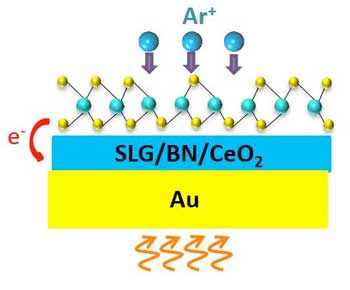
Molybdenum sulfide is a molecule made up of one molybdenum atom with two sulfur atoms attached. The molecules line up with the molybdenum in the middle and the sulfur atoms on the top and bottom when forming a 2-D, single-layer, film. These films were placed on a variety of substrates – gold, single-layer graphene, hexagonal boron nitride and cerium dioxide – and irradiated to create defects in the lattice structure.
Creating 2-D materials is not a perfect manufacturing process and defects are always present in the lattice. The researchers wanted to determine how those defects changed the physical and electrochemical properties of the molybdenum sulfide. Irradiation causes some of the molybdenum sulfide to lose a sulfur atom from the surface. Using these less-than-perfect films, the researchers could see how the materials changed using a variety of microscopies and spectroscopies.
Simulations of lattice defects allowed the researchers to manipulate the materials and produce structures that matched the experimentally defective films. They found that the materials properties results of their simulations matched their experimental results.
„We found that the sulfur defects improved the physical characteristics of the material,” said Huang. „By choosing the locations and number of defects, we should be able to tune the material’s band structure, improving its electronic capabilities.”
Experimentally, the researchers found that many more sulfur atoms are lost than molybdenum atoms, because the sulfur is on the surfaces and the molybdenum is protected in the middle. They also noted that because so many sulfur atoms leave the material, the defects caused by the absence of sulfur overwhelm any effect the absence of a molybdenum in the lattice might have.
Investigating how different substrates enhanced or did not enhance the properties of the two-dimensional material, the researchers found that „the substrates can tune the electronic energy levels in molybdenum sulfide due to charge transfer at the interface.” The material properties of the substrate also change the properties of the two-dimensional single layer. Cerium dioxide, because it is an oxide, altered the electrical properties of the material differently than the other substrates.
Smaller, faster and more flexible electronics are not the only possible outcome of tuning these 2-D materials.
„If we have the right amount of sulfur vacancies, we can enhance chemical processes like hydrogen evolution from water,” said Huang.
Materials like molybdenum sulfide are used as catalysts in chemical reactions. Huang refers to the splitting of water, a process used to create gaseous hydrogen and oxygen from liquid water where properly defective molybdenum sulfide could enhance the process and reduce the amounts of energy and costs needed and increase the amount of hydrogen produced.
Molybdenum is a transition metal and other members of this atomic group also form molecules called dichalcogenides. These include tungsten, niobium, zirconium, titanium and tantalum and they form layers with sulfur and other chalcogenides such as selenium and tellurium. Other dichalcogenides can be made into 2-D materials and may also be tunable to enhance their properties.
au creat un compozit biodegradabil fabricat din fibre de mătase care pot fi utilizate pentru a repara oasele rupte încărcate fără complicații uneori prezentate de alte materiale.Echipa a început deja să testeze noi derivați ai compozitului, inclusiv acelea care încorporează o singură formă cristalină a hidroxiapatitei pentru o rezistență mai mare și o variație a amestecului de acoperire pentru a maximiza proprietățile sale mecanice pentru oasele care poartă o greutate mai mare.
Posted: Apr 19, 2018
Spider silk key to new bone-fixing composite
(Nanowerk News) University of Connecticut researchers have created a biodegradable composite made of silk fibers that can be used to repair broken load-bearing bones without the complications sometimes presented by other materials.
Repairing major load-bearing bones such as those in the leg can be a long and uncomfortable process.
To facilitate repair, doctors may install a metal plate to support the bone as it fuses and heals. Yet that can be problematic. Some metals leach ions into surrounding tissue, causing inflammation and irritation. Metals are also very stiff. If a metal plate bears too much load in the leg, the new bone may grow back weaker and be vulnerable to fracture.
Seeking a solution to the problem, UConn professor Mei Wei, a materials scientist and biomedical engineer, turned to spiders and moths for inspiration. In particular, Wei focused on silk fibroin, a protein found in the silk fibers spun by spiders and moths known for its toughness and tensile strength.
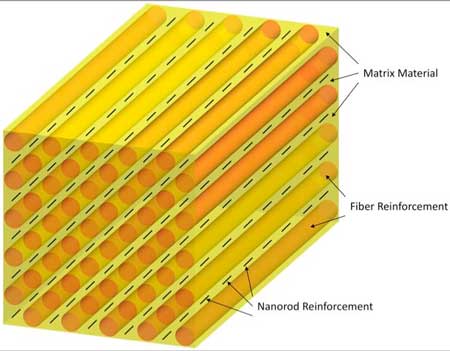
A 3-D rendering of a novel bone-fixing composite developed at the University of Connecticut. The composite is made of silk fibers and fibers of polylactic acid that are coated with fine bioceramic particles to add strength while maintaining flexibility. The biodegradable composite helps heal bones without the complications posed by metal parts. (Image: Bryant Heimbach/UConn)
The medical community has been aware of silk fibroin for a while. It is a common component in medical sutures and tissue engineering because of its strength and biodegradability. Yet no one had ever tried to make a dense polymer composite out of it, and that is what Wei knew she needed if she was going to create a better device for healing broken load-bearing bones.
Working with UConn associate professor Dianyun Zhang, a mechanical engineer, Wei’s lab began testing silk fibroin in various composite forms, looking for the right combination and proportion of different materials to achieve optimum strength and flexibility. The new composite certainly needed to be strong and stiff, yet not so much so that it would inhibit dense bone growth. At the same time, the composite needed to be flexible, allowing patients to retain their natural range of motion and mobility while the bone healed.
After dozens of tests, Wei and Zhang found the materials they were looking for. The new composite consists of long silk fibers and fibers of polylactic acid – a biodegradable thermoplastic derived from cornstarch and sugar cane – that are dipped in a solution in which each is coated with fine bioceramic particles made of hydroxyapatite (the calcium phosphate mineral found in teeth and bones). The coated fibers are then packed in layers on a small steel frame and pressed into a dense composite bar in a hot compression mold.
In a study recently published in the Journal of the Mechanical Behavior of Biomedical Materials(„High performance resorbable composites for load-bearing bone fixation devices”), Wei reports that the high-performance biodegradable composite showed strength and flexibility characteristics that are among the highest ever recorded for similar bioresorbable materials in literature.
And they could get even better.
„Our results are really high in terms of strength and flexibility, but we feel that if we can get every component to do what we want them to do, we can get even higher,” says Wei, who also serves as the School of Engineering’s associate dean for research and graduate education.
The new composite is also resilient. Large leg bones in adults and seniors can take many months to heal. The composite developed in Wei’s lab does its job and then starts to degrade after a year. No surgery is required for removal.
Joining Wei and Zhang in the research were Bryant Heimbach, a Ph.D. candidate and materials scientist in Wei’s lab; and Beril Tonyali, a UConn undergraduate pursuing a degree in materials science and engineering.
The team has already begun testing new derivatives of the composite, including those that incorporate a single crystalline form of the hydroxyapatite for greater strength and a variation of the coating mixture to maximize its mechanical properties for bones bearing more weight.
fabricarea grafenului de înaltă calitate, care este adaptat pentru utilizarea în membrane care filtrează o varietate de molecule, inclusiv săruri, ioni mai mari, proteine sau nanoparticule. Astfel de membrane ar trebui să fie utile pentru desalinizare, separare biologică și alte aplicații.
Posted: Apr 18, 2018
A graphene roll-out
(Nanowerk News) MIT engineers have developed a continuous manufacturing process that produces long strips of high-quality graphene.
The team’s results are the first demonstration of an industrial, scalable method for manufacturing high-quality graphene that is tailored for use in membranes that filter a variety of molecules, including salts, larger ions, proteins, or nanoparticles. Such membranes should be useful for desalination, biological separation, and other applications.
“For several years, researchers have thought of graphene as a potential route to ultrathin membranes,” says John Hart, associate professor of mechanical engineering and director of the Laboratory for Manufacturing and Productivity at MIT. “We believe this is the first study that has tailored the manufacturing of graphene toward membrane applications, which require the graphene to be seamless, cover the substrate fully, and be of high quality.”
Hart is the senior author on the paper, which appears online in the journal Applied Materials and Interfaces („A Scalable Route to Nanoporous Large-Area Atomically Thin Graphene Membranes by Roll-to-Roll Chemical Vapor Deposition and Polymer Support Casting”). The study includes first author Piran Kidambi, a former MIT postdoc who is now an assistant professor at Vanderbilt University; MIT graduate students Dhanushkodi Mariappan and Nicholas Dee; Sui Zhang of the National University of Singapore; Andrey Vyatskikh, a former student at the Skolkovo Institute of Science and Technology who is now at Caltech; and Rohit Karnik, an associate professor of mechanical engineering at MIT.
The process consists of a “roll-to-roll” system that spools out a ribbon of copper foil from one end, which is fed through a furnace. Methane and hydrogen gas are deposited onto the foil to form graphene, which then exits the furnace and is rolled up for further development. (Image: MIT) (click on image to enlarge)
Growing graphene
For many researchers, graphene is ideal for use in filtration membranes. A single sheet of graphene resembles atomically thin chicken wire and is composed of carbon atoms joined in a pattern that makes the material extremely tough and impervious to even the smallest atom, helium.
Researchers, including Karnik’s group, have developed techniques to fabricate graphene membranes and precisely riddle them with tiny holes, or nanopores, the size of which can be tailored to filter out specific molecules. For the most part, scientists synthesize graphene through a process called chemical vapor deposition, in which they first heat a sample of copper foil and then deposit onto it a combination of carbon and other gases.
Graphene-based membranes have mostly been made in small batches in the laboratory, where researchers can carefully control the material’s growth conditions. However, Hart and his colleagues believe that if graphene membranes are ever to be used commercially they will have to be produced in large quantities, at high rates, and with reliable performance.
“We know that for industrialization, it would need to be a continuous process,” Hart says. “You would never be able to make enough by making just pieces. And membranes that are used commercially need to be fairly big — some so big that you would have to send a poster-wide sheet of foil into a furnace to make a membrane.”
A factory roll-out
The researchers set out to build an end-to-end, start-to-finish manufacturing process to make membrane-quality graphene.
The team’s setup combines a roll-to-roll approach — a common industrial approach for continuous processing of thin foils — with the common graphene-fabrication technique of chemical vapor deposition, to manufacture high-quality graphene in large quantities and at a high rate. The system consists of two spools, connected by a conveyor belt that runs through a small furnace. The first spool unfurls a long strip of copper foil, less than 1 centimeter wide. When it enters the furnace, the foil is fed through first one tube and then another, in a “split-zone” design.
While the foil rolls through the first tube, it heats up to a certain ideal temperature, at which point it is ready to roll through the second tube, where the scientists pump in a specified ratio of methane and hydrogen gas, which are deposited onto the heated foil to produce graphene.
“Graphene starts forming in little islands, and then those islands grow together to form a continuous sheet,” Hart says. “By the time it’s out of the oven, the graphene should be fully covering the foil in one layer, kind of like a continuous bed of pizza.”
As the graphene exits the furnace, it’s rolled onto the second spool. The researchers found that they were able to feed the foil continuously through the system, producing high-quality graphene at a rate of 5 centimers per minute. Their longest run lasted almost four hours, during which they produced about 10 meters of continuous graphene.
“If this were in a factory, it would be running 24-7,” Hart says. “You would have big spools of foil feeding through, like a printing press.”
Custom-built roll-to-roll chemical vapor deposition (CVD) system in our laboratory at MIT, making graphene on copper foil at 1000°C.
Flexible design
Once the researchers produced graphene using their roll-to-roll method, they unwound the foil from the second spool and cut small samples out. They cast the samples with a polymer mesh, or support, using a method developed by scientists at Harvard University, and subsequently etched away the underlying copper.
“If you don’t support graphene adequately, it will just curl up on itself,” Kidambi says. “So you etch copper out from underneath and have graphene directly supported by a porous polymer — which is basically a membrane.”
The polymer covering contains holes that are larger than graphene’s pores, which Hart says act as microscopic “drumheads,” keeping the graphene sturdy and its tiny pores open.
The researchers performed diffusion tests with the graphene membranes, flowing a solution of water, salts, and other molecules across each membrane. They found that overall, the membranes were able to withstand the flow while filtering out molecules. Their performance was comparable to graphene membranes made using conventional, small-batch approaches.
The team also ran the process at different speeds, with different ratios of methane and hydrogen gas, and characterized the quality of the resulting graphene after each run. They drew up plots to show the relationship between graphene’s quality and the speed and gas ratios of the manufacturing process. Kidambi says that if other designers can build similar setups, they can use the team’s plots to identify the settings they would need to produce a certain quality of graphene.
“The system gives you a great degree of flexibility in terms of what you’d like to tune graphene for, all the way from electronic to membrane applications,” Kidambi says.
Looking forward, Hart says he would like to find ways to include polymer casting and other steps that currently are performed by hand, in the roll-to-roll system.
“In the end-to-end process, we would need to integrate more operations into the manufacturing line,” Hart says. “For now, we’ve demonstrated that this process can be scaled up, and we hope this increases confidence and interest in graphene-based membrane technologies, and provides a pathway to commercialization.”
O diminuare a sarii poate simplifica crearea de materiale bidimensionale, iar datorita oamenilor de stiinta de la Universitatea Rice, motivul devine clar.
Boris Yakobson, profesor de știință în materie de ricin, nanoengineering și chimie, a fost expertul în grup atunci când un grup de laboratoare din Singapore, China, Japonia și Taiwan au folosit sare pentru a face o „bibliotecă” de materiale 2-D care combina tranziția metale și chalcogeni.
Posted: Apr 18, 2018
Salt boosts creation of 2-D materials
(Nanowerk News) A dash of salt can simplify the creation of two-dimensional materials, and thanks to Rice University scientists, the reason is becoming clear.
Boris Yakobson, a Rice professor of materials science and nanoengineering and of chemistry, was the go-to expert when a group of labs in Singapore, China, Japan and Taiwan used salt to make a “library” of 2-D materials that combined transition metals and chalcogens.
A molecular dynamics simulation by Rice University scientists shows a layer of salt and molybdenum oxide mixing together to form molybdenum oxychloride. The atoms are oxygen (red), sodium (yellow), chlorine (green) and molybdenum (purple). (Video: Yakobson Group)
These compounds could lead to smaller and faster transistors, photovoltaics, sensors and catalysts, according to the researchers.
Through first-principle molecular dynamics simulations and accurate energy computations, Yakobson and his colleagues determined that salt reduces the temperature at which some elements interact in a chemical vapor deposition (CVD) furnace. That makes it easier to form atom-thick layers similar to graphene but with the potential to customize their chemical composition for specific layer-material and accordingly electrical, optical, catalytic and other useful properties.
The research team including Yakobson and Rice postdoctoral researcher Yu Xie and graduate student Jincheng Lei reported its results this week in Nature („A library of atomically thin metal chalcogenides”).
The team led by Zheng Liu of Nanyang Technological University in Singapore used its seasoned technique with CVD to create 47 compounds of metal chalcogenides (which contain a chalcogenand an electropositive metal). Most of the new compounds had two ingredients, but some were alloys of three, four and even five. Many of the materials had been imagined and even coveted, Yakobson said, but never made.
In the CVD process, atoms excited by temperatures — in this case between 600 and 850 degrees Celsius (1,112 and 1,562 degrees Fahrenheit) — form a gas and ultimately settle on a substrate, linking to atoms of complementary chemistry to form monolayer crystals.
Researchers already suspected salt could facilitate the process, Yakobson said. Liu came to him to request a molecular model analysis to learn why salt made it easier to melt metals with chalcogens and get them to react. That would help them learn if it might work within the broader palette of the periodic table.
“They did impressively broad work to make a lot of new materials and to characterize each of them comprehensively,” Yakobson said. “From our theoretical perspective, the novelty in this study is that we now have a better understanding of why adding plain salt lowers the melting point for these metal-oxides and especially reduces the energy barriers of the intermediates on the way to transforming them into chalcogenides.”
Rice University scientists built computer models of intermediate reactions to understand why salt lowers reaction temperatures in the synthesis of two-dimensional compounds. Above left, molybdenum oxychloride precursor molecules undergo sulfurization in which sulfur atoms replace oxygen atoms. That sets up the material to form new compounds. At right, the calculations show the charge densities of the new molecules. (Image: Yakobson Group/Rice University)
Whether in the form of common table salt (sodium chloride) or more exotic compounds like potassium iodide, salt was found to allow chemical reactions by lowering the energetic barrier that otherwise prevents molecules from interacting at anything less than ultrahigh temperatures, Yakobson said.
“I call it a ‘salt assault,’” he said. “This is important for synthesis. First, when you try to combine solid particles, no matter how small they are, they still have limited contact with each other. But if you melt them, with salt’s help, you get a lot of contact on the molecular level.
“Second, salt reduces the sublimation point, where a solid undergoes a phase transformation to gas. It means more of the material’s component molecules jump into the gas phase. That’s good for general transport and contact issues and helps the reaction overall.”
The Rice team discovered the process doesn’t facilitate the formation of the 2-D-material itself directly so much as it allows for the formation of intermediate oxychlorides. These oxychlorides then lead to the 2-D chalcogenide growth.
Detailing this process required intensive atom-by-atom simulations, Yakobson said. These took weeks of heavy-duty computations of the quantum interactions among as few as about 100 atoms – all to show just 10 picoseconds of a reaction. “We only did four of the compounds because they were so computationally expensive, and the emerging picture was clear enough,” Yakobson said.
au dezvoltat un nou material poros capabil de adsorbție selectivă a CO 2.studiul deschide noi căi de dezvoltare a materialelor ieftine și non-toxice, nu numai pentru captarea CO 2, ci și pentru alte separări de gaze. În prezent, echipa ei îmbunătățește în continuare stabilitatea la apă a noilor MOF-uri, precum și dezvoltarea unor căi sintetice generale către MOF-urile alcalino-pământoase stabile pentru o gamă largă de separări moleculare.
Posted: Apr 17, 2018
A novel, water-stable metal-organic framework for selective CO2 adsorption
(Nanowerk News) Researchers of the University of Amsterdam’s Research Priority Area Sustainable Chemistry have developed a novel porous material capable of selectively adsorbing CO2. In the journal Inorganic Chemistry Frontiers („Selective CO2 adsorption in water-stable alkaline-earth based metal-organic frameworks”) they present their design of a water-stable metal-organic framework (MOF) that according to team leader Dr Stefania Grecea can pave the way to cost-effective separation of CO2 from power plant emissions.
Climate change is correlated with increasing CO2 emissions as a result of the combustion of fossil fuels in power stations, vehicles, factories and homes. One way to keep the atmospheric CO2concentration within acceptable levels is by selectively removing it from power plant emissions. The physical adsorption of CO2 using porous materials provides an economically viable route for such CO2 capturing. It requires less energy for the regeneration of adsorbents in comparison to the currently used chemisorption methods.
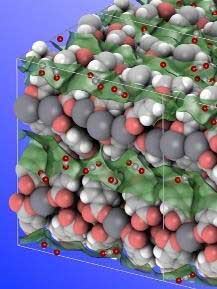
Molecular structure of the novel calcium-based MOF. Small CO2 molecules can be seen adsorbed within the channels (green transparent) of the microporous material. (Image: HIMS)
At the Research Priority Area Sustainable Chemistry of the University of Amsterdam (UvA), Dr Stefania Grecea develops synthetic strategies for making porous materials that enable efficient adsorptive separations.
In the journal Inorganic Chemistry Frontiers, Grecea and co-workers now present a water-stable metal-organic framework that selectively adsorbs CO2 from a CO2/N2 mixture. The research was performed by PhD student Yiwen Tang in collaboration with Dr David Dubbeldam of UvA’s Computational Chemistry group, Dr Simon Teat of the Lawrence Berkeley National Laboratory (USA), and Prof. Anastasios Tasiopoulos of the University of Cyprus.
Metal-organic frameworks
Metal-organic frameworks (MOFs) are crystalline microporous materials that exist of metal ions (or clusters of metal ions) linked by organic ligands. MOFs are very promising materials for gas separation since their pore surfaces can be easily functionalised to tune the interaction with various gas molecules. They also have very high surface areas which provide for optimal selectivity and capacity. Moreover, MOFs offer the right balance between high adsorption capacity, operational life time and energy requirement for regeneration.
The UvA team designed a series of MOFs using a flexible organic linker in combination with alkaline metal ions, which are abundantly available, lightweight and low-cost. They show that when the guest molecules are removed, the three-dimensional structure of these MOFs shrinks. In the case of calcium based materials, this specific behaviour results in large diffusional resistances towards N2 over CO2 molecules.
Selective and water-stable
Experimental studies performed by Yiwen Tang and theoretical calculations performed by Dr David Dubbeldam confirmed a very good CO2/N2 separation selectivity that is substantially higher than what has been reported for other MOFs. Adding to this, the specific design of the organic linker protects the calcium ions from being attacked by water molecules. Therefore, the new MOF materials also have a very high humidity stability.
According to Dr Grecea, the study opens new avenues in developing low-cost and non-toxic materials, not only for CO2capture but also for other gas separations. Currently her team is further improving the water stability of the novel MOFs as well as developing general synthetic routes towards stable alkaline-earth MOFs for a broad range of molecular separations.
„Rezistența materialului hibrid obținut se realizează suplimentar pentru că nu distrugem însuși grafenul, ci folosim defecte pre-existente și o legătură covalentă puternică cu moleculele de polimer. Acest lucru ne permite să considerăm studiul drept promițător pentru dezvoltarea de electronice subțiri și flexibile atunci când bateriile solare pot fi atașate la haine, iar atunci când sunt deformate, ele nu se vor rupe „.Grafenul trebuie integrat în structuri complexe pentru a fi utilizat cu succes. Cu toate acestea, este o provocare să facem acest lucru. Potrivit oamenilor de știință, grafena în sine este suficient de stabilă și reacționează prost cu alți compuși. Pentru a reacționa cu alte elemente, adică pentru al modifica, grafenul este, de obicei, cel puțin parțial distrus. Această modificare degradează proprietățile materialelor obținute.
Posted: Apr 17, 2018
Polymer-graphene nanocarpets to electrify smart fabrics
(Nanowerk News) Researchers from Tomsk Polytechnic University together with their international colleagues have discovered a method to modify and use the one-atom thin conductor of current and heat, graphene without destroying it. Thanks to the novel method, the researchers were able to synthesize on single-layer graphene a well-structured polymer with a strong covalent bond, which they called ‘polymer carpets’. The entire structure is highly stable; it is less prone to degradation over time that makes the study promising for the development of flexible organic electronics. Also, if a layer of molybdenum disulfide is added over the ‘nanocarpet’, the resulting structure generates current under exposure to light. The study results were published in Journal of Materials Chemistry C („Bottom-up Fabrication of Graphene-based Conductive Polymer Carpets for Optoelectronics”).
This is the scheme for obtaining a hybrid structure of ‘graphene-polymer’. (Image: Tomsk Polytechnic University) (click on image to enlarge)
Graphene is simultaneously the most durable, light and an electrically conductive carbon material. It can be used for manufacturing solar batteries, smartphone screens, thin and flexible electronics, and even in water filters since graphene films pass water molecules and stop all other compounds. Graphene should be integrated into complex structures to be used successfully. However, it is a challenge to do that. According to scientists, graphene itself is stable enough and reacts poorly with other compounds. In order to make it react with other elements, i.e. to modify it, graphene is usually at least partially destroyed. This modification degrades the properties of the materials obtained.
Professor Raul D. Rodriguez from the Research School for Chemistry & Applied Biomedical Sciences says: ‘When functionalizing graphene, you should be very careful. If you overdo it, the unique properties of graphene are lost. Therefore, we decided to follow a different path.
In graphene, there are inevitable nanodefects, for example, at the edges of graphene and wrinkles in the plane. Hydrogen atoms are often attached to such defects. It is this hydrogen that can interact with other chemicals.’
To modify graphene, the authors use a thin metal substrate on which a graphene single-layer is placed. Then graphene is covered with a solution of bromine-polystyrene molecules. The molecules interact with hydrogen and are attached to the existing defects, resulting in polyhexylthiophene (P3HT). Further exposed to light during the photocatalysis, a polymer begins to ‘grow’.
‘In the result, we obtained the samples which structure resembles ‘polymer carpets’ as we call them in the paper. Above such a ‘polymer carpet’ we place molybdenum disulfide. Due to a unique combination of materials, we obtain a ‘sandwich’ structure’ that functions like a solar battery. That is, it generates current when exposed to light. In our experiments a strong covalent bond is established between the molecules of the polymer and graphene, that is critical for the stability of the material obtained,’ notes Rodriguez.
According to the researcher, the method for graphene modification, on the one hand, enables obtaining a very sturdy compound; on the other hand, it is rather simple and cheap as affordable materials are used. The method is versatile because it makes growing very different polymers directly on graphene possible.
‘The strength of the obtained hybrid material is achieved additionally because we do not destroy graphene itself but use pre-existing defects, and a strong covalent bond to polymer molecules. This allows us to consider the study as promising for the development of thin and flexible electronics when solar batteries can be attached to clothes, and when deformed they will not break,’ the professor explains.
Au dezvoltat o tehnica care face ca un material compozit sa devina mai rigid si mai puternic la cerere atunci cand este expus la lumina ultravioleta.Acest control la cerere al comportamentului compozit ar putea să permită o varietate de noi capacități pentru proiectarea, performanța și întreținerea viitoarelor nave de rotor armatei.În laboratorul nostru de la UMD am dezvoltat nanomateriale unice de carbon și chimie, dar nu a fost până când Gardea ne-a abordat am devenit conștienți de provocarea interesantă și oportunitatea pentru materiale reconfigurabile compozite
Posted: Apr 17, 2018
Making adaptive composite materials with light-responsive chemistry
(Nanowerk News) Engineers at the U.S. Army Research Laboratory and the University of Maryland have developed a technique that causes a composite material to become stiffer and stronger on-demand when exposed to ultraviolet light.
This on-demand control of composite behavior could enable a variety of new capabilities for future Army rotorcraft design, performance and maintenance.
ARL’s Dr. Frank Gardea, a research engineer, said the focus of the research was on controlling how molecules interact with each other. He said the aim was to „have them interact in such a way that changes at a small size, or nanoscale, could lead to observed changes at a larger size or macroscale.”
Dr. Bryan Glaz, chief scientist of ARL’s Vehicle Technology Directorate said,”an important motivation for this work is the desire to engineer new structures, starting from the nanoscale, to enable advanced rotorcraft concepts that have been proposed in the past, but were infeasible due to limitations in current composites. One of the most important capabilities envisioned by these concepts is a significantly reduced maintenance burden due to compromises we make to fly at high speeds.”
The reduced scheduled maintenance of future Army aviation platforms is an important technological driver for future operating concepts.
„The enhanced mechanical properties with potentially low weight penalties, enabled by the new technique, could lead to nanocomposite based structures that would enable rotorcraft concepts that we cannot build today,” Glaz said.
Researchers show the synthetic process they use to create photo responsive reinforcing agents. A carbon nanotube, or CNT, is treated with a photo-reactive molecule called benzophenone. After exposure to ultraviolet light, the molecules bond to the surrounding polymer chain. This creates a covalent link between the nanotube and the polymer. (Image: U.S. Army Research Laboratory)
The technique consists of attaching ultraviolet light reactive molecules to reinforcing agents like carbon nanotubes. These reactive reinforcing agents are then embedded in a polymer. Upon ultraviolet light exposure, a chemical reaction occurs such that the interaction between the reinforcing agents and the polymer increases, thus making the material stiffer and stronger.
The researchers said the chemistry used here is generally applicable to a variety of reinforcement/polymer combinations thereby expanding the utility of this control method to a wide range of material systems.
„This research shows that it is possible to control the overall material property of these nanocomposites through molecular engineering at the interface between the composite components. This is not only important for fundamental science but also for the optimization of structural component response,” said Dr. Zhongjie Huang, a postdoctoral research fellow at the University of Maryland.
Army researchers conceived of this fundamental approach for the potential of „enabling new leap-ahead capabilities in support of the Future Vertical Lift Army Modernization Priority,” officials said.
„In this instance, the development of advanced structures to enable leap-ahead Army aviation capabilities not currently feasible due to limitations in mechanical properties of current materials,” Glaz said. „This is especially important for the envisioned future operating environment which will require extended periods of operation without the opportunity to return to stationary bases for maintenance.”
Some particularly attractive design options that correspond to lower mechanical loads and vibration are not currently achievable due to limitations in structural damping in hingeless blade or wing structures.
Future structures based on this work may help lead to new composites with controlled structural damping and low weight that could enable low maintenance, high speed rotorcraft concepts that are currently not feasible (e.g. soft in-plane tiltrotors).
In addition, controllable mechanical response will allow for the development of adaptive aerospace structures that could potentially accommodate mechanical loading conditions.
„The Army Research Laboratory and its partners will continue to invest in emerging and Soldier-inspired technologies that will enable more reliable, higher performing and leap-ahead capabilities that are key to the advancement of the next generation platforms used by Soldiers,” said Elias Rigas, division chief of the ARL Vehicle Applied Research Division.
Collaboration between the ARL and the University of Maryland was crucial in the development of this method.
„In our lab at UMD we have been developing unique carbon nanomaterials and chemistry but it was not until Gardea approached us did we become aware of the intriguing challenge and opportunity for reconfigurable composite materials,” said Dr. YuHuang Wang, professor of the Department of Chemistry and Biochemistry at the University of Maryland.
„Together we have achieved something that is quite remarkable.”
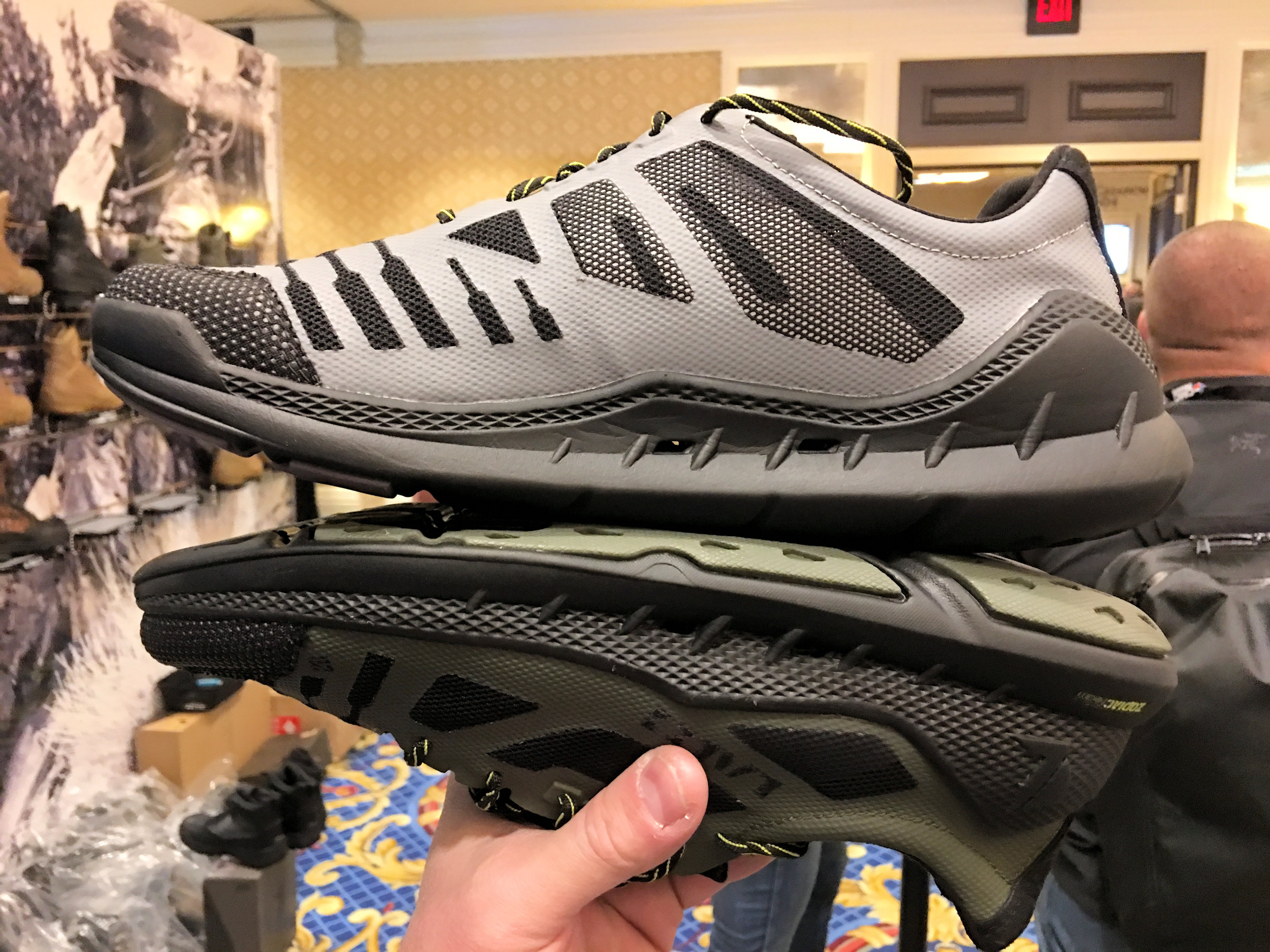
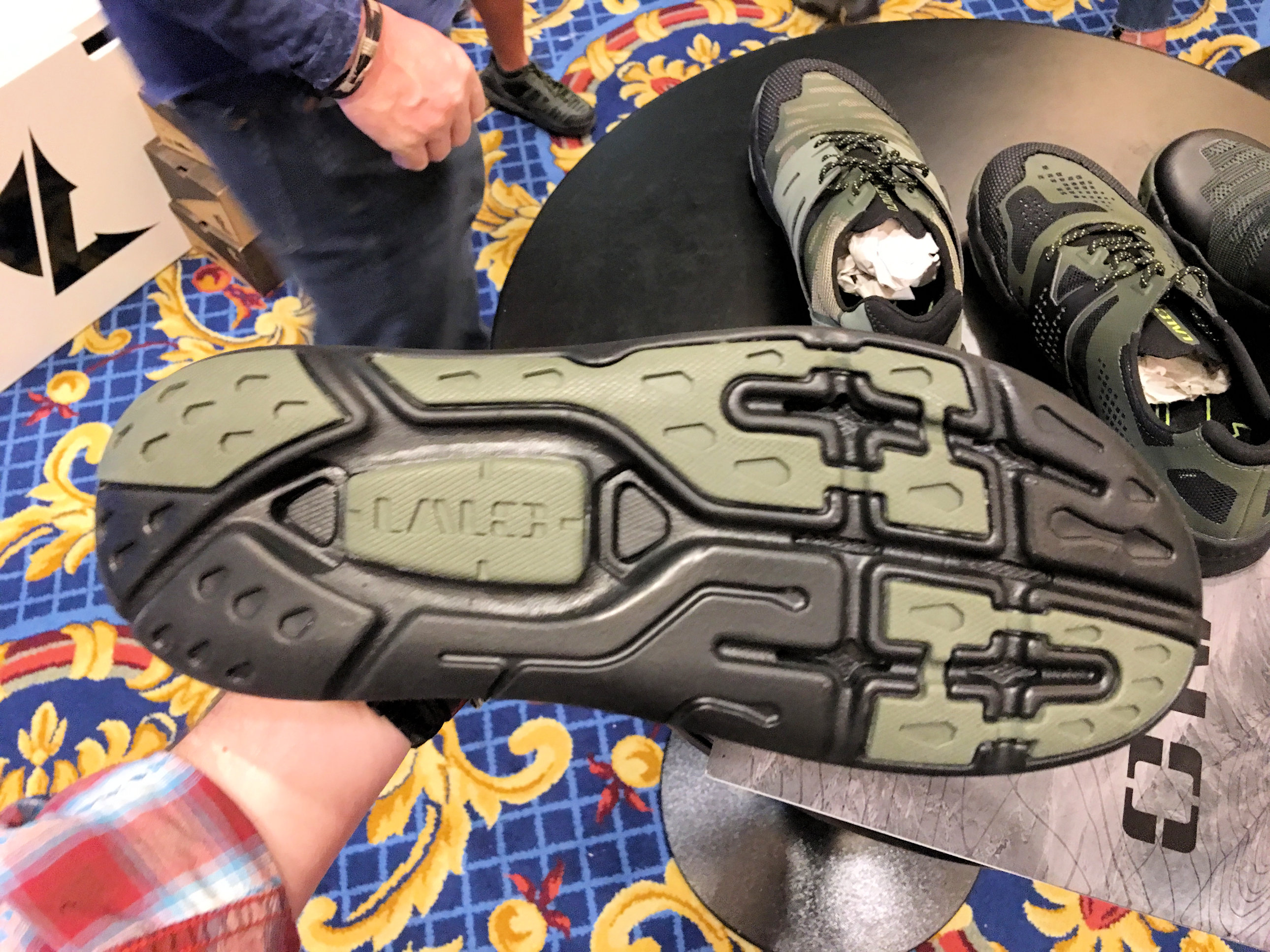
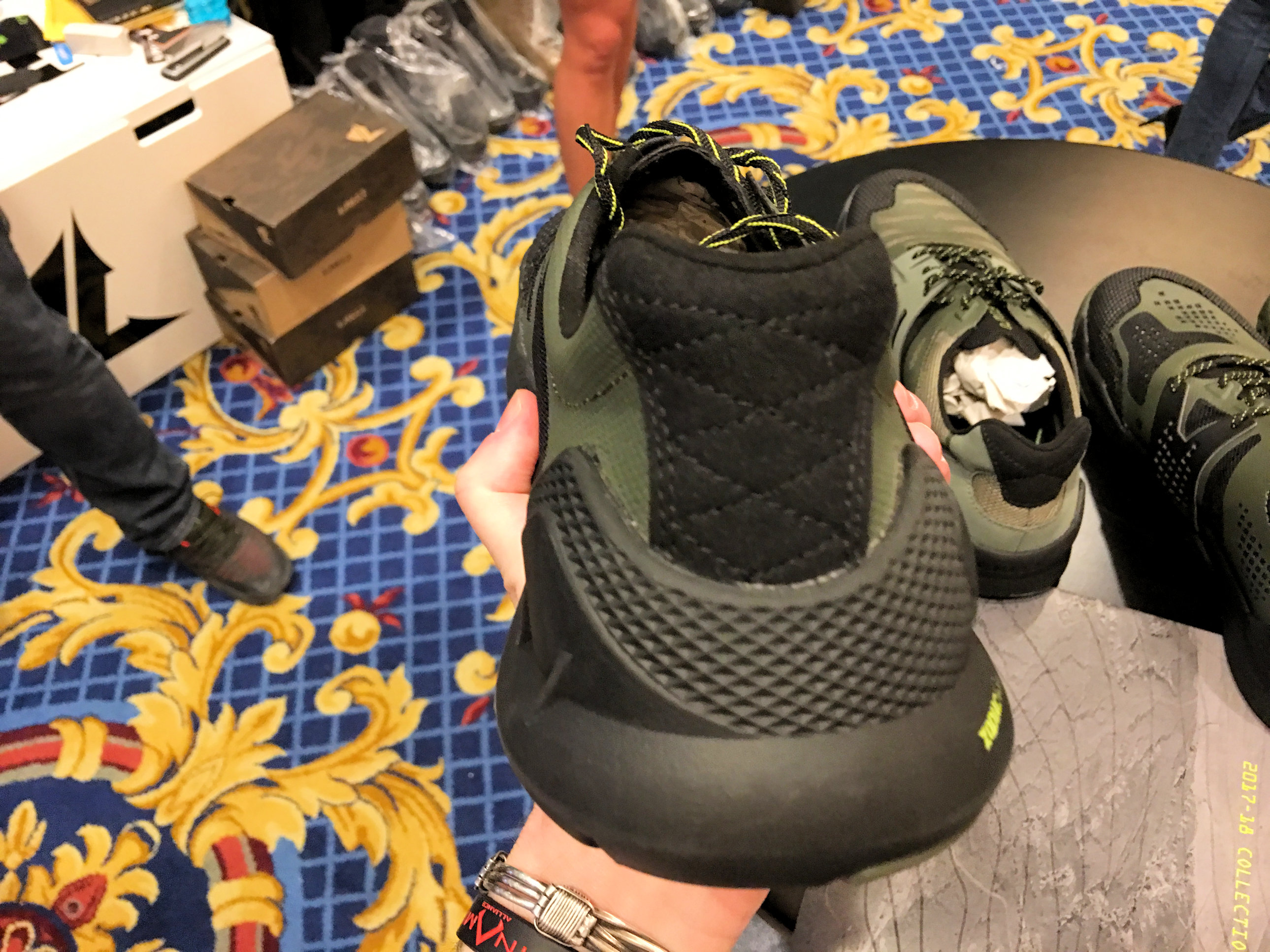
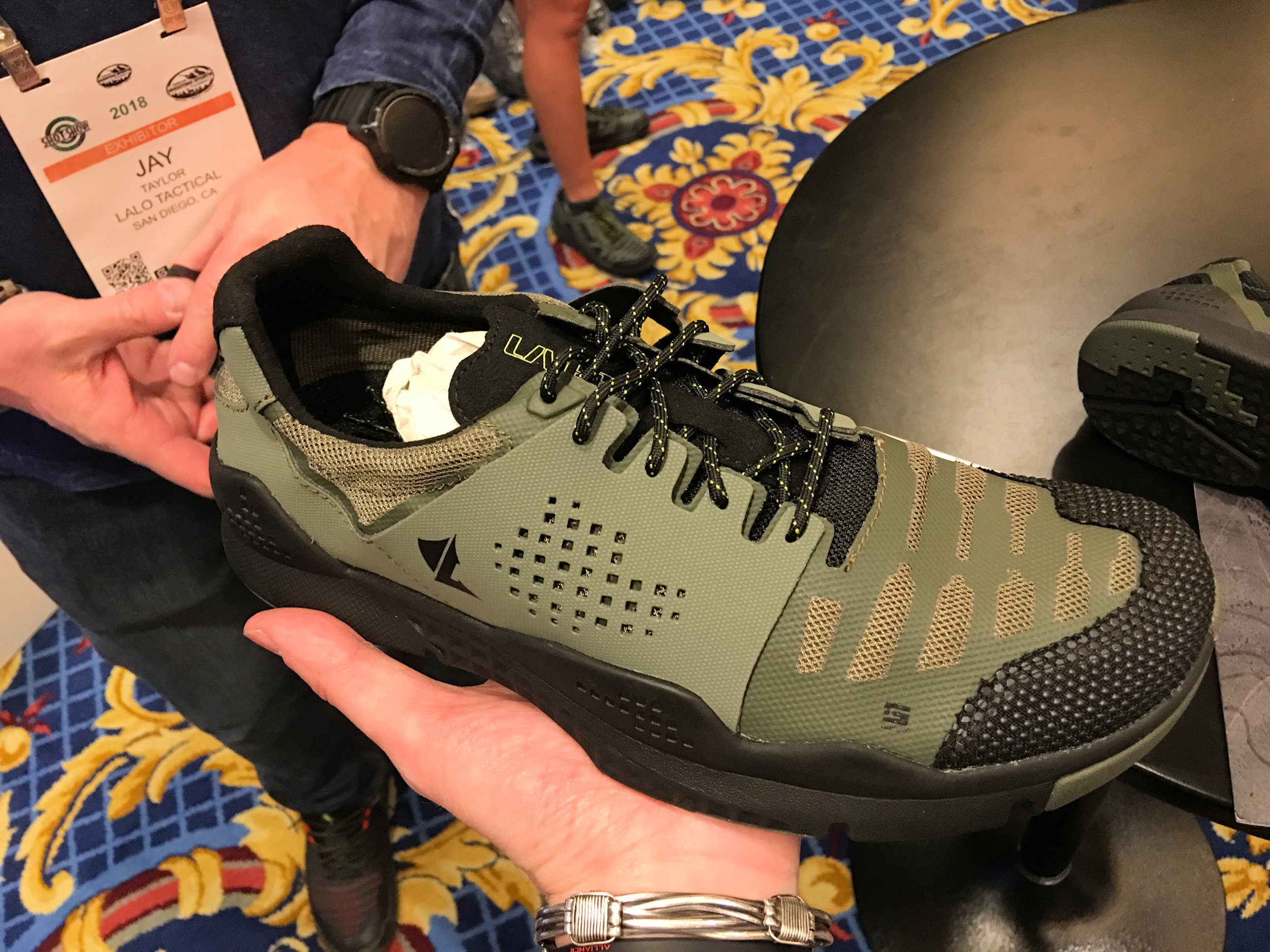
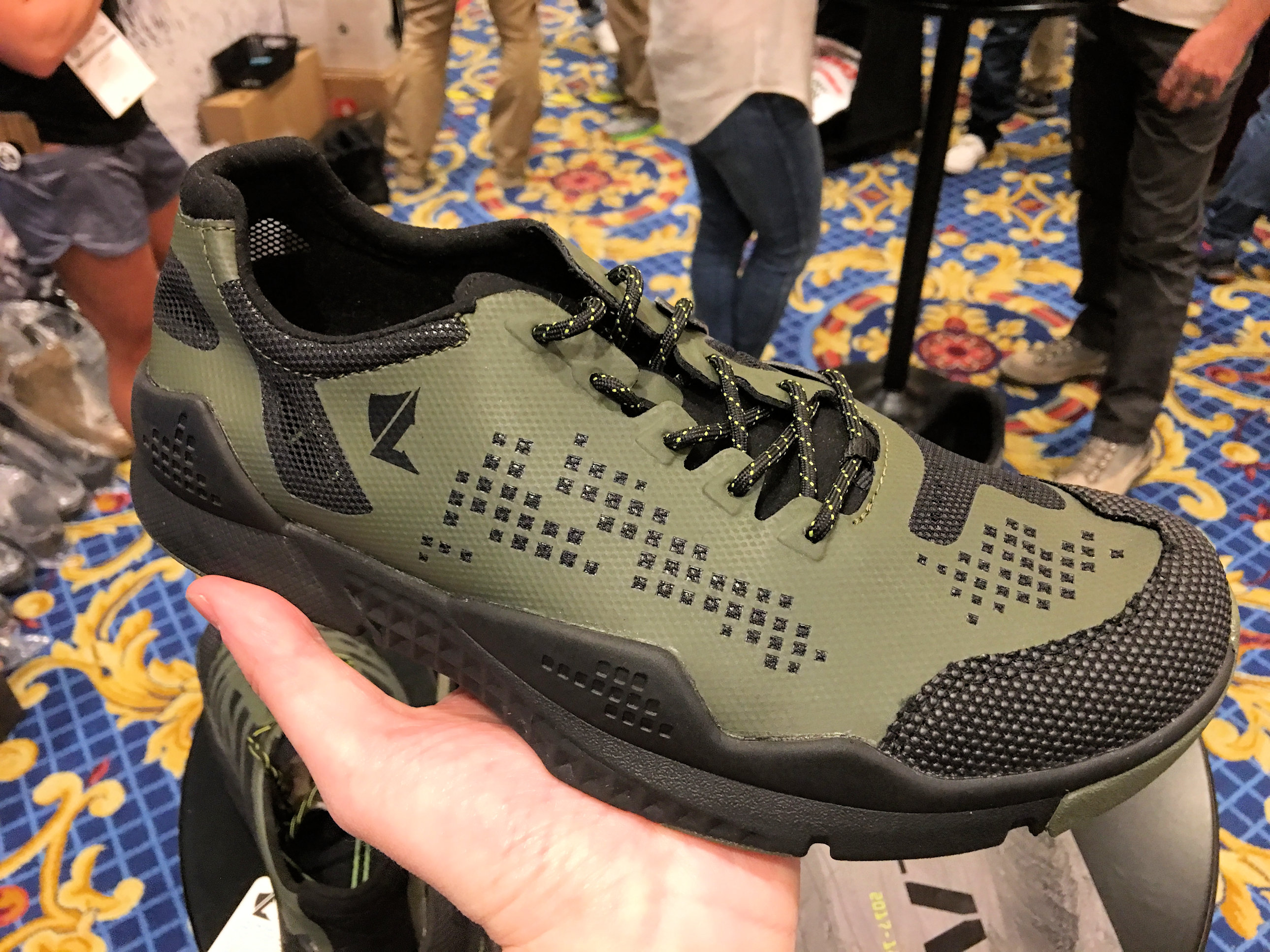
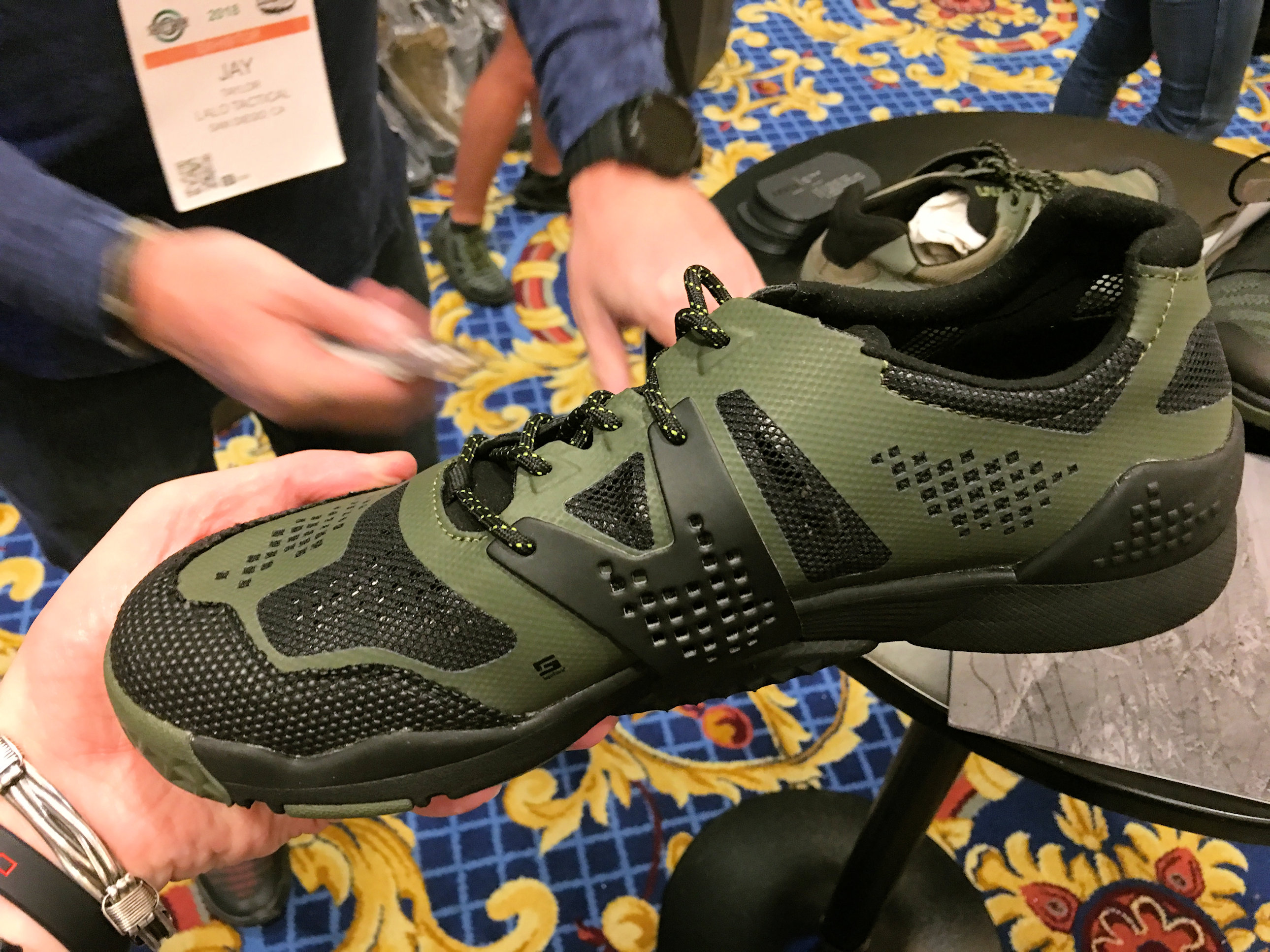
Aceste adidași tactici sunt perfecționate cu caracteristicile și tehnologia avansată a designului LALO, inclusiv tălpi de reactiv-propulsie, tocuri din material plastic SuperFabric ™ acoperite cu ceramică, porturi de drenaj „pentru un sistem de drenare pasivă cu două căi”, ” „, Și LALO OCF, care reprezintă sistemul” Component Fit „. Destul de cool … și high-tech.
LALO Tactical Fitness and Running Shoes with Reactive-Propulsion Soles and Ceramic-Coated SuperFabric Toecaps for Military SOF Assaulters/Operators and Civilian Tactical Shooters! (Video!)
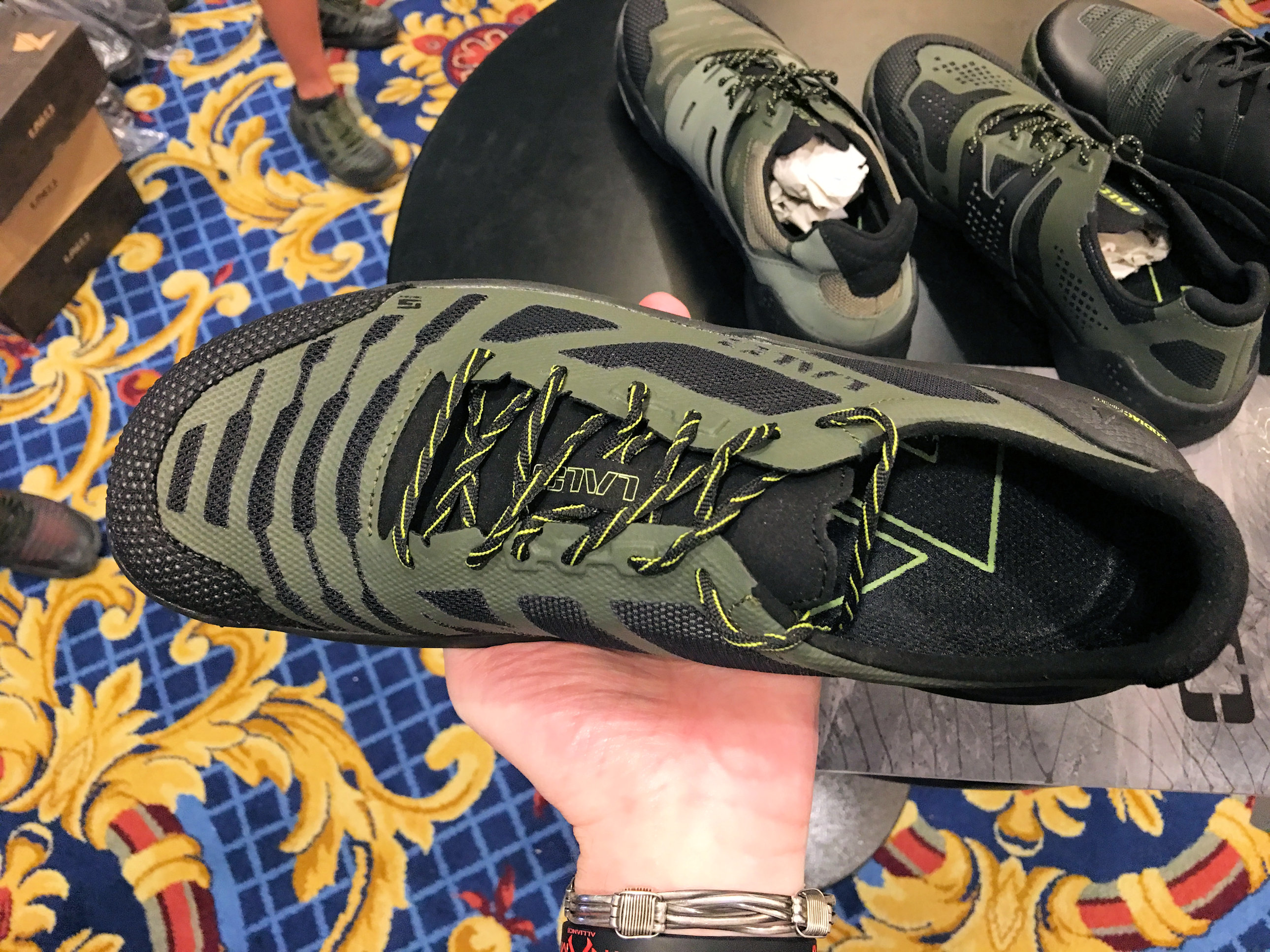
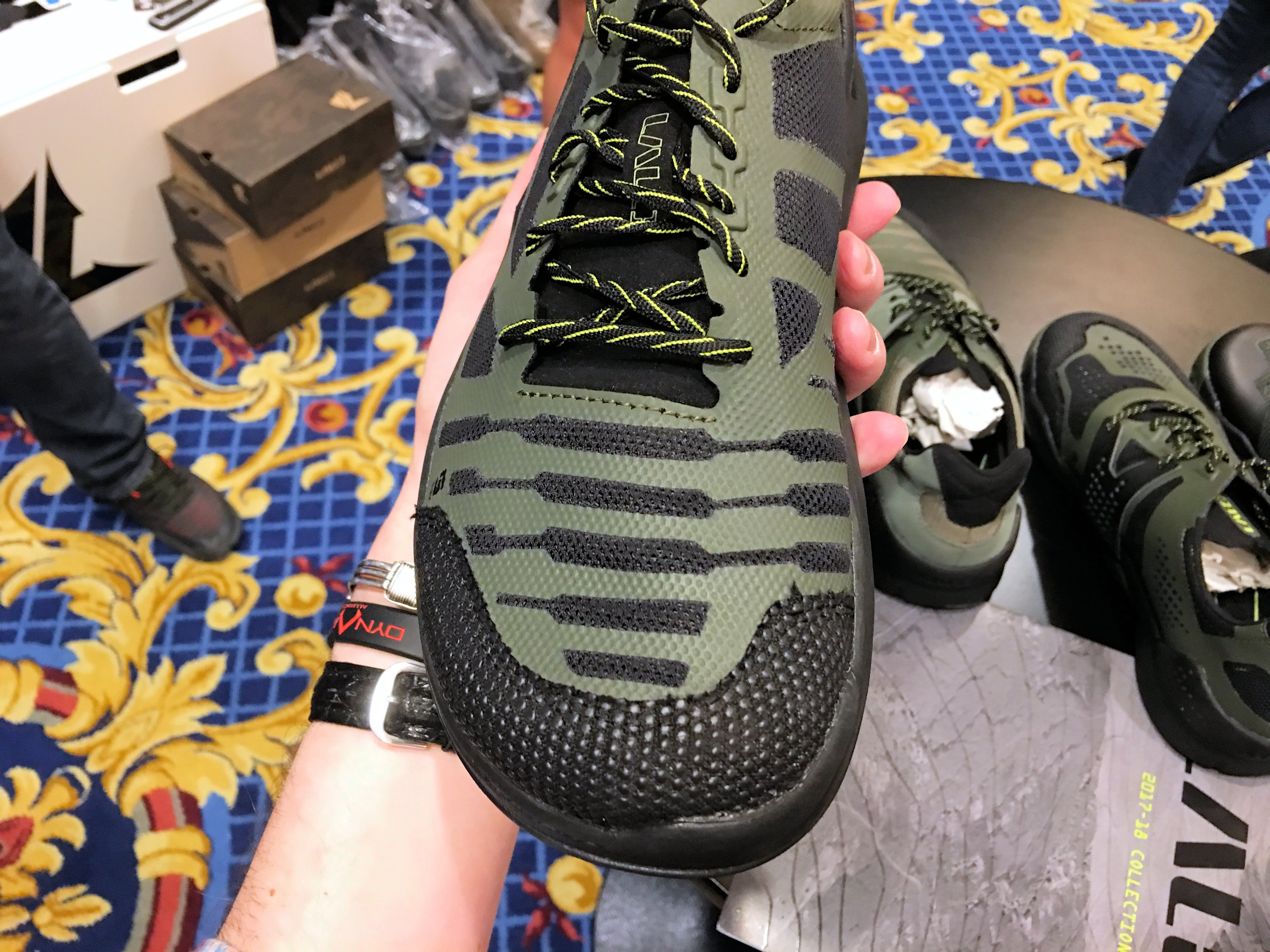
Every once in awhile, DefenseReview (DR) comes across a new company (or old company, for that matter) that really blows us away with their products, and intrigues us with their technology and manufacturing level. LALO Tactical is just such a company, and their very interesting line of fitness and running shoes/sneakers is what we’re referring to here. LALO Tactical president/CEO Jay Taylor was kind enough to take DR through a plethora of interestingly-named tactical-operator-focused models at the company’s booth at SHOT Show 2018, including but not necessarily limited to the LALO Tactical BUD/S GRINDER, LALO Tactical Bloodbird, the LALO Tactical Zodiac Recon, and the LALO Tactical Zodiac Recon AT (All Terrain). These tactical sneakers are all infused with LALO’s advanced design features and technology, including reactive-propulsion soles, ceramic-coated SuperFabric™ toecaps, drainage ports “for a two-way passive drainage system”, “internal stability wrap for extra mid-foot support”, and the LALO OCF, which stands for “Operator Component Fit” system. Pretty cool…and high-tech.
DR really dug all the LALO Tactical sneaks (sneakers)we saw and handled, and we’re particularly keen to try the BUD/S GRINDER Battleship cross-trainer (cross-training shoe) and BUD/S ZODIAC RECON Battleship running shoe, or tactical running shoe, if you will. “Battleship” refers to the shoes’ color, which is a battleship grey, and DR digs it. We also dig both shoes’ lightweight, rugged construction, overall design aspects, and workmanship/quality, which look truly excellent.
The only thing Defense Review has left to do is actually run them on the road and range, and in the gym, to determine, fit, comfort, utility and durability. In the meantime, we hope you enjoy our video below, and please check out the LALO Tactical website to see everything the company does, and get the latest info and pricing on the shoes discussed here. We think you’ll like what you see.
Editor’s Note: Mr. Taylor spent a lot of time educating DR about LALO Tactical’s shoe tech at their booth, which we really appreciated. He went above and beyond, which speaks well of both him and his company.
Company Contact Info:
LALO Tactical
2150 W Washington #208
San Diego, CA 92110
Customer Service Phone: 619-876-5256
International Sales Phone: 619-876-5256 Ext. 105
Customer Service Email: [email protected]
International Sales Email: [email protected]
Website: https://lalo.com
Un strat mic de fulgi de grafen se transforma intr-o arma mortala si ucide bacteriile, oprindu-se infectiile in timpul unor proceduri precum chirurgia implantuluiO echipă de cercetare de la Chalmers a arătat acum că un strat de fulgi de grafeni verticali formează o suprafață protectoare care face imposibilă atașarea bacteriilor. În schimb, bacteriile sunt despicate în afară de fulgi ascuți de grafen și uciși. Acoperirea implanturilor cu un strat de fulgi grafenici poate, prin urmare, ajuta la protejarea pacientului împotriva infecțiilor, la eliminarea necesității tratamentului antibiotic și la reducerea riscului de respingere a implantului.
Posted: Apr 16, 2018
Spikes of graphene can kill bacteria on implants
(Nanowerk News) A tiny layer of graphene flakes becomes a deadly weapon and kills bacteria, stopping infections during procedures such as implant surgery. This is the findings of new research from Chalmers University of Technology, Sweden, recently published in the scientific journal Advanced Materials Interfaces („Vertically Aligned Graphene Coating is Bactericidal and Prevents the Formation of Bacterial Biofilms”).
Operations for surgical implants, such as hip and knee replacements or dental implants, have increased in recent years. However, in such procedures, there is always a risk of bacterial infection. In the worst case scenario, this can cause the implant to not attach to the skeleton, meaning it must be removed.
Bacteria travel around in fluids, such as blood, looking for a surface to cling on to. Once in place, they start to grow and propagate, forming a protective layer, known as a biofilm.
A research team at Chalmers has now shown that a layer of vertical graphene flakes forms a protective surface that makes it impossible for bacteria to attach. Instead, bacteria are sliced apart by the sharp graphene flakes and killed. Coating implants with a layer of graphene flakes can therefore help protect the patient against infection, eliminate the need for antibiotic treatment, and reduce the risk of implant rejection. The osseointegration – the process by which the bone structure grow to attach the implant – is not disturbed. In fact, the graphene has been shown to benefit the bone cells.
Vertical graphene flakes form a protective surface that makes it impossible for bacteria to attach. Instead, bacteria are sliced apart by the sharp graphene flakes and killed. Human cells volume is typically 15,000 times larger. So, what constitutes a deadly knife attack for a bacterium, is therefore only a tiny scratch for a human cell. Coating implants with a layer of graphene flakes can therefore help protect the patient against infection, eliminate the need for antibiotic treatment, and reduce the risk of implant rejection. The osseointegration – the process by which the bone structure grows to attach the implant – is not disturbed. In fact, the graphene has been shown to benefit the bone cells. (Image: Yen Strandqvist/Chalmers University of Technology)
Chalmers University is a leader in the area of graphene research, but the biological applications did not begin to materialise until a few years ago. The researchers saw conflicting results in earlier studies. Some showed that graphene damaged the bacteria, others that they were not affected.
„We discovered that the key parameter is to orient the graphene vertically. If it is horizontal, the bacteria are not harmed” says Ivan Mijakovic, Professor at the Department of Biology and Biological Engineering.
The sharp flakes do not damage human cells. The reason is simple: one bacterium is one micrometer – one thousandth of a millimeter – in diameter, while a human cell is 25 micrometers. So, what constitutes a deadly knife attack for a bacterium, is therefore only a tiny scratch for a human cell.
„Graphene has high potential for health applications. But more research is needed before we can claim it is entirely safe. Among other things, we know that graphene does not degrade easily” says Jie Sun, Associate Professor at the Department of Micro Technology and Nanoscience.
Good bacteria are also killed by the graphene. But that’s not a problem, as the effect is localised and the balance of microflora in the body remains undisturbed.
„We want to prevent bacteria from creating an infection. Otherwise, you may need antibiotics, which could disrupt the balance of normal bacteria and also enhance the risk of antimicrobial resistance by pathogens” says Santosh Pandit, postdoc at Biology and Biological Engineering.
Vertical flakes of graphene are not a new invention, having existed for a few years. But the Chalmers research teams are the first to use the vertical graphene in this way. The next step for the research team will be to test the graphene flakes further, by coating implant surfaces and studying the effect on animal cells.
Chalmers cooperated with Wellspect Healthcare, a company which makes catheters and other medical instruments, in this research. They will now continue with a second study. The projects are funded by Vinnova (a Swedish government agency).
The making of vertical graphene
Graphene is made of carbon atoms. It is only a single atomic layer thick, and therefore the world’s thinnest material. Graphene is made in flakes or films. It is 200 times stronger than steel and has very good conductivity thanks to its rapid electron mobility. Graphene is also extremely sensitive to molecules, which allows it to be used in sensors.
Graphene can be made by CVD, or Chemical Vapor Deposition. The method is used to create a thin surface coating on a sample. The sample is placed in a vacuum chamber and heated to a high temperature at the same time as three gases – usually hydrogen, methane and argon – are released into the chamber. The high heat causes gas molecules to react with each other, and a thin layer of carbon atoms is created.
To produce vertical graphene forms, a process known as Plasma-Enhanced Chemical Vapor Deposition, or PECVD, is used. Then, an electric field – a plasma – is applied over the sample, which causes the gas to be ionized near the surface. With the plasma, the layer of carbon grows vertically from the surface, instead of horizontally as with CVD.