un eveniment organizat în iunie anul trecut pentru a arăta tehnologia israeliană potențialilor bayeri de la forțele străine de securitate, reprezentanții grupului Mer promovau doar un singur lucru: produsele de supraveghere vândute de divizia de securitate a companiei;cei mai inteligenți tineri sunt direcționați către unitatea de informații și au învățat cum să spioneze, hack și să creeze atacuri cibernetice ofensive
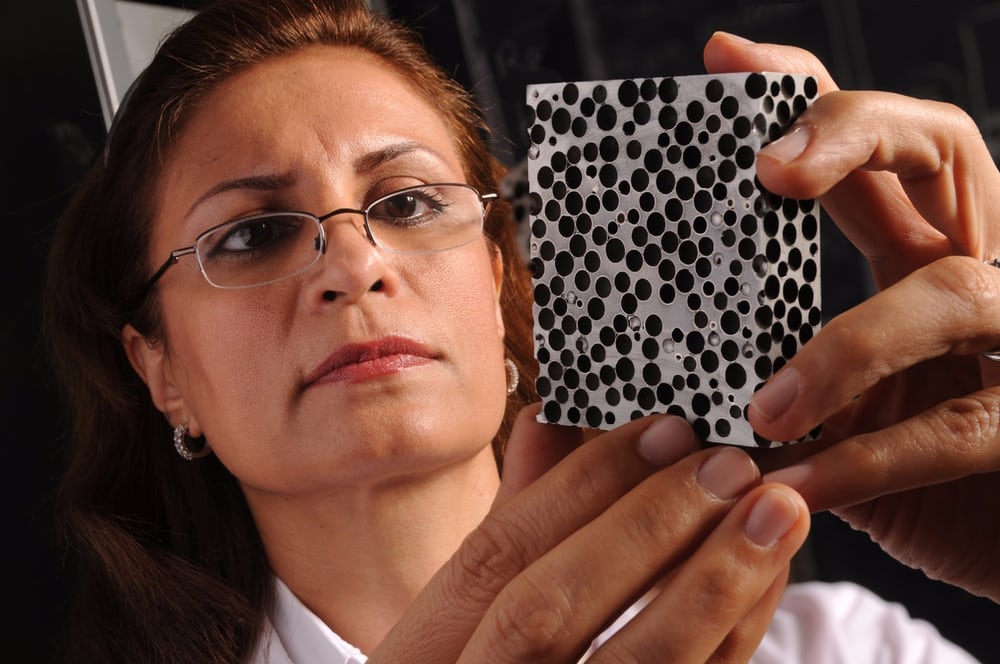
S-ar părea posibil ca spumă de metal ușoară bazată pe coajă abalone, carbină biomelică scalară flexibilă (carbon liniar acetilenic) și / sau compozite grafene multistrat (probabil combinate cu fibre balistice și / sau compozite ceramice) să se dovedească eventual o soluție viabilă pentru viitor armura corpului și armura vehiculului, ceea ce ar fi bun nou pentru TALOS. Armura balistică a lui TALOS va deveni, în mod evident, o componentă importantă a sistemului global.
Will TALOS (Tactical Assault Light Operator Suit)-Outfitted Future Soldiers Get Lightweight Abalone Shell-Based Flexible Scalar Biomimetic Metal Foam, Carbyne (Linear Acetylenic Carbon) and/or Multilayer Graphene Ballistic Armor Composites?
DR found the UC San Diego Jacobs school of Engineering piece Uncovering the Secrets of Abalone Body Armor to be some pretty interesting reading to go along with NewAtlas’ metal foam piece, and we wonder if those two technologies can be integrated with carbyne and/or graphene. According to ExtremTech, carbyne’s essentially an “indefinitely long chain of carbon atoms that are joined together by sequential double bonds or alternating single and triple bonds (a polyyne)”. Carbyne’s about two times stronger than graphene and carbon nanotubes.
DR is fairly familiar with multilayer graphene, which is mechanically drawn from bulk graphite sheets. A group of scientists out of Rice University and the University of Massachussetts (Jae-Hwang Lee, Phillip E. Loya, Jun Lou, and Edwin L. Thomas) published a paper on the theoretical/devvelopmental multilayer graphen ballistic armor tech in late 2014, and it’s definitely intriguing. Apparently, graphene absorbes kinetic energy ten (10) times better than steel, although we haven’t seen any mention yet of how graphene stacks up against aramid fibers (like DuPont Kevlar), ceramic hard armor, etc. Regardless carbyne is even better, significantly better. Metal Foam may eventually prove to be the best future ballistic armor technology yet, as it can reportedly obliterate/vaporize bullets.
It should be noted that to our knowledge, graphene of up to 300 layers and 100 nanometers thick has only taken microbullet hits. Microbullets are microscopic spheres travelling at very high speed. The bad news is that the 3.7 micron spheres punctured the graphene barrier every time. The good news, however, is that the spheres “left a fractured pattern of ‘petals’ around the point of impact, indicating the graphene stretched before breaking, which is supposed to be promising, since it shows that the microbullet’s energy is distributed over a wide area of the graphene material, despite the puncture. So, DR’s very interesting in seeing what carbyne can handle with regard to ballistic projectiles.
Obviously, the lighter TALOS’ ballistic armor can be made the better, despite TALOS’ electric/hydraulic-powered exoskeleton component. Lighter’s ALWAYS better, when it comes to military mobile infantry and Special Operations Forces (SOF) hardware. The question is, will TALOS’-viable carbyne and/or multilayer graphene composite ballistic armor eventually offer anti-rifle protection, specifically against various 7.62x39mm Russian and 7.62x54R Russian rounds? DR doesn’t know, but we DO know that we’re excited to find out. We’re also curious if the proposed graphene-infused spider-silk composite tech has ballistic armor application.
Comunitatea de experți în securitate consideră că probabilitatea atacului terorist prin utilizarea materialelor CBRN crește; că acestea sunt din ce în ce mai atrase de utilizarea de arme neconvenționale – biologice, chimice și radiologice;să definească și să dezvolte instrumente care să permită pregătirea și reacția la dezastrele majore în general
pentru a stabili un cadru global de referință pentru terminologie, metrici și proceduri pentru determinarea fiabilă a performanței detecției traseului ETD;pentru a oferi dezvoltatorilor teste de referință tangibile, menite să îmbunătățească performanța de detectare a ETD-urilor de generație următoare;
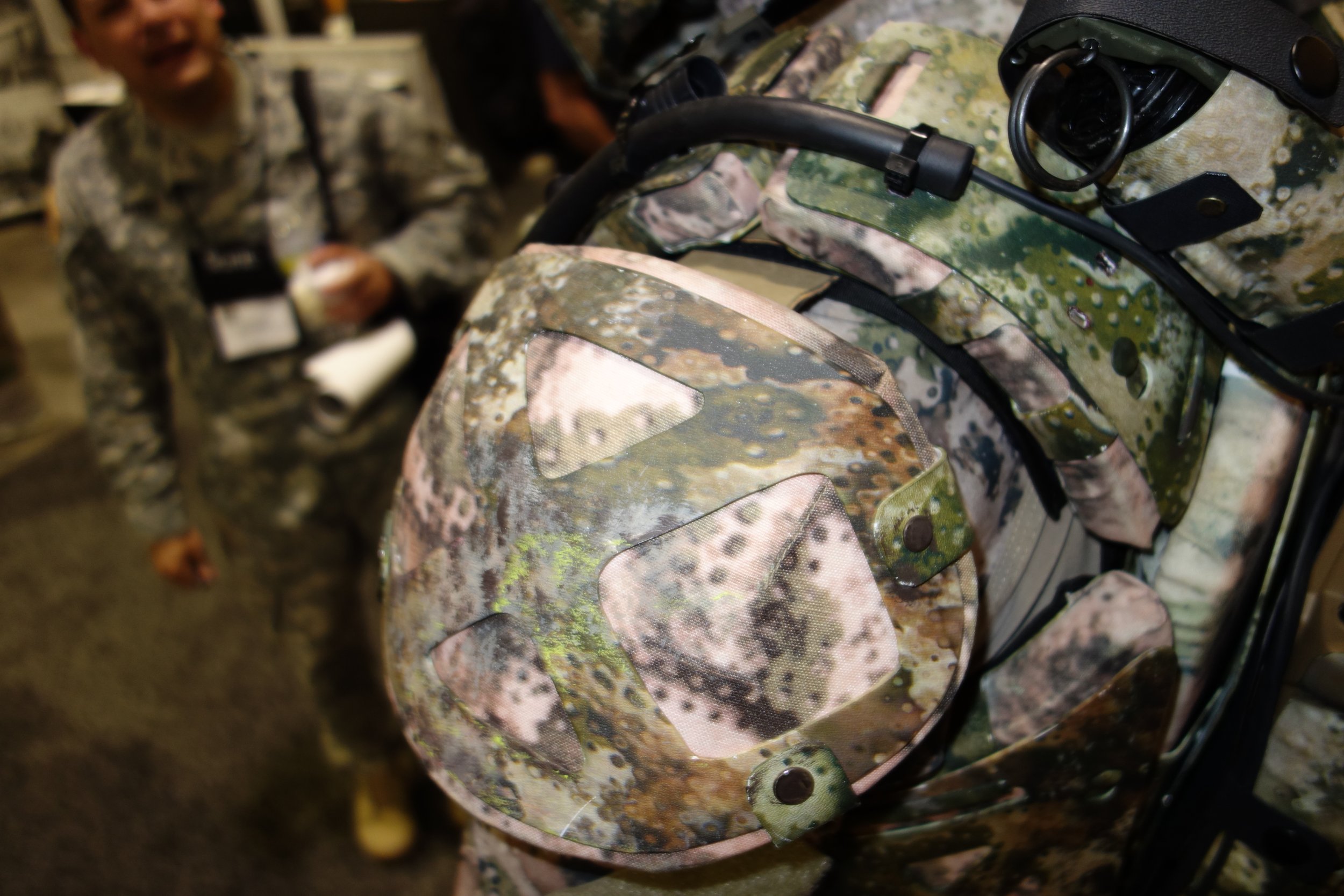
recent, compania a prezentat casca de protecție cu bombe multifuncționale revizuită / cascadă modulară combinată cu sistem de montare pe șină scheletată, care este o soluție interesantă pentru protecția capului de balistică ușor și modulară și o posibilă tehnologie modulară pentru tehnologie TALOS, TALOS continuă platformele de protecție a amicilor soldați-soldați / războinici, precum și operatorii actuali SOF.
Tactical Assault Light Operator Suit (TALOS) + FlyBoard Air Ducted-Fan Hoverboard = Flying Super Soldiers: Future Military Special Operations Forces (SOF) Assaulters/Operators to Fly Themselves to the Target in Exo-Armor ‘Iron Man’-Type Combat Suits?
September 21, 2016 Last updated on 10/09/16.
DefenseReview (DR) first reported on the TALOS (Tactical Assault Light Operator Suit) Exo-Armor Combat Suit program in October, 2013, and while we were healthily skeptical about it, we were also cautiously optimistic, as is our way. Cut to the present, and the TALOS program is still going, which is an achievement in itself, especially considering normal new-military-program attrition AND sequestration. So, DR shall continue with our cautious optimism, at least for now.
But running through a litany of Revision Military KOS’ TALOS-applicable combat technologies isn’t our primary purpose here. The reason for this article is to discuss an incredibly interesting and visually-exciting individual aircraft/air-transport technology called the FlyBoard Air, which is potentially a real game changer for military Special Operations Forces (SOF) missions/operations, and possibly even general infantry warfare, eventually, depending on whether or not it’s affordable and flight time can be significantly increased. The Flyboard Air Test 1 prototype, brought to you by Zapata Racing (ZR), the same (French) folks who brought you the Jetpack by ZR and Flyboard Legend, is essentially a small, relatively lightweight ducted-fan-type hoverboard platform (connected to a bacpack power supply and wireless hand controller/throttle device) with a current (claimed) maximum speed of 93.2 mph, a (claimed) maximum altitude/flight ceiling of 10,000 ft, and a (claimed) maxium flight time of approximately 10 minutes (we assume for an adult male human being of average weight), all enough to make it really revolutionary and even practical for specific military SOF missions.
For example, let’s say you’ve got to get a bunch of military SOF assaulters/operators up a mountain somewhere within a few minutes, and you can’t use a helicopter or Osprey for some reason, at least not to take them the whole distance. Or, let’s say you want to assault either an elevated or ground target, and then immediately exfil said target location, and you don’t want to risk losing helicopters or Ospreys. Or, let’s say you just want to intimidate the hell out of the enemy before you kill them. Never underestimate the potentially very real impact of intimidation and psychological warfare. Psychological advantage can be a major component of a positive outcome, all by itself. Anyway, being able to fly in military SOF assaulters individually, and then fly them right back out of there just as fast is a pretty big deal. Arguably, the best way to go would be to HALO or HAHO jump an assault team in silently with their FlyBoard Airs, and have them fly themselves out with them, using their reserve chutes as emergency chutes during exfil, just in case of a malfunction during the flight back to base.
Remember the jet pack in the movie The Rocketeer? How about the Goblin Glider in the “Spider-Man” comic book and movie series? Well, the Zapata Racing ZR Flyboard Air isn’t quite either of those–not even close, really (although it’s physically closer to the Goblin Glider)–but it’s a really nice, and seemingly very real, technological advancement in individual flight/transport capability, and it may just be the future of warfare, again provided the hardware cost isn’t too hight, and the flight time can be enhanced a bit. Hell, even if the flight time can’t be enhanced, it’s still a great first step–or dare we say–technological leap.
Defense Review is interested to find out if the FlyBoard Air’s ducted fan can be quieted at all for stealthier operation, and if the flight time can be enhanced with graphene supercapacitor battery tech and/or fossil fuel tech advancements, at least until micro, man-packable cold fusion reactors become viable individual-soldier power systems.
Editor’s Note: Zapata Racing was recently acquired by Implant Sciences Corporation (ISC), presumably to ensure that the FlyBoard Air hardware/tech gets into U.S. military hands first, if not exclusively. While the name “Implant Sciences” perhaps sounds like a sinister company or organization either run by a Bond villain who enjoys stroking a white long-haired cat while watching some hapless sap/minion get eaten by his pet tiger shark after falling through a trap door, or run by futurists driving us ever closer to the singularity, the company apparently makes “trace detection technology” that supposedly makes all our lives better somehow. So, I guess we should all feel perfectly safe.
O companie locală din Ankara , care deține un monopol mondial în tunuri de apă și vehicule anti-revoltă în Turcia, intră acum pe piața vehiculelor blindate din țară, sperând să obțină o bună parte din această industrie turcă profitabilă
Constatări ale fraudei și ale altor nereguli legate de fabricarea și vânzarea căștilor de luptă de către industriile închisorilor federali și ArmorSource, LLC, Departamentului Apărării