Nanocoatingul protejează clădirile împotriva poluării(Nanocoating protects buildings against pollution)

soluție
Proprietățile fotocatalitice ale anatazei, una dintre cele trei forme naturale de dioxid de titan, au fost descoperite în Japonia la sfârșitul anilor ’60. Sub influența radiației UV în lumina soarelui, se pot descompune poluanți organici, cum ar fi bacterii, ciuperci și nicotină, și unele materiale anorganice în dioxid de carbon. Efectul catalitic este cauzat de nanostructura cristalelor sale.
Aplicată în aer liber, acest material accesibil și disponibil pe scară largă ar putea reprezenta o soluție eficientă de autocurățare pentru clădiri. Acest lucru se datorează reacției chimice, care lasă un reziduu pe fațadele clădirilor, un reziduu apoi spălat atunci când plouă. Aplicarea lui la monumentele din zonele urbane poate salva patrimoniul nostru cultural, care este amenințat de poluanți.
Cu toate acestea, „vopselele fotocatalitice și aditivii au fost mult timp o provocare pentru industria de acoperire, deoarece acțiunea catalitică afectează durabilitatea lianților de rășină și oxidează componentele vopselei”, explică Ioannis Arabatzis, fondator și director general al NanoPhos, cu sediul în orașul grecesc din Lavrio, într-una din țările în care se află unele dintre cele mai importante monumente ale istoriei omenirii. Compania greacă testează o vopsea numită Kirei, inspirată de un cuvânt japonez care înseamnă atât curat, cât și frumos.

Posted: Sep 15, 2017

Nanocoating protects buildings against pollution

(Nanowerk News) The organic pollution decomposing properties of titanium dioxide (TiO2) have been known for about half a century. However, practical applications have been few and hard to develop, but now a Greek paint producer claims to have found a solution

The photocatalytic properties of anatase, one of the three naturally occurring forms of titanium dioxide, were discovered in Japan in the late 1960s. Under the influence of the UV-radiation in sunlight, it can decompose organic pollutants such as bacteria, fungi and nicotine, and some inorganic materials into carbon dioxide. The catalytic effect is caused by the nanostructure of its crystals.
Applied outdoors, this affordable and widely available material could represent an efficient self-cleaning solution for buildings. This is due to the chemical reaction, which leaves a residue on building façades, a residue then washed away when it rains. Applying it to monuments in urban areas may save our cultural heritage, which is threatened by pollutants.
However, “photocatalytic paints and additives have long been a challenge for the coating industry, because the catalytic action affects the durability of resin binders and oxidizes the paint components,” explains Ioannis Arabatzis, founder and managing director of NanoPhos, based in the Greek town of Lavrio, in one of the countries home to some of the most important monuments of human history. The Greek company is testing a paint called Kirei, inspired by a Japanese word meaning both clean and beautiful.
According to Arabatzis, it’s an innovative product because it combines the self-cleaning action of photocatalytic nanoparticles and the reflective properties of cool wall paints. “When applied on exterior surfaces this paint can reflect more than 94% of the incident InfraRed radiation (IR), saving energy and reducing costs for heating and cooling”, he says. “The reflection values are enhanced by the self-cleaning ability. Compared to conventional paints, they remain unchanged for longer.”
The development of Kirei has been included in the European project BRESAER, which is studying a sustainable and adaptable “envelope system” to renovate buildings. The new paint was tested and subjected to quality controls following ISO standard procedures at the company’s own facilities and in other independent laboratories. “The lab results from testing in artificial, accelerated weathering conditions are reliable,” Arabatzis claims. “There was no sign of discolouration, chalking, cracking or any other paint defect during 2,000 hours of exposure to the simulated environmental conditions. We expect the coating’s service lifetime to be at least ten years.”
Many studies are being conducted to exploit the properties of titanium dioxide. Jan Duyzer, researcher at the Netherlands Organisation for Applied Scientific Research (TNO) in Utrecht, focused on depollution: “There is no doubt about the ability of anatase to decrease the levels of nitrogen oxides in the air. But in real situations, there are many differences in pollution, wind, light, and temperature. We were commissioned by the Dutch government specifically to find a way to take nitrogen oxides out of the air on roads and in traffic tunnels. We used anatase coated panels. Our results were disappointing, so the government decided to discontinue the research. Furthermore, we still don’t know what caused the difference between lab and life. Our best current hypothesis is that the total surface of the coated panels is very small compared to the large volumes of polluted air passing over them,” he tells youris.com.
“In laboratory conditions the air is blown over the photocatalytic surface with a certain degree of turbulence. This results in the NOx-particles and the photocatalytic material coming into full contact with one another,” says engineer Anne Beeldens, visiting professor at KU Leuven, Belgium. Her experience with photocatalytic TiO2 is also limited to nitrogen dioxide (NOx) pollution.
“In real applications, the air stream at the contact surface becomes laminar. This results in a lower velocity of the air at the surface and a lower depollution rate. Additionally, not all the air will be in contact with the photocatalytic surfaces. To ensure a good working application, the photocatalytic material needs to be positioned so that all the air is in contact with the surface and flows over it in a turbulent manner. This would allow as much of the NOx as possible to be in contact with photocatalytic material. In view of this, a good working application could lead to a reduction of 5 to 10 percent of NOx in the air, which is significant compared to other measures to reduce pollutants.”
The depollution capacity of TiO2 is undisputed, but most applications and tests have only involved specific kinds of substances. More research and measurements are required if we are to benefit more from the precious features of this material.
Source: By Koen Mortelmans, Youris

Lămpi ceramice luminiscente pentru surse noi de lumină(Luminescent ceramics for new light sources )

În funcție de compoziția luminoforului este posibil să se obțină un spectru variabil de strălucire a ceramicii, adică alb, albastru, galben etc. Pentru acest scop, se selectează luminoforele optime în compoziția generală a materialului ceramic transparent”, adaugă Oleg Khasanov.
Sursele de lumină din ceramică luminescente vor avea, de asemenea, o rezistență mai mare. Aceasta înseamnă că sursele de lumină vor dura mult mai mult și vor fi mai greu de deteriorat.
Oamenii de știință de la TPU observă că ceramica din zilele noastre se aplică în diferite domenii: electronică, radioelectronică, industria de apărare, petrol și gaze, industria nucleară, aerospațială, automobile, precum și în domeniul energetic și medicină și în multe alte domenii. Materialele ceramice au un set avansat de proprietăți operaționale: o gamă largă de aplicații (de la temperatura rece la temperatura plasmei în duzele motorului de rachetă), determină rezistența și proprietățile electrofizice.

Posted: Sep 13, 2017

Luminescent ceramics for new light sources

(Nanowerk News) A technology for obtaining luminescent ceramics which may become a cheaper alternative to modern light sources is being developed by scientists of Tomsk Polytechnic University. In the future this kind of ceramics can replace LEDs; its application will make it possible to significantly reduce the cost of production of automobile headlights and other light sources. Another advantage of luminescent ceramics is higher strength due to which ceramic material products will be more durable.

Luminescent ceramics
Luminescent ceramics. (Image: TPU)
A research team from the Department of Nanomaterials and Nanotechnology and TPU Nano-Center under the supervision of Professor Oleg Khasanov develops luminescent ceramics. Research is conducted together with the Department of Lasers and Lighting Engineering.
In automobile industry new ceramics can be applied in different lighting devices, for example, in car headlights, and lights for urban and holiday illumination.
„In mass production luminescent nanoceramic light sources cost less compared to modern LEDs with more complex electronic structure,” says Professor Khasanov.
TPU scientists obtain various types of nanoceramics, i.e. luminescent and transparent ceramics, on a spark-plasma sintering unit (SPS) for powder materials. Ceramic powder is placed in a special mold which is conductive and capable to withstand high temperatures and pressure casting. After that, the powder is heated by impulse current at the required temperature and simultaneously compressed. Therefore, sintering lasts quickly.
„Depending on the composition of luminophor it is possible to obtain a variable spectrum of glow of ceramics, i.e. white, blue, yellow, etc. For this purpose we select optimal luminophors in the general composition of transparent ceramic material,” adds Oleg Khasanov.
Light sources made of luminescent ceramics will also feature higher strength. That means, the light sources will last much longer and they will be more difficult to damage.
TPU scientists note that nowadays ceramics is applied in various fields: electronics, radioelectronics, defense industry, oil & gas, nuclear industry, aerospace, automobile, as well as in power engineering and medicine and many other fields. Ceramic materials have an advanced set of operational properties: a wide range of applications (from space cold to plasma temperature in rocket engine nozzles), determined strength and electrophysical properties.
Source: Tomsk Polytechnic University
Subscribe to a free copy of one of our daily
Nanowerk Newsletter Email Digests
with a compilation of all of the day’s news.

Read more: Luminescent ceramics for new light sources

Catalizatori metalici lichizi suportați – o nouă generație de acceleratori de reacție (Supported liquid metal catalysts – a new generation of reaction accelerators )

Elementul galiu joacă un rol central în această nouă clasă de materiale. Galiul se topește la aproximativ 30 ° C și are un punct de fierbere de 2400 ° C. Acesta posedă capacitatea unică de a putea dizolva aproape toate celelalte metale. Când este expus la aer, straturi ultra-subțiri de oxid se formează pe suprafața galiului; totuși, acestea sunt reconvertite înapoi la elementul original în condițiile obținute în timpul multor procese catalitice.
Până în prezent, cercetătorii FAU și-au atins rezultatele spectaculoase utilizând paladiu dizolvat în galiu. În continuare intenționează să efectueze cercetări suplimentare pentru a afla dacă aceste efecte extraordinare pot fi obținute și prin utilizarea metalelor neprețioase dizolvate în galiu și, de asemenea, dacă efectele pot fi reproduse în legătură cu alte reacții chimice.
„Calculele noastre ne determină să presupunem că atomii individuali de metal dizolvați în galiu pot prezenta caracteristici reactive complet diferite de cele pe care le va expune același metal în formă cristalină”, ​​explică Andreas Görling.
„Din acest motiv suntem atât de fascinați de această nouă clasă de materiale catalitice, suntem convinși că, cu ajutorul complexelor de aliaje susținute, pot fi dezvoltați catalizatori foarte eficienți și rentabili, care au un potențial considerabil în ceea ce privește aplicațiile industriale” adaugă Hans-Peter Steinrück.

Posted: Sep 13, 2017

Supported liquid metal catalysts – a new generation of reaction accelerators

(Nanowerk News) Catalysts are agents that initiate chemical reactions, speed them up or significantly increase the yield of the desired product. New and improved catalysts are thus considered the key to creating more sustainable and efficient production processes in the chemical industry.

In a joint research project, five professors at Friedrich-Alexander-Universität Erlangen-Nürnberg (FAU) and their teams have recently discovered how to bypass the known drawbacks of the technical catalysts that are currently in use by means of a new material concept that makes the creation of significantly more efficient catalysts possible.
This new generation of catalysts employs liquid drops of metal alloy attached to porous carriers that are brought into contact with the gaseous reactants. The microscopically small drops of alloy are fluid because they contain a high proportion of gallium, an element with a very low melting point. At the same time, this high concentration of gallium ensures that the atoms of the dissolved secondary metal components are thoroughly dispersed: the individual metal atoms in solution within the gallium are responsible for the catalytic effect.
The researchers have published their findings in the leading specialist journal Nature Chemistry („Gallium-rich Pd–Ga phases as supported liquid metal catalysts”).
A diagram illustrating the processes at the catalytic surface of a liquid drop of gallium containing small amounts of palladium during the catalytic dehydrogenation of n-butane
A diagram illustrating the processes at the catalytic surface of a liquid drop of gallium containing small amounts of palladium during the catalytic dehydrogenation of n-butane. (Image: FAU/Mathias Grabau and Florian Maier)

Supported liquid catalysts

Over the past decade, researchers at FAU have repeatedly been able to demonstrate their international preeminence in the field of catalyst material innovations. Catalytic Materials is consequently a key research area within the Cluster of Excellence Engineering of Advanced Materials (EAM) at FAU.
Supported liquid catalysts have often been the focal point of interest for the FAU-based researchers. These combine the benefits of customised molecular reaction accelerators with the advantage that they can be more readily separated from the product.
In the concept outlined in the article published in Nature Chemistry, the use of metal alloys in supported liquid catalysts is described for the first time. In addition, it is also the first time that catalytic activity has been ascribed to liquid metal alloys.
Moreover, the initially tested material combinations have been found to significantly outperform standard technical catalysts that have taken years to develop.
„It is particularly interesting that there is little to no deactivation of the supported metal complexes when carbon deposits form on them,’ says Professor Peter Wasserscheid. ‘It is deposits such as this that are the main cause of the deactivation of catalysts used for catalytic conversion at high temperatures by the petrochemical industry.”
The researchers were able to demonstrate this important effect in the case of the dehydration of butane. The special structural nature of this new class of materials was discovered by four groups working in collaboration: microscopic analysis was undertaken by the team under Wolfgang Peukert, the teams of Hans-Peter Steinrück and Christian Papp completed the spectrographic analysis, Rainer Hock’s team was responsible for radiographic analysis while the corresponding calculations were undertaken by Andreas Görling and his colleagues.

Gallium: the secret of success

The element gallium plays a central role in this new class of materials. Gallium melts at around 30°C and has a boiling point of 2400°C. It possesses the unique ability of being able to dissolve almost all other metals. When it is exposed to air, ultra-thin layers of oxide form on the surface of gallium; however, these are reconverted back to the original element under the conditions obtained during many catalytic processes.
To date, the FAU-based researchers have achieved their spectacular results using palladium dissolved in gallium. They next intend to conduct further research to find out whether these extraordinary effects can also be obtained using non-precious metals dissolved in gallium and also whether the effects can be reproduced in connection with other chemical reactions.
„Our calculations lead us to assume that single metal atoms dissolved in gallium can display totally different reactive characteristics from those that the same metal in crystalline form will usually exhibit,” explains Andreas Görling.
„This is why we are so fascinated by this new class of catalytic materials. We are convinced that with the help of supported alloy complexes, highly efficient and very cost-effective catalysts can be developed that have considerable potential with regard to industrial applications,” adds Hans-Peter Steinrück.
Source: Friedrich-Alexander-Universität Erlangen-Nürnber

Read more: Supported liquid metal catalysts – a new generation of reaction accelerators


Nanopowder eliberează puterea în urină (w / video)(Nanopowder releases power in urine (w/video))

Ceea ce facem ca oamenii de stiinta ai Armatei este dezvoltarea de materiale si tehnologii care vor aduce beneficii direct Soldierului si imbunatati capacitatile lor”, a spus dr. Kristopher Darling, cercetator ARL. „Am dezvoltat o nouă tehnică de procesare pentru a sintetiza un material care sparge în mod spontan apa în hidrogen”.Echipa de cercetare a anunțat, în vara aceasta, că o pulbere nano-galvanică pe bază de aluminiu pe care o dezvoltau producea hidrogen pur atunci când vine în contact cu apa. Cercetătorii au observat o reacție similară atunci când adăugă pulberea lor în orice lichid care conține apă.

Posted: Sep 12, 2017

Nanopowder releases power in urine (w/video)

(Nanowerk News) Scientists at the U.S. Army Research Laboratory observed an unexpected result when combining urine with a newly engineered nano-powder based on aluminum. It instantly releases hydrogen from the urine at much higher rate than with ordinary water.

The research team announced earlier this summer that a nano-galvanic aluminum-based powder they were developing produced pure hydrogen when coming into contact with water. The researchers observed a similar reaction when adding their powder to any liquid containing water.
„What we do as Army scientists is develop materials and technology that will directly benefit the Soldier and enhance their capabilities,” said Dr. Kristopher Darling, an ARL researcher. „We developed a new processing technique to synthesize a material, which spontaneously splits water into hydrogen.”
Hydrogen, the most plentiful element in the universe, has the potential to power fuel cells and provide energy to future Soldiers.
Fuel cells generate electricity quietly, efficiently and without pollution. According to a Department of Energy’s website, fuel cells are „more energy-efficient than combustion engines and the hydrogen used to power them can come from a variety of sources.”
„We have calculated that one kilogram of aluminum powder can produce 220 kilowatts of energy in just three minutes,” said Dr. Anit Giri, also an ARL researcher.
In space, astronauts recycle waste water and urine because drinking water is a precious commodity. For Soldiers in austere environments, there are many precious commodities. Power and energy is becoming increasingly important to run communications and electronics gear for away teams, which can’t be resupplied.
Making use of urine as fuel source may result in tremendous benefits for Soldiers, officials said.
„When we demonstrated it with urine, we saw almost a factor of twofold increase in the reaction rates,” Darling said. „We were very excited. As a group we have been pushing for the last few months on developing the efficiency and the reaction kinetics to try to get them faster.”
The team is still investigating why urine causes a faster reaction, but it may have something to do with the electrolytes and the acidity of the liquid.
„It’s unique because the rate of the reaction is so efficient and extremely rapid from such a small volume of material,” Darling said.
The team is working closely with other researchers at the laboratory, including the Sensors and Electron Devices Directorate, to discover how to harness the material as a potential energy source.
„It was a spontaneous finding,” Darling said. „We weren’t expecting to develop this material specifically for hydrogen production. It was a group effort. We came together as a team to understand the importance of the discovery. This has great potential for benefiting Soldiers.”
In a statement, Dr. Philip Perconti, the laboratory director, said it „may find great utility for forward deployed troops who need a compact and lightweight energy source.”
In the coming months, the team will continue to investigate and push the limits of the discovery, to try and understand its implications.
„Our basic focus is materials development and optimization,” Darling said. „We’re looking at how we can optimize the composition, its interactions with other fluids, including saliva and other liquids available to Soldiers in a field environment.”
Source: U.S. Army Research Laboratory


Evaluarea toxicității nanoclay(Assessing the toxicity of nanoclay)

„Modelul SAEC extinde impactul studiului nostru asupra unei platforme biologice mai umane, deoarece celulele primare imita mai mult țesutul lor de origine și reduc în continuare identificarea greșită, contaminarea, instabilitatea genetică generală și lipsa de funcții și markeri întâlnite adesea cu celulele imortalizate sisteme, „noteaza cercetatoriiCu o rată estimată de creștere de aproximativ 25% anual, nanocompozitele sau compozitele care conțin nanoclase încorporate în polimeri sunt de așteptat să aibă o largă implementare în produsele comerciale și industriale, de la materialele de ambalare pentru produsele alimentare la dispozitivele auto și medicale. În ambalajul alimentar, de exemplu, nanoclays sunt modificate organic pentru a permite o mai bună exfoliere în matricea polimerului la un procentaj scăzut în greutate silicat, ceea ce duce la aplicații comerciale de aproape 70% din volumul pieței.

Posted: Sep 07, 2017

Assessing the toxicity of nanoclay

(Nanowerk News) With an estimated growth rate of about 25% annually, nanocomposites or composites containing nanoclays incorporated into polymers are expected to have wide implementation in commercial and industrial products, from food packaging materials to automotive and medical devices. In food packaging, for instance, nanoclays are organically modified to allow for better exfoliation within the polymer matrix at a low silicate weight percent, leading to commercial applications of almost 70% of the market volume.

Some of the most common nanoclays used in food packaging are Nanomer I.31PS, Nanomer I.34TCN, and Nanomer I.44P. Researchers at West Virginia University now have designed a systematic study to help determine the potential for inhalation toxicity of the three organically modified Nanomer nanoclays currently used for food packaging applications.
This study, just reported in a paper in ACS Applied Materials & Interfaces („Early Assessment and Correlations of Nanoclay’s Toxicity to Their Physical and Chemical Properties”), uses human immortalized bronchial epithelial cells (BEAS-2B) and primary small airway epithelial cells (SAECs) as established cell lines for assessing toxicity induced via inhalation because they have previously helped assess toxicity of graphene nanoparticles, asbestos, and carbon nanotubes.
Assessment and Correlations of Nanoclay’s Toxicity to Their Physical and Chemical Properties
„The SAEC model expands the impact of our study to a more human-related biological platform as primary cells more closely mimic their tissue of origin and further reduce misidentification, contamination, general genetic instability, and lack of functions and markers often encountered with immortalized cellular systems,” the researchers note.
Additionally, through the use of two epithelial lung cell lines, the scientists were able to further assess the potential toxicity of nanoclays when they deposit in both the bronchioles and distal airways near the terminal bronchiole and alveolar duct, respectively.
Systematic assessment maps and correlates the physical and chemical properties of nanoclays at two points in their life cycle (i.e., production/manufacturing or the end of their life cycle) with their potential to induce toxicity for a better understanding of how nanoclays’ deleterious interactions with the cellular systems can be reduced so safe yet effective materials can be produced and implemented in commercial sectors.
„Our study showed that the chemical composition of individual organic modifiers used for nanoclay functionalization played a large role in their interactions with cellular systems,” the authors conclude their report. „Specifically, differences in organic modifiers caused differential size distributions in dispersion cellular media and differential degrees of toxicity upon their or thermally degraded byproducts exposure to lung epithelial cells. Understanding how the physical and chemical properties of such materials influence toxicity can aid in safer design functionalities while still maintaining beneficial properties to make them miscible with polymer matrixes for food packaging applications.”
By Michael is author of two books by the Royal Society of Chemistry: Nano-Society: Pushing the Boundaries of Technology and Nanotechnology: The Future is Tiny.

Read more: Assessing the toxicity of nanoclay

Echipa de cercetare descoperă „materialul de cauciuc” care ar putea duce la vopsea rezistentă la zgârieturi pentru mașină ( Research team discovers ‘rubber material’ that could lead to scratch-proof paint for car )

, o echipa internationala de cercetatori a descoperit super-lubricitate in cateva straturi de grafen – un concept in care frecarea dispar sau aproape dispar. Experții au constatat, de asemenea, că câteva straturi de nitrurați de bor hexagonal (h-BN) sunt la fel de puternice ca diamantul, dar sunt mai flexibile, mai ieftine și mai ușoare.
Constatările, care au fost raportate în Nature Communications ( „Proprietățile mecanice ale nitriului de bor subțire subțire atomică și rolul interacțiunilor intermediare” ), arată că straturile h-BN formează cel mai puternic izolator subțire disponibil la nivel global și calitățile unice ale materialului să fie folosite pentru a crea dispozitive inteligente, flexibile și aproape incomode, precum și vopsea rezistentă la zgârieturi pentru mașini.

Posted: Sep 07, 2017

Research team discovers ‘rubber material’ that could lead to scratch-proof paint for car

(Nanowerk News) Led by Dr Elton Santos from the University’s School of Mathematics and Physics, an international team of researchers have found superlubricity in a few layers of graphene – a concept where friction vanishes or very nearly vanishes. The experts also found that a few layers of hexagonal boron nitride (h-BN) are as strong as diamond but are more flexible, cheaper and lighter.

The findings, which have been reported in Nature Communications („Mechanical properties of atomically thin boron nitride and the role of interlayer interactions”), reveal that the h-BN layers form the strongest thin insulator available globally and the unique qualities of the material could be used to create flexible and almost unbreakable smart devices, as well as scratch-proof paint for cars.
Scratch proof paint for cars
Scratch proof paint for cars.
Dr Santos explains: „We have all at some point in life stepped on a slippery surface where we have to steady our balance so that we don’t fall. In most cases, liquid such as water or oil is the cause and this slippery state is what we describe as superlubricity – there is basically no friction on a surface.
„In graphene, this superlubricity state comes from atomic orbitals that compose carbon atoms. Normally, to generate friction some orbitals must overlap and heat, or some energy, must be released. Surprisingly, our research shows that graphene does not require this process, it just spontaneously slides on top of other layers but does not release heat. This means that graphene, which is 300 times stronger than steel, becomes mechanically weaker and can easily break.”
The research findings around the h-BN layers show that its mechanical properties are similar to diamond but are much cheaper, more flexible and lighter. It can easily be integrated in tiny electronic circuits or to reinforce structures as it is more robust against shocks or mechanical stress.
Dr Santos commented: „It has been a privilege to work with global researchers to predict and measure multilayer graphene and h-BN in an unprecedented way. It is nearly impossible at present to make major breakthroughs in science without working in collaboration. At Queen’s University we have advanced our knowledge of these layered materials and have made some major discoveries, which could help to tackle many global challenges within our society.
„Our key finding is that bilayer graphene develops a super-lubricity state where no heating is generated as the layers slide on top of each other. Just a few materials have these features and it looks like graphene has joined this exclusive club. During this process, we also discovered that h-BN, a common lubricant used in several automotive and industrial applications, developed a mechanical strength in a few layers. These are as strong as diamond, measured in terms of a quantity called Young modulus. This is a truly ground-breaking finding as even an insulator with thin layers could not keep its Young modulus at such high magnitudes.
„There are several possibilities for application of our discoveries which could have a positive impact in the real world. We are looking at a timeline of around five to ten years to transform the discoveries into real products but we could see benefits such as material reinforcement to mixture in solutions such as ink for paint, which would give further strength against corrosion and could potentially mean scratch-proof cars in future.
„This stretchy material could also be used in electronic devices and motor engines to make friction very low, as no heat is released.”
Dr Santos added: „In electronics, several companies are currently integrating h-BN in prototypes together with graphene for the creation of smart-devices such as iPads and Androids with unique features. These companies are also incorporating h-BN with polymers to give additional strength for novel mechanical applications such as aerospace, sports and civil engineering.
„We are currently looking for other combinations of 2D crystals which could be used for similar applications. So far, graphene seems the best candidate but there is still much to be explored within the library of layered materials. The future is bright for 2D materials because of the development, progress and research currently being performed worldwide.”
Source: Queen’s University Belfast

Read more: Research team discovers ‘rubber material’ that could lead to scratch-proof paint for car

Adezivul solid se asamblează pe o cale către baterii mai sigure(Self-assembling solid crystals a path to safer, solid batteries )

Cercetatorii au identificat noi materiale solide care ar putea conduce la fabricarea de baterii litiu-ion netoxice,

Posted: Sep 04, 2017

Self-assembling solid crystals a path to safer, solid batteries

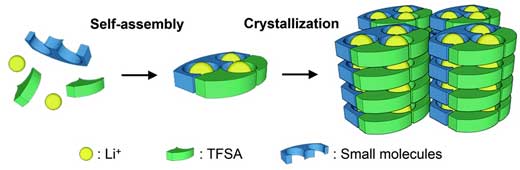
(Nanowerk News) Researchers have identified new solid materials that could lead to the manufacture of non-toxic lithium-ion batteries, according to a study recently published in the journal Science and Technology of Advanced Materials („Construction of nanostructures for selective lithium ion conduction using self-assembled molecular arrays in supramolecular solids”).When a specific organic compound is added to lithium salt, the molecules self-assemble to form channels through which lithium ions can move, creating an electric currentWhen a specific organic compound is added to lithium salt, the molecules self-assemble to form channels through which lithium ions can move, creating an electric current.Batteries are made of two oppositely charged electrodes separated by a liquid, gel-like, or solid ‘electrolyte’ medium through which electrically charged atoms, or ions, move. In many cases, these electrolytes are toxic and flammable, so researchers have been looking for non-toxic alternatives.Makoto Moriya of Shizuoka University in Japan investigated molecular crystals for this purpose. To obtain the crystals he added an organic compound to lithium salt. The molecules self-assembled to form channels through which lithium ions moved, creating an electric current. Changing the crystals’ structures affected their ion-conducting functions.Ion conductivity in these materials was not as high as in organic liquids, inorganic ceramics or glass electrolytes. But it was comparable to polymer electrolytes, which have been targeted as potential solid electrolytes.Also, the amount of flammable organic substances in the molecular crystalline electrolytes was lower than in polymer electrolytes and in conventional liquid electrolytes, making them a potentially safer alternative.Moriya found it easy to control the crystal structure of these solid materials by making alterations to their molecules. This structural versatility could prove to be a powerful tool for dramatically improving ion conductivity in these materials.“These observations … could open the door to the design of new solid electrolytes and thus the development of new molecular devices,” Moriya concludes.

Read more: Self-assembling solid crystals a path to safer, solid batteries

Source: National Institute for Materials Science

Uleiul și apa se pot combina dacă condițiile sunt corecte ( Oil and water may combine if conditions are right )

Aceasta este prima data cand metanul sa dovedit a se amesteca cu apa. Substanțele de respingere se comportă sub presiuni ridicate, cum ar fi cele găsite la podeaua oceanică sau în interiorul planetelor, care ar putea avea o gamă largă de aplicații, de la înlocuirea solvenților industriali periculoși și periculoși pentru mediu la modelarea corpurilor planetare,

Posted: Aug 28, 2017

Oil and water may combine if conditions are right

(Nanowerk News) They say that oil and water do not mix … but now scientists have discovered that – under certain circumstances – it may be possible.

A new study suggests that some oily molecules – which normally repel water – can be forced to dissolve in water when the two substances are squeezed together under extreme pressure.
Researchers applied high pressure to tiny containers filled with water and methane, creating conditions similar to the intense pressure found on the ocean floor or inside the planets Uranus and Neptune.
By compressing water and methane together, scientists have been able to gain insights into how the chemicals interact. Methane is often used in experiments to study the properties of substances like oil that repel water – called hydrophobic molecules.
The new findings suggest it may be possible to mix other hydrophobic molecules with water in a similar way.
The study, published in the journal Science Advances („When immiscible becomes miscible – Methane in water at high pressures”), was carried out by researchers at the University of Edinburgh.
The team squeezed methane and water molecules between two ultra-sharp diamonds and compressed them by bringing the two anvil points together. The diamond anvil was used to apply pressures of up to 20,000 Bars – 20 times greater than the pressure at the bottom of the Mariana trench, the deepest part of the world’s oceans.
Under a microscope, methane – much like oil – appears as large droplets in water at normal pressure, demonstrating that the substances do not mix. However, the team found the droplets disappeared at high pressures, indicating that the methane had dissolved.
Researchers think this happens because methane molecules shrink as pressure is increased, while water molecules stay largely the same. This could allow compacted methane molecules to fit between the much larger water molecules, enabling them to mix, the team says.
Understanding the mixing properties of water and methane could help researchers find ways of replacing expensive and hazardous solvents used in industry. It could also help provide new insights into conditions at the bottom of the ocean or in the outer solar system.
The study was supported by the Engineering and Physical Sciences Research Council and European Research Council.
Dr John Loveday, of the University of Edinburgh’s Centre for Science at Extreme Conditions in the School of Physics and Astronomy, said: „This is the first time that methane has been shown to mix with water. These exciting findings shed light on how water-repelling substances behave under high pressures, such as those found at the ocean floor or inside planets. This could have a huge range of applications, from replacing expensive and environmentally hazardous industrial solvents to modelling planetary bodies like Saturn’s largest moon, Titan.”
Source: University of Edinburgh

Read more: Oil and water may combine if conditions are right

Noua tehnologie cu membrană lichid-metal poate contribui la viabilitatea vehiculelor pe bază de hidrogen cu celule de combustibil (New liquid-metal membrane technology may help make hydrogen fuel cell vehicles viable)

Conștient de faptul că tensiunea superficială a metalelor lichide s-ar putea schimba ca răspuns la variațiile de temperatură și compoziția gazelor la care au fost expuse, potențial producând scurgeri, au hotărât să introducă metalul între două straturi de material suport pentru a crea un lichid întins – membrana metalică sau SLiMM. O membrană constând dintr-un strat subțire (două zecimi dintr-un milimetru) de galiu lichid între un strat de carbură de siliciu și un strat de grafit a fost construită în laborator și testată pentru stabilitate și permeabilitate la hidrogen.
Membrana a fost expusă la o atmosferă de hidrogen timp de două săptămâni la temperaturi cuprinse între 480 și 550 ° C. Rezultatele au arătat că pelicula de galiu lichid a fost de până la 35 de ori mai permeabilă la hidrogen decât un strat comparabil de paladiu și că difuzia de hidrogen Membrana sandwich a fost considerabil mai mare decât pentru o membrană tipică de paladiu. De asemenea, testul a arătat că membranele au fost selective, permițând doar trecerea hidrogenului

Posted: Aug 28, 2017

New liquid-metal membrane technology may help make hydrogen fuel cell vehicles viable

(Nanowerk News) While cars powered by hydrogen fuel cells offer clear advantages over the electric vehicles that are growing in popularity (including their longer range, their lower overall environmental impact, and the fact that they can be refueled in minutes, versus hours of charging time), they have yet to take off with consumers. One reason is the high cost and complexity of producing, distributing, and storing the pure hydrogen needed to power them, which has hindered the roll-out of hydrogen refueling stations.

Engineers have long recognized the power – and limitless availability – of hydrogen, the most abundant element in the universe. Hydrogen occurs naturally in the environment, but it is almost always chemically bound to other elements–to oxygen in water (H2O), for example, or to carbon in methane (CH4). To obtain pure hydrogen, it must be separated from one of these molecules. Virtually all of the hydrogen produced in the United States is obtained from hydrocarbon fuels, primarily natural gas, through steam reforming, a multi-step process in which the hydrocarbons react with high-temperature steam in the presence of a catalyst to produce carbon monoxide, carbon dioxide, and molecular hydrogen (H2).
The hydrogen can then be separated from the other gases through a cumbersome, multi-step chemical process, but the cost and complexity of hydrogen production can be reduced by using a membrane to do the separation. Most of the hydrogen separation membranes currently being developed use the precious metal palladium, which has unusually high hydrogen solubility and permeance (which means that hydrogen easily dissolves in and travels through the metal, while other gases are excluded). But palladium is expensive (it currently sells for about $900 per ounce) and fragile.
For these reasons, chemical engineers have long searched for alternatives to palladium for use in hydrogen separation membranes, but so far, no suitable candidates have emerged. A pioneering study led by Ravindra Datta, professor of chemical engineering at Worcester Polytechnic Institute (WPI), may have identified the long-elusive palladium alternative: liquid metals.
A host of metals and alloys are liquid at the standard operating temperatures found in steam reforming systems (around 500 degrees C), and most of these are far less expensive than palladium. In addition, a membrane made with a film of liquid metal should not be prone to the defects and cracks that can render a palladium membrane unusable.
The WPI study, published in the Journal of the American Institute of Chemical Engineers („Sandwiched liquid metal membrane (SLiMM) for hydrogen purification”), is the first to demonstrate that in addition to these advantages, liquid-metal membranes also appear to be significantly more effective than palladium at separating pure hydrogen from other gases, suggesting that they may provide a practical and effective solution to the challenge of supplying affordable hydrogen for fuel-cell vehicles. „The recent shift to electric cars is irreversible,” said Datta. The next step after electric vehicles, he and others believe, is hydrogen-fuel vehicles – if the hydrogen supply puzzle is solved.
Testing a Sandwiched Liquid-Metal Membrane
Researchers at Worcester Polytechnic Institute (WPI) tested a prototype sandwiched liquid-metal membrane with this laboratory set-up. The membrane, a thin layer of gallium sandwiched between porous ceramic supports, selectively separated hydrogen from a mixed-gas stream more efficiently than a comparable palladium membrane. (Image: Worcester Polytechnic Institute (WPI)/Curtis Sayers (click on image to enlarge)
Like battery-powered electric cars, fuel-cell vehicles have electric motors. The motors are powered by electricity generated inside the fuel cell when hydrogen and oxygen combine in the presence of a catalyst (the only „waste” product is water). While they can pull oxygen from the air, the cars must carry a supply of pure hydrogen.
Many researchers have focused on bringing the cost of that hydrogen down by making better and thinner palladium membranes. Some of the most advanced membranes were produced by retired WPI chemical engineering professor Yi Hua „Ed” Ma, who, with considerable funding from industry and the U.S. Department of Energy, pioneered a process for binding palladium to a porous steel tube, resulting in palladium layers as thin as 5 to 10 microns.
Making the palladium layer thin increases the membrane’s flux, or the rate at which pure hydrogen moves through it. „But if a membrane is too thin,” Datta said, „it becomes fragile or it develops defects. And the membranes need to be defect-free. If they develop even a hairline crack or a micropore, you have to start over.”
Six years ago, Datta and his students began to wonder whether liquid metals might overcome some of palladium’s limitations – particularly its cost and fragility–while also, potentially, offering superior hydrogen solubility and permeance. „Besides chemical affinity, permeance depends on how open a metallic crystal structure is,” he said. „Liquid metals have more space between atoms than solid metals, so their solubility and diffusability should be higher.”
After a literature review revealed no previous research on this topic, Datta successfully applied for a $1 million award from the U.S. Department of Energy to study the feasibility of using liquid metals for hydrogen separation. he and his team, graduate students Pei-Shan Yen and Nicholas Deveau (Yen earned her PhD in 2016; Deveau received his in May), decided to begin their exploration with gallium, a nontoxic metal that is liquid at room temperature.
They conducted fundamental work that revealed that gallium was an excellent candidate, as it demonstrated significantly higher hydrogen permeance than palladium at elevated temperatures. In fact, laboratory studies and theoretical modeling conducted by the team showed that a number of metals that are liquid at higher temperatures may have better hydrogen permeance than palladium.
While liquid gallium showed great promise as a material for hydrogen separation, creating a functioning membrane with the metal proved challenging, Datta said. „It turns out that liquid metals are very reactive,” he said. „You cannot place gallium on a porous metal support, as Professor Ma did with palladium, since at higher temperatures it quickly forms intermetallic compounds that kill the permeability.” The team discovered that the metal will also react with a number of ceramic materials commonly used as supports in palladium membranes.
Through modelling and experimentation, they compiled a list of materials, including carbon-based materials like graphite and silicon carbide, that do not chemically react with liquid gallium but that are also wettable by the liquid metal, meaning that the metal will spread out to form a thin film on the support material.
Aware that the surface tension of liquid metals was likely to change in response to variations in temperature and the composition of the gases they were exposed to, potentially producing leaks, they decided to insert the metal between two layers of support material to create a sandwiched liquid-metal membrane or SLiMM. A membrane consisting of a thin (two-tenths of a millimeter) layer of liquid gallium between a layer of silicon carbide and a layer of graphite, was constructed in the lab and tested for stability and hydrogen permeance.
The membrane was exposed to a hydrogen atmosphere for two weeks at temperatures ranging from 480 to 550 degrees C. The results showed that the liquid gallium film was up to 35 times more permeable to hydrogen than a comparable layer of palladium and that diffusion of hydrogen through the sandwiched membrane was considerably higher than for a typical palladium membrane. The test also showed that the membranes were selective, allowing just hydrogen to pass through.
„These tests confirmed our hypotheses that liquid metals may be suitable candidate for hydrogen separation membranes,” Datta said, „suggesting that these materials could be the long-sought substitute for palladium. There are a host of questions that still need to be answered, including whether the small membranes we constructed in the laboratory can be scaled up and whether the membranes will be resistant to substances present in reformed gases (including carbon monoxide and sulfur) that are known to poison palladium membranes.
„But by demonstrating the feasibility of sandwiched liquid-metal membranes, we have opened the door to a highly promising new area of hydrogen energy research,” Datta added, „for there are many other metals and alloys, beyond gallium, that are liquid at 500 degrees C. It is a vast open field, in terms of what materials you might use. Also, it poses a host of interesting scientific questions.”
Source: Worcester Polytechnic Institute

Read more: New liquid-metal membrane technology may help make hydrogen fuel cell vehicles viable

Crearea unui burete molecular superior, de la început(Creating a molecular super sponge, from the ground up)

oamenii de stiinta au creat un material complex din punct de vedere structural folosind doar doua tipuri de blocuri. Cunoscută ca o structură metalică organică (MOF), noua suprastructură poroasă sau cușcă, numită NU-1301, este destul de mare, cu cea mai mare celulă unică din orice material nebiologic.MF este un material foarte poros, ca un burete super, care este excelent pentru aplicații de stocare incluzând, dar fără a se limita la, depozitarea deșeurilor nucleare.

Posted: Aug 22, 2017

Creating a molecular super sponge, from the ground up

(Nanowerk News) Mother Nature does it every day, but building complex materials from the bottom-up using only simple building blocks is incredibly difficult in the lab.

Now, scientists created a structurally complex material using just two types of building blocks. Known as a metal-organic framework (MOF), the new porous, or cage-filled, superstructure called NU-1301 is quite large, with the largest unit cell of any non-biological material.
In addition, it is the lowest density MOF reported to date. The low density means the MOF is a highly porous material, like a super sponge, which is great for storage applications including, but not limited to, storage of nuclear waste.
This work (Science, „Bottom-up construction of a superstructure in a porous uranium–organic crystal”) demonstrates a set of design rules. These rules can now be used for the self-assembly of highly intricate, open structures using simple starting materials. For example, scientists can use the rules to design new materials that better filter pollutants and other toxic chemicals. In addition, this work highlights the potential role of uranium and other actinides for complex materials synthesis.
NU-1301 is composed of cuboctahedral building blocks
NU-1301 is composed of cuboctahedral building blocks (blue) that organize into pentagonal and hexagonal (yellow and red) prismatic secondary structures resulting in the formation of colossal icosidodecahedral (grey) and rectified hexakaidecahedral (green) cavities with internal diameters of 5.0 nm and 6.2 nm, respectively. The cages are measured in Angstroms. (Image: N.A. Vermeulen)
The structure of NU-1301 represents a new three-dimensional net, named Northwestern University Net (nun), which has been added to the reticular chemistry structure resource database. The net is highly complex with 17 topologically distinct nodal vertices and 18 discrete edges.
Given the structural complexity of NU-1301, the single crystal x-ray structure of the resulting MOF could not be solved using traditional methods because only the position of the uranium atoms could be determined experimentally.
As a result, the scientists simulated the organic components based on the uranium atom positions; then, they confirmed the final simulated structure using other techniques. NU-1301 has a high Brunauer-Emmett-Teller (BET) area (4750 m2/g) and pore volume (3.9 cm3/g) and is thermally stable to temperatures greater than 500°C (~900 F) under both nitrogen and air.
The pores of NU-1301 are also accessible and anionic in nature, as shown by the encapsulation of positively charged small organic molecules and large biological molecules that can be separated from negatively charged molecules of similar sizes.
Source: U.S. Department of Energy, Office of Science

Read more: Creating a molecular super sponge, from the ground up

Ambalajul antimicrobian bazat pe argint menține alimentele proaspete ( Clay-based antimicrobial packaging keeps food fresh )

Cercetătorii au încărcat aceste nanotuburi cu un ulei esențial antibacterian natural găsit în cimbru și oregano numit carvacrol și au acoperit suprafața interioară a filmului de ambalaj cu nanotuburile încărcate pentru a ucide microbii.
Echipa a înfășurat roșiile, bananele și puiul în film pentru a-și testa eficacitatea în diferite perioade de timp în comparație cu alimentele învelite în polietilenă simplă. După 10 zile, roșiile învelite cu noul film erau mai bine conservate decât legumele de control. În plus, noul film a ajutat bananele să rămână mai ferme și să păstreze culoarea galbenă vibrantă după șase zile, comparativ cu fructul de control. Și puiul învelit cu filmul experimental și refrigerat timp de 24 de ore a prezentat o creștere semnificativ mai mică a bacteriilor decât puiul din polietilenă simplă.

Posted: Aug 22, 2017

Clay-based antimicrobial packaging keeps food fresh

(Nanowerk News) Sometimes it seems as if fresh fruits, vegetables and meats go bad in the blink of an eye. Consumers are left feeling frustrated, often turning to less expensive processed foods that last longer but are less nutritious. Now scientists report that they have developed a packaging film coated with clay nanotubes packed with an antibacterial essential oil. The film provides a one-two punch, preventing over-ripening and microbial growth, which could help improve the shelf life of perishables.

The researchers are presenting their results at the 254th National Meeting & Exposition of the American Chemical Society (ACS).
Clay-Based Antimicrobial Packaging Keeps Food Fresh
Control tomatoes (left) rotted after six days while those wrapped in a new clay-based film (right) stayed fresh. (Image: Hayriye Ünal)
„Food packaging that is capable of interacting with food can contribute to safety and prevent economic losses from spoilage,” Hayriye Ünal, Ph.D., says. „Specialized films that can preserve a wide array of foods are highly sought after.”
People around the world have been trying to preserve fruits, vegetables and meats since ancient times. From the traditional methods of salting or fermenting to the more modern methods of canning, freezing or wrapping in plastic films, food preservation has always been important. According to the U.S. Department of Agriculture, about 30 to 40 percent of the food that farmers produce in the country goes to waste. Sometimes, busy people just don’t have enough time to eat all of the fresh food they buy, but other times food spoils at the grocery store because consumers avoid purchasing imperfect fruits, vegetables and meats.
Over the past two decades, scientists have been developing alternative ways to preserve food, with an extensive focus on packaging. Numerous issues, primarily the versatility of the materials, have hindered progress. „While companies can already make many films that prevent fruit and vegetables from drying out, incorporating additional properties in the same film is a challenge,” says Ünal, who is at Sabanci University in Turkey.
Bacterial contamination and permeability to both oxygen and water vapor are major issues that scientists are addressing. Another challenge is to prevent too much ethylene from building up around foods. Ethylene is a compound naturally released by fruits and vegetables that aids in the ripening process. But an excess of ethylene trapped underneath the packaging film can cause food to over ripen and rot.
To meet the demand for multi-functional packaging, Ünal’s team started with a polyethylene film. To scavenge for ethylene and provide a gas barrier the group incorporated clay „halloysite nanotubes,” which are small, hollow cylinders. The nanotubes prevent oxygen from entering the film, and prevent water vapor and other gases from escaping. In addition they keep ethylene from building up by absorbing it. The researchers loaded these nanotubes with a natural antibacterial essential oil found in thyme and oregano called carvacrol and coated the inner surface of the packaging film with the loaded nanotubes to kill microbes.
The team wrapped tomatoes, bananas and chicken in the film to test its effectiveness over varying amounts of time compared to foods wrapped in plain polyethylene. After 10 days, tomatoes wrapped with the new film were better preserved than the control vegetables. In addition, the new film helped bananas stay more firm and keep their vibrant yellow color after six days compared to the control fruit. And chicken enveloped with the experimental film and refrigerated for 24 hours showed significantly less bacterial growth than chicken in plain polyethylene.
But moving this technology to industry will require some additional work, Ünal says. As a next step toward that, her team will test the new film to make sure it is safe and nontoxic.
Source: American Chemical Society

Read more: Clay-based antimicrobial packaging keeps food fresh