Cercetătorii au descoperit că o acoperire protectoare de oxid solid pentru metale poate, atunci când este aplicată în straturi suficient de subțiri, să se deformeze ca și cum ar fi un lichid, umplând orice fisuri și goluri pe măsură ce se formează.
Stratul subțire de acoperire ar trebui să fie deosebit de util pentru a preveni scurgerile de molecule mici care pot pătrunde prin majoritatea materialelor, cum ar fi gazul hidrogen care ar putea fi folosit pentru a alimenta autovehiculele cu combustibil sau tritiumul radioactiv (o formă grea a hidrogenului) nucleele centralelor nucleare.
Posted: Apr 04, 2018
Self-healing metal oxides could protect against corrosion
(Nanowerk News) Researchers have found that a solid oxide protective coating for metals can, when applied in sufficiently thin layers, deform as if it were a liquid, filling any cracks and gaps as they form.
The thin coating layer should be especially useful to prevent leakage of tiny molecules that can penetrate through most materials, such as hydrogen gas that could be used to power fuel-cell cars, or the radioactive tritium (a heavy form of hydrogen) that forms inside the cores of nuclear power plants.
Most metals, with the notable exception of gold, tend to oxidize when exposed to air and water. This reaction, which produces rust on iron, tarnish on silver, and verdigris on copper or brass, can weaken the metal over time and lead to cracks or structural failure. But there are three known elements that produce an oxide that can actually serve as a protective barrier to prevent any further oxidation: aluminum oxide, chromium oxide, and silicon dioxide.
Ju Li, a professor of nuclear engineering and science at MIT and senior author of a paper describing the new finding, says “we were trying to understand why aluminum oxide and silicon dioxide are special oxides that give excellent corrosion resistance.” The paper appears in the journal Nano Letters („Liquid-Like, Self-Healing Aluminum Oxide during Deformation at Room Temperature”).
The team, led by MIT graduate student Yang Yang, used highly specialized instruments to observe in detail the surface of metals coated with these “special” oxides to see what happens when they are exposed to an oxygen environment and placed under stress. While most transmission electron microscopes (TEMs) require that samples be studied in a high vacuum, the team used a modified version called an environmental TEM (E-TEM) that allows the sample to be studied in the presence of gases or liquids of interest. The device was used to study the process that can lead to a type of failure known as stress corrosion cracking.
Metals under stress from pressure inside a reactor vessel and exposed to an environment of superheated steam can corrode quickly if not protected. Even with a solid protective layer, cracks can form that allow the oxygen to penetrate to the bare metal surface, where it can then penetrate into interfaces between the metal grains that make up a bulk metal material, causing further corrosion that can penetrate deeper and lead to structural failure. “We want an oxide that is liquid-like and crack-resistant,” Yang says.
It turns out that the old standby coating material, aluminum oxide, can have just that liquid-like flowing behavior, even at room temperature, if it is made into a thin enough layer, about 2 to 3 nanometers (billionths of a meter) thick.
“Traditionally, people think that the metal oxide would be brittle” and subject to cracking, Yang says, explaining that no one had demonstrated otherwise because it is so difficult to observe the material’s behavior under realistic conditions. That’s where the specialized E-TEM setup at Brookhaven National Laboratory, one of only about 10 such devices in the world, came into play. “No one had ever observed how it deforms at room temperature,” Yang says.
“For the first time, we’ve observed this at nearly atomic resolution,” says Li. This approach demonstrated that an aluminum oxide layer, normally so brittle it would shatter under stress, when made exceedingly thin is almost as deformable as a comparably thin layer of aluminum metal — a layer much thinner than aluminum foil. When the aluminum oxide is coated onto a surface of a bulk piece of aluminum, the liquid-like flow “keeps the aluminum covered” with its protective layer, Li reports.
The researchers demonstrated inside the E-TEM that the aluminum with its oxide coating could be stretched to more than double its length without causing any cracks to open up, Li says. The oxide “forms a very uniform conformal layer that protects the surface, with no grain boundaries or cracks,” even under the strain of that stretching, he says. Technically, the material is a kind of glass, but it moves like a liquid and fully coats the surface as long as it is thin enough.
“People can’t imagine that a metal oxide can be ductile,” Yang says, referring to a metal’s ability to be deformed, such as being stretched out into a thin wire. For example, sapphire is a form of exactly the same material, aluminum oxide, but its bulk crystalline form makes it a very strong but brittle material.
The self-healing coating could have many potential applications, Li says, noting the advantage of its smooth, continuous surface without cracks or grain boundaries that could penetrate into the material.
Cercetătorii de la Dartmouth College au dezvoltat o cerneală inteligentă care transformă structurile tipărite 3D în obiecte care pot schimba forma și culoarea. Inovația promite să adauge și mai multă funcționalitate imprimării 3D și ar putea deschide calea către o nouă generație de materiale tipărite
Posted: Apr 04, 2018
Smart ink adds new dimensions to 3-D printing
(Nanowerk News) Researchers at Dartmouth College have developed a smart ink that turns 3D-printed structures into objects that can change shape and color. The innovation promises to add even more functionality to 3D printing and could pave the way to a new generation of printed material.
The advancement in the area of form-changing intelligent printing – also known as 4D printing – provides a low-cost alternative to printing precision parts for uses in areas ranging from biomedicine to the energy industry.
„This technique gives life to 3D-printed objects,” said Chenfeng Ke, an assistant professor of chemistry at Dartmouth. „While many 3D-printed structures are just shapes that don’t reflect the molecular properties of the material, these inks bring functional molecules to the 3D printing world. We can now print smart objects for a variety of uses.”
Many 3D printing protocols rely on photo-curing resins and result in hard plastic objects with rigid, but random molecular architectures. The new process allows designers to retain specific molecular alignments and functions in a material and converts those structures for use in 3D printing.
By using a combination of new techniques in the pre-printing and post-printing processes, researchers were able to reduce printed objects to 1 percent of their original sizes and with 10-times the resolution. The 3D printed objects can even be animated to repeatedly expand and contract in size through the use of supramolecular pillars. With fluorescent trackers, the objects can be made to change color in response to an external stimulus such as light.
The ability to reduce the size of an object after printing while preserving functional features and increasing resolution allows inexpensive printers to print high-resolution objects that were once only possible with much more sophisticated printers.
An example from the research shows how a 3-D-printed object composed of hydrogel (G1) can change size after printing. While this example serves to demonstrate the result, other objects can be used as filters or storage devices. (Image: Chenfeng Ke) (click on image to enlarge)
According to the study, which was selected as a VIP paper by Angewandte Chemie („Hierarchical Co-Assembly Enhanced Direct Ink Writing”), the journal of the German Chemical Society, the smart ink can print at a rough, 300-micron resolution, but the end product would feature a much finer line width of 30 microns.
„This process can use a $1,000 printer to print what used to require a $100,000 printer,” said Ke. „This technique is scalable, widely adaptable and can dramatically reduce costs.”
To create the smart ink, researchers used a polymer-based „vehicle” that integrates intelligent molecular systems into printing gel and allows for the transformation of their functions from the nanosacle to the macroscale.
While most materials are readily hardened during the 3D printing process, the new process introduces a series of post-printing reactions which lock the active ingredients together and retain the form of the molecular structure throughout the printing process.
The result is a printed object with a molecular design that is programmed to transform itself: If you provide it with chemical fuel, it changes shape. If you shine a light on it, it can change color.
„This is something we’ve never seen before. Not only can we 3D print objects, we can tell the molecules in those objects to rearrange themselves at a level that is viewable by the naked eye after printing. This development could unleash the great potential for the development of smart materials,” Ke said.
While researchers believe the technology is still far away from intelligent 3D systems that can dynamically change their configuration, current uses for the technology could be to print precision filters and storage devices. Over time, researchers expect that the process could result in a new class of macroscale 3D printed objects that can be used to deliver medicine or produce high resolution bone replacements.
According to the research team involved in the study: „We believe this new approach will initiate the development of small molecule-based 3D printing materials and greatly accelerate the development of smart materials and devices beyond our current grasp that are capable of doing complex tasks in response to environmental stimuli.”
In the immediate term, researchers expect the smart inks to be useful to materials chemists, 3D printing engineers and others interested in bringing functional materials into 3D printing.
Grafenul este un material bidimensional, cu o structură de tip fagure de grosime de numai un atom. Dublat ca material al viitorului, grafenul prezintă proprietăți electronice unice, care pot fi folosite pentru o gamă largă de aplicații, cum ar fi ecrane tactile, cerneluri conductive și baterii de încărcare rapidă. Dificultatea de a produce un grafen de înaltă calitate, cu posibilitate accesibilă pe scară largă, totuși, continuă să constituie un obstacol în calea adoptării sale pe scară largă de către industrii.Suspensia de grafen rezultată poate fi ușor separată în monostraturi atunci când este necesară sau depozitată de luni de zile. Suspensia poate fi utilizată, de asemenea, direct pentru a imprima aerogeluri conductive de grafenie 3D, un material burete ultra-ușor, care poate fi folosit pentru a elimina deversarea de petrol în mare.
Posted: Apr 04, 2018
Research team develops cost effective technique for mass production of high-quality graphene
(Nanowerk News) A research team led by the National University of Singapore (NUS) have developed an economical and industrially viable strategy to produce graphene (Nature Communications, „A non-dispersion strategy for large-scale production of ultra-high concentration graphene slurries in water”). The new technique addresses the long-standing challenge of an efficient process for large-scale production of graphene, and paves the way for sustainable synthesis of the material.
Graphene is a two-dimensional material with a honeycomb structure of only one atom thick. Dubbed as the material of the future, graphene exhibits unique electronic properties that can potentially be employed for a wide range of applications such as touch screens, conductive inks and fast-charging batteries. The difficulty to produce high-quality graphene affordably on a large scale, however, continues to pose hindrance to its widespread adoption by industries.
The conventional method of producing graphene utilises sound energy or shearing forces to exfoliate graphene layers from graphite, and then dispersing the layers in large amounts of organic solvent. As insufficient solvent causes the graphene layers to reattach themselves back into graphite, yielding one kilogram of graphene currently requires at least one tonne of organic solvent, making the method costly and environmentally unfriendly.
Producing graphene with 50 times less solvent
The NUS-led development research team, on the other hand, uses up to 50 times less solvent. This is achieved by exfoliating pre-treated graphite under a highly alkaline condition to trigger flocculation, a process in which the graphene layers continuously cluster together to form graphene slurry without having to increase the volume of solvent. The method also introduces electrostatic repulsive forces between the graphene layers and prevents them from reattaching themselves.
The resulting graphene slurry be easily separated into monolayers when required or stored away for months. The slurry can also be used directly to 3D-print conductive graphene aerogels, an ultra-lightweight sponge-like material that can be used to remove oil spill in the sea.
Professor Loh Kian Ping from the Department of Chemistry at NUS Faculty of Science who is also the Head of 2D Materials Research at the NUS Centre for Advanced 2D Materials led the research. He said, “We have successfully demonstrated a unique exfoliation strategy for preparing high quality graphene and its composites. Our technique, which produces a high yield of crystalline graphene in the form of a concentrated slurry with a significantly smaller volume of solvent, is an attractive solution for industries to carry out large scale synthesis of this promising material in a cost-effective and sustainable manner.”
O cerneală nouă care conține nanoparticule de oxid de fier poate fi transformată în componente imprimate și versatilate pentru rețele celulare ( Advanced Materials Technologies , „Dezvoltarea cerneală magnetică bazată pe nanoparticule pe bază de oxid de fier pentru dispozitivele de radiofrecvență reglabile pe deplin imprimate” ).
Tehnologia de tipărire cu jet de cerneală poate fi utilizată pentru a produce dispozitive de radiofrecvență, cum ar fi antene, care pot fi reconfigurate magnetic la cerere. Această descoperire de către o echipă de la KAUST mărește perspectivele pentru electronice ieftine, care funcționează în întreaga lume, prin acordarea mai multor benzi și standarde celulare.Prin injectarea reactivilor pe bază de fier într-o soluție fierbinte de acid acetic, cercetătorii sintetizează nanoparticule magnetice cu oxid de fier care se dispersează în apă deionizată pentru a forma o cerneală. Testele ulterioare de imprimare au arătat o promisiune imediată: atunci când se depune sub formă de film subțire pe un substrat de sticlă, noul substrat magnetic ar putea acționa ca un dispozitiv de inducție de stocare a energiei cu o capacitate reglabilă de peste 20%.
Inkjet printing technology can be used to produce radio frequency devices, such as antennas, that can be magnetically reconfigured on demand. This discovery by a team from KAUST boosts prospects for inexpensive electronics that work worldwide by tuning in to multiple cellular bands and standards.
A typical cellphone antenna is made by depositing metallic patterns onto insulating silicon or glass wafers. These miniature aerials have excellent reliability, but only operate at fixed frequency bands. To fabricate devices that can adapt to different wireless settings, researchers are increasingly turning to magnets. Replacing an insulating wafer with a magnetic one, for instance, can achieve frequency tuning that can cover mega- to gigahertz ranges.
Instead of the complex, multilayered ceramics currently used as magnetic substrates, Mohammad Vaseem, Atif Shamim and colleagues investigated an approach based on printable electronics-a technology that replaces the dye-filled fluids found in consumer printers with special inks containing substances, such as metallic nanoparticles, and then custom-prints device patterns with relative ease and high speeds.
Magnetic substrates formed through inkjet printing may help manufacturers in their efforts to build micro-antennas that respond to all cellular frequency bands. (Image: KAUST)
„If magnetic substrates can be printed, we can achieve huge cost savings and add new functionalities,” says Shamim. „There are a number of other metrics that can be optimized, such as thickness, that are impossible with fixed substrates.”
By injecting iron-based reagents into a hot acetic acid solution, the researchers synthesized magnetic iron-oxide nanoparticles that dispersed into deionized water to form an ink. Subsequent printing tests showed immediate promise: when deposited as a thin film on a glass substrate, the new magnetic substrate could act as an energy-storing inductor device with an adjustable capacity of over 20 percent.
Printing the magnetic ink thicker than a few nanometers, however, proved impossible due to its natural brittleness. To strengthen the ink, the team modified the nanoparticles’ surfaces with hydrocarbon chains to help the tiny magnets mix evenly into an epoxy resin known as SU-8. The resulting paste was screen-printed and UV-cured into free-standing magnetic sheets of a few millimeters in thickness.
The innovative, fully printed magnetic wafer displayed promising antenna tuning of over 10 percent-a figure the team aims to improve by perfecting their printing recipes.
„The surprise was that we got antennas with a good tuning range, even though we mixed in 50 percent SU-8,” notes Shamim. „This means we could extend this tuning range further by adjusting this ratio and also move to more sophisticated roll to roll processes that print at meters per minute.”
Source: King Abdullah University of Science and Technology
Oxizii metalici sunt de interes pentru oamenii de știință datorită proprietăților lor electronice și chimice unice. Unele, ca dioxidul de titan, sunt utilizate în mod obișnuit în aplicațiile fotovoltaice și fotocatalitice datorită capacității lor de a absorbi lumina.
Cheia pentru formarea acestor rețele de oxizi metalici este borul, care, atunci când este recoapitat cu oxizi metalici, conduce la formarea unor grupări interconectate termic robuste și stabile, care acționează ca niște fire de adeziv care leagă un strat de oxid de metal.
„Acest adeziv are capacitatea de a fi o componentă cheie a întregului sistem reactiv, schimbând proprietățile pe care le-au avut oxizii metalici pe cont propriu
Posted: Mar 30, 2018
What a mesh
(Nanowerk News) A team of scientists from across the U.S. has found a new way to create molecular interconnections that can give a certain class of materials exciting new properties, including improving their ability to catalyze chemical reactions or harvest energy from light.
In a new study (Nature Materials, „A Molecular Cross-Linking Approach for Hybrid Metal Oxides”), researchers at the U.S. Department of Energy’s (DOE) Argonne National Laboratory, the University of California-Los Angeles, the University of California-Santa Barbara, Purdue University and the University of Oregon have developed a method to create linked networks of metal oxides that could have interesting catalytic or electronic properties.
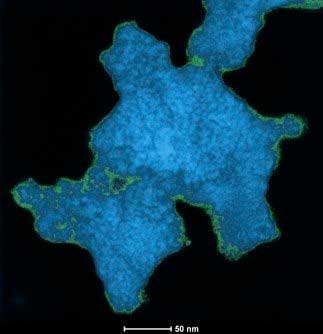
This shows electron microscopy of cross-linked titania nanoparticles with boron-based clusters. Argonne researchers helped create a method to build these networks. (Image: Alexander Spokoyny, UCLA)
Metal oxides are of interest to scientists because of their unique electronic and chemical properties. Some, like titanium dioxide, are commonly used in photovoltaic and photocatalytic applications because of their ability to absorb light.
The key to forming these metal oxide networks is boron, which when annealed with metal oxides leads to the formation of thermally robust and stable interconnected clusters that act as strands of glue that connect a metal oxide web.
“This glue has the ability to be a key component of the entire reactive system, changing the properties that the metal oxides had on their own,” said Alexander Spokoyny, a chemist at UCLA.
The formation of the boron-metal oxide network provides a launching point for future studies of different materials that could combine their own natural properties with the added advantage of a similar “cross-linked” structure.
“We want to know, for instance, if we can transfer our knowledge of this mesh to a material like silicon dioxide. The photocatalytic properties of these materials are extraordinary compared to titanium dioxide,” said Argonne chemist Max Delferro.
In the future, the researchers seek to design a way to create precisely tailored materials by perfecting how the interconnecting clusters of boron “glue” are interspersed within the metal oxide. “If we can stitch in these molecules exactly where we want them to be, it will give us a powerful ability to make and understand hybrid materials with a wide range of uses,” Spokoyny said.
Because these materials are so new, the researchers believe they have a great deal of untapped potential. “We’re not claiming mission fully accomplished by any means; there are still parts of the chemistry that we don’t fully understand and appreciate,” Delferro said.
The research team included Argonne chemist Karena Chapman, who works at the laboratory’s Advanced Photon Source (APS), a DOE Office of Science User Facility. Chapman and Spokoyny met when they were named to Chemical and Engineering News’s “Talented Twelve” list in 2016, and established the collaboration that led to the research.
According to Chapman, a member of the Structural Sciences Group in the APS X-ray Science division, the structural characterization of the material involved the use of X-ray pair distribution function analysis carried out at the APS, which gives local structural information about the relative atom positions.
Chapman, Delferro and Spokoyny noted that the efforts of the research team to produce and analyze this new material were just as interconnected as the discovered hybrid material itself. “There are cross-linkages at both the molecular and the human level,” Delferro said. “This work proves that we work better and are stronger when we’re connected.”
NG2 este bineînțeles cunoscuți pentru foarte interesantul dispozitiv de suprimare MAXFLO 3D AFD (Advanced Flow Dynamics), conceput pentru a fi o pușcă de presiune în caz de presiune zero (sau contra-presiune) (amortizor / supresor de sunet). NG2 este o companie nouă care poate să facă cea mai bună și mai versatilă presiune zero în afaceri (neconfirmată / neconfirmată), dar vom acoperi în scurt timp acest lucru într-un alt articol (probabil cel care urmează) și să începem cu începutul
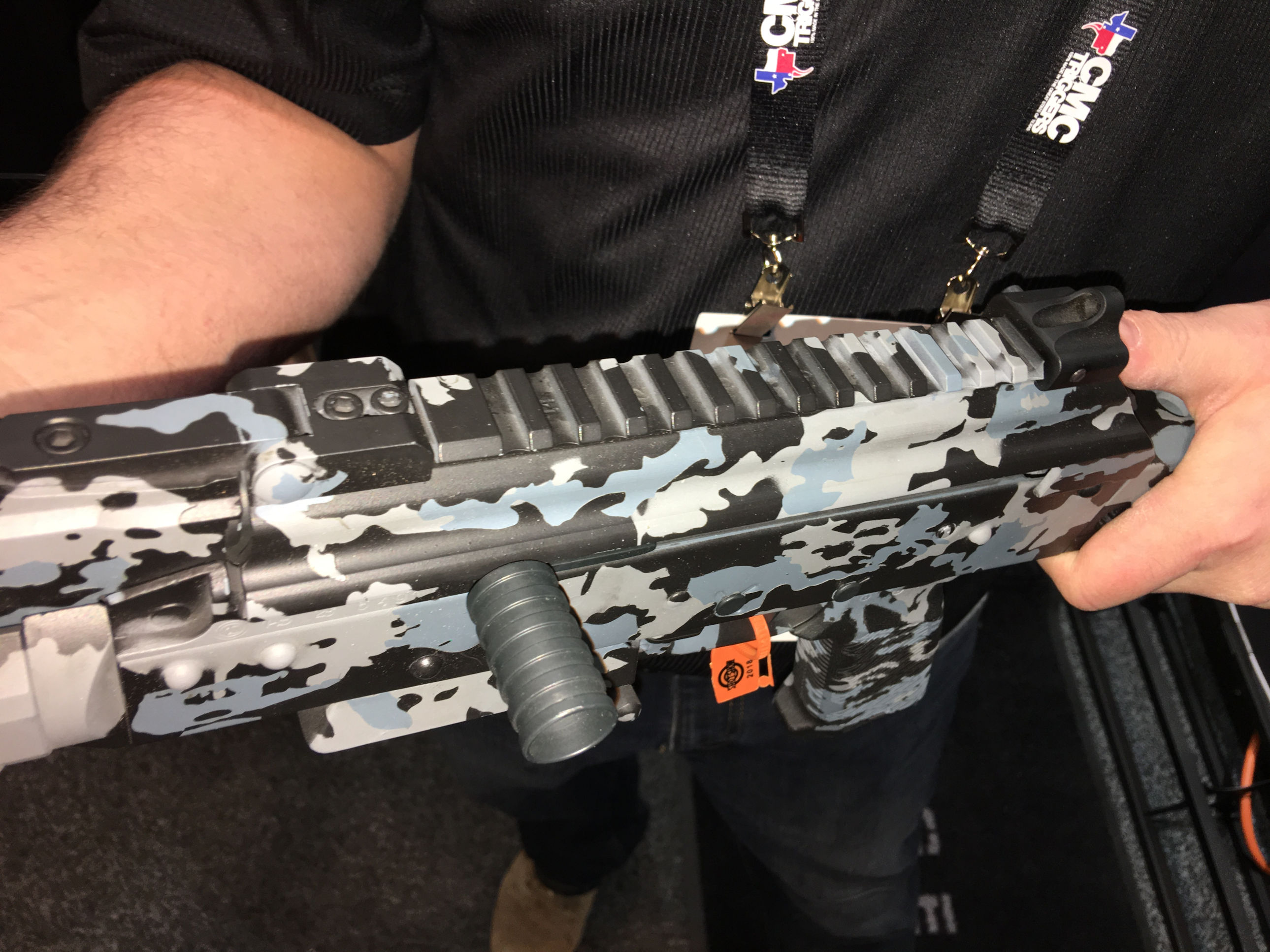
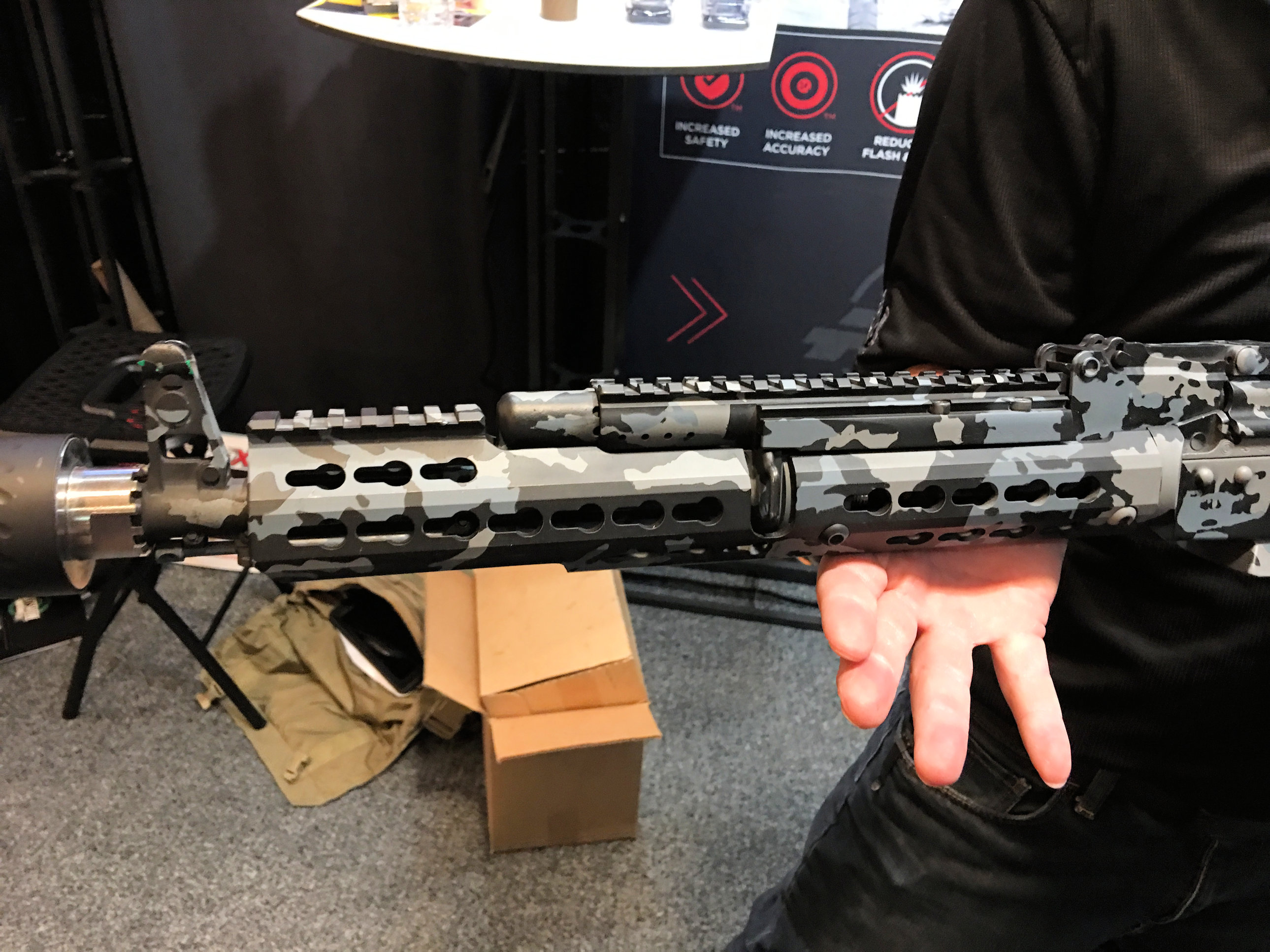
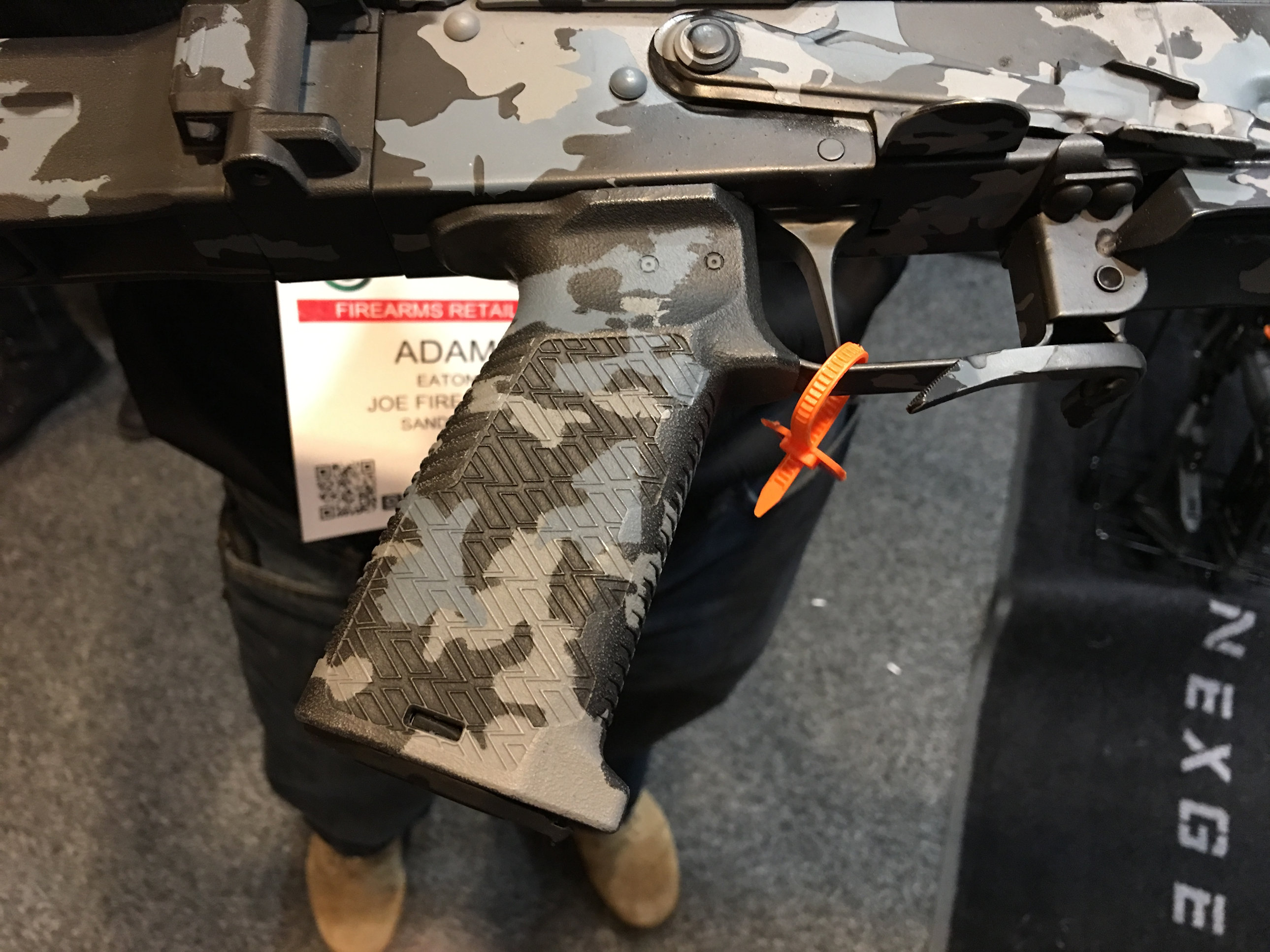
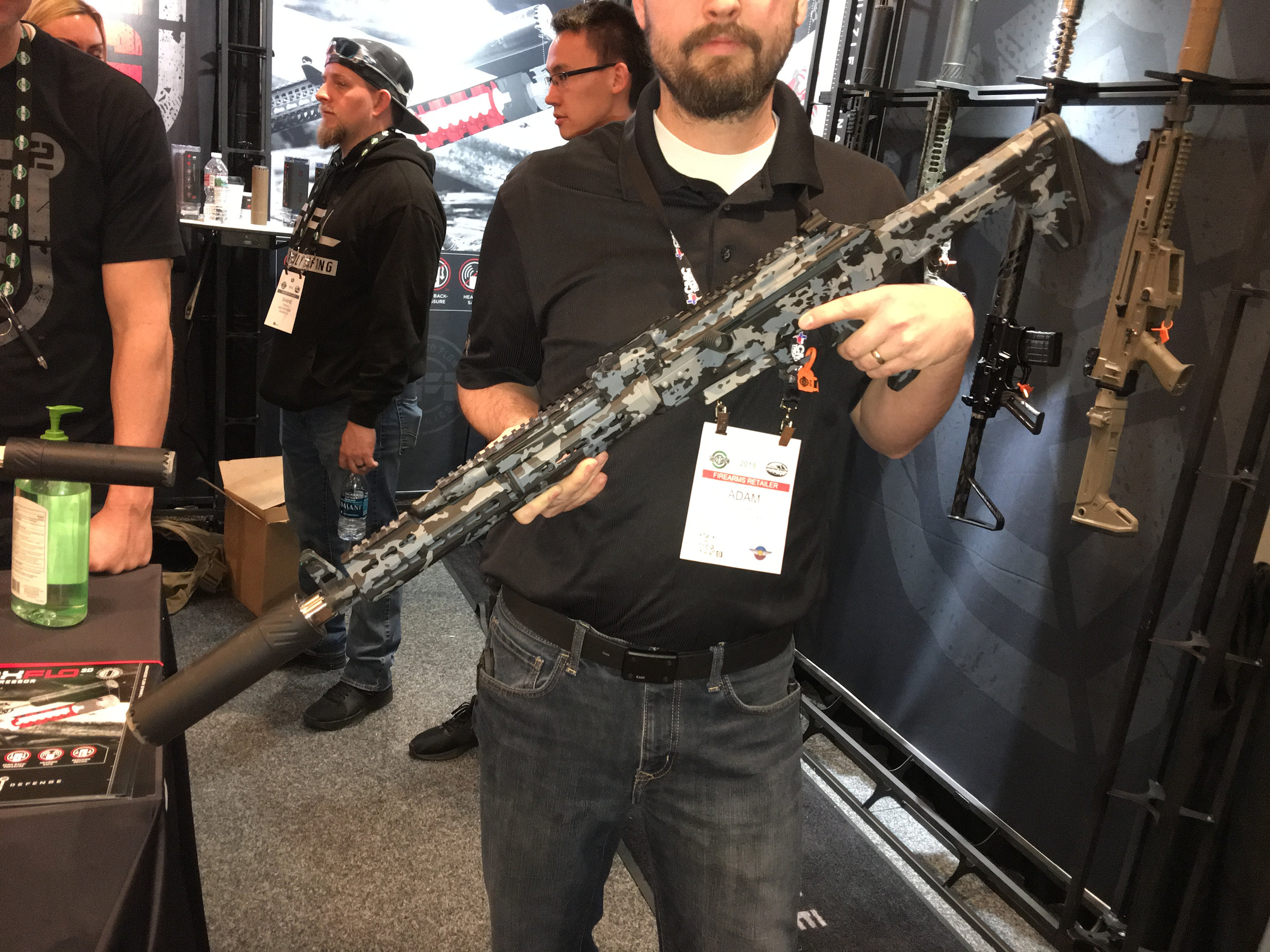
Joe Firearms AJAK Enhanced Combat/Tactical AK Carbines and SBR’s: Americansky Kalashnikov Ergonomics and Ruggedness Taken to the Max (Video!)
While we here at DefenseReview (DR) are all AR (AR-15) carbine/SBR (Short Barreled Rifle) guys, we also like our AK’s, particularly when they’re modified by competent and talented professionals to mimick AR ergonics and weapons-handling and shooting speed. So, we were very happy to come across the Joe Firearms AJAK Enhanced AK’s (Kalashnikov AK-47 7.62x39mm and AK-74-type 5.45x39mm Russian AKM’s) at the NexGen2 (NG2) Defense booth at SHOT Show 2018. NG2 is of course known for their very interesting MAXFLO 3D AFD (Advanced Flow Dynamics) Suppressor, designed to be a zero-back-pressure (or, no-back-pressure) rifle can (silencer/sound suppressor). NG2 is a new company that may just be making the best and most versatile zero-back-pressure can in the business (unconfirmed/unverified), but we’ll be covering that shortly in another article (perhaps the very next one), and first things first.
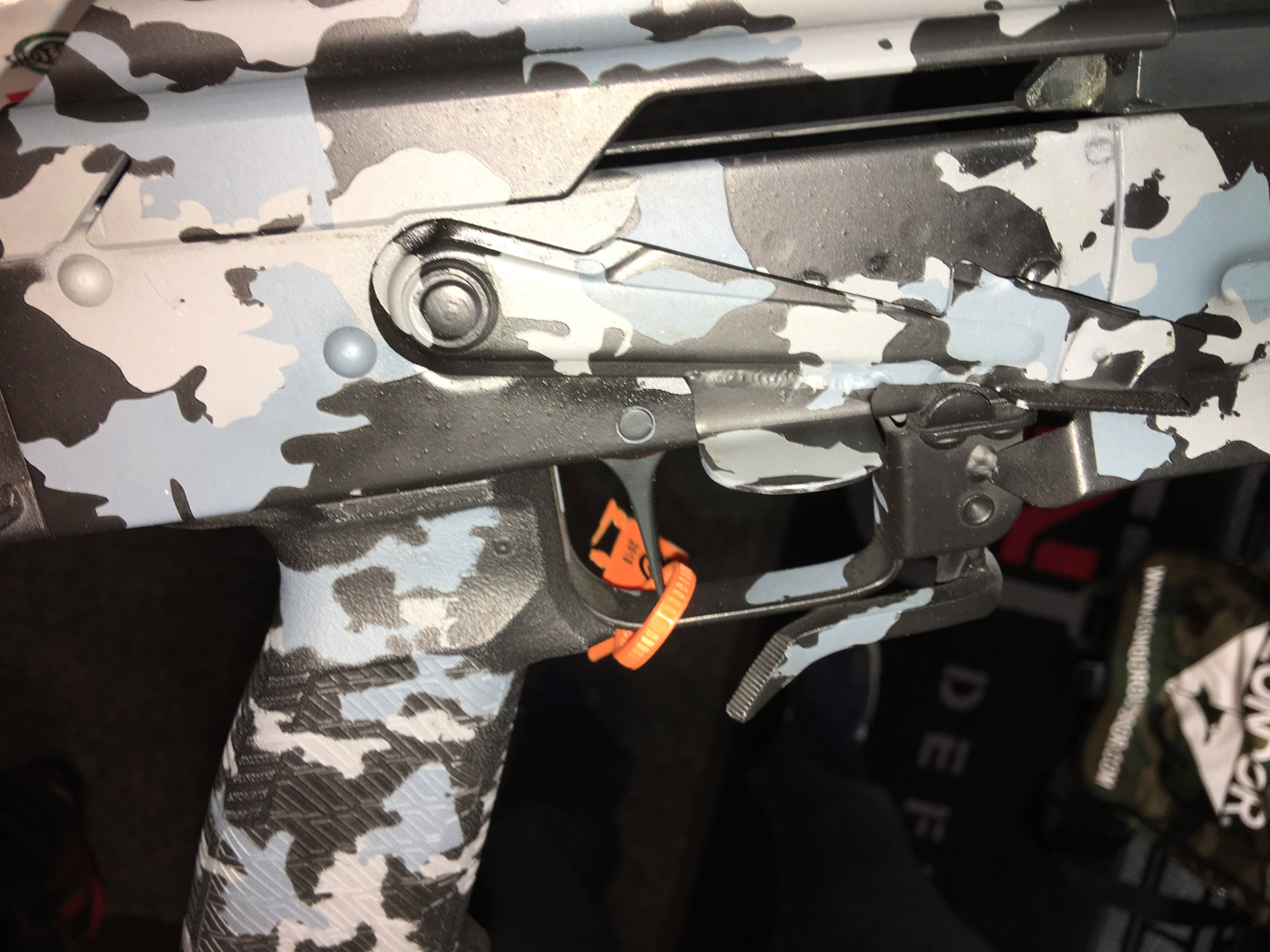
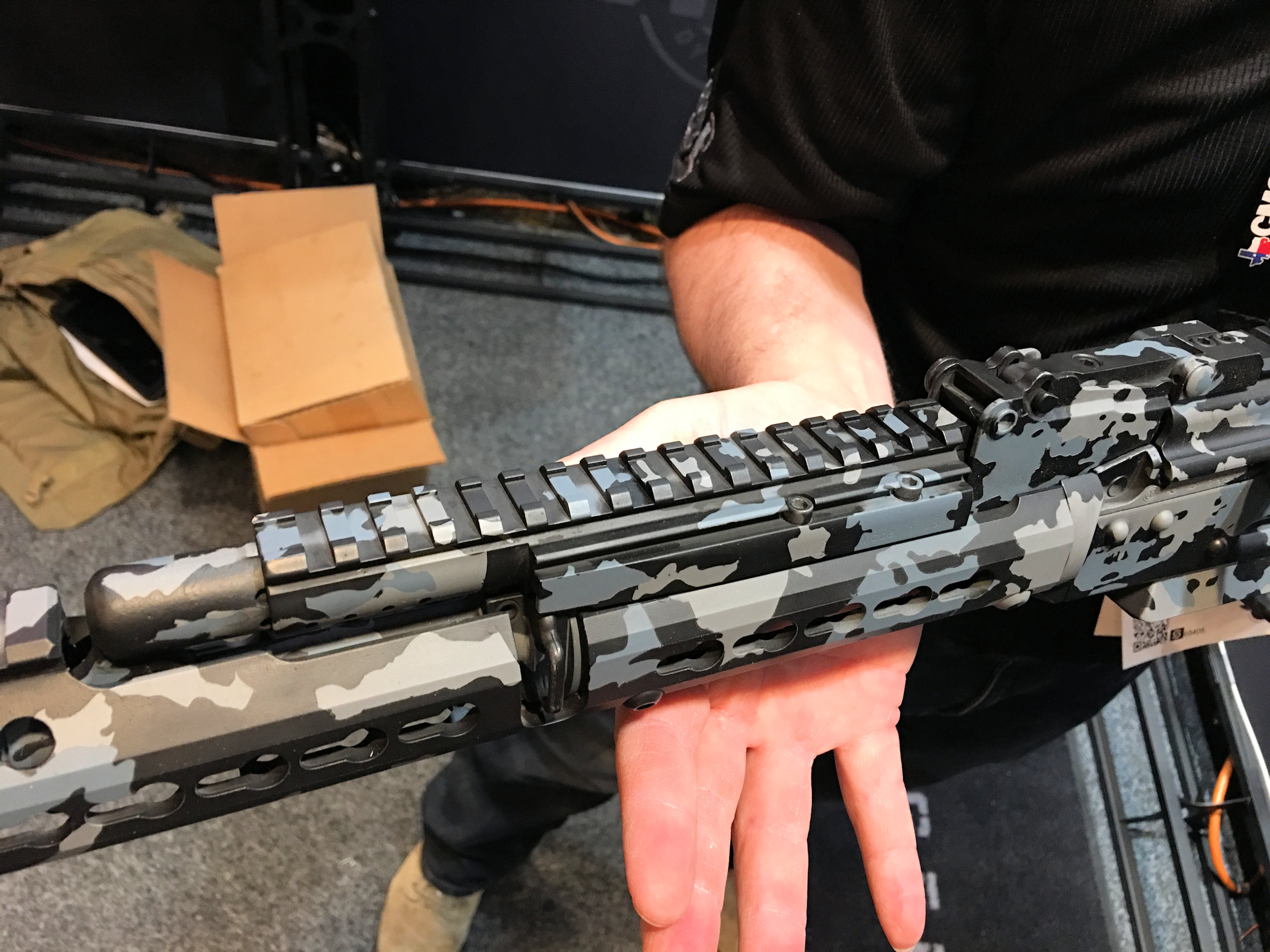
The Joe Firearms AJAK Enhanced AK’s are the brainchild of designer/developer Steve Palano, who set out to design and build the most ergonomic, rugged and reliable combat/tactical AK’s out there, approaching ARs in weapons handling and shooting speed. Built using Bulgarian parts kits as the carbine’s core, the key ergonimic and shooting-enhancement features on the guns are Joe Firearms’ “performance tune” and in-house designed AK components/parts, including a smooth-break/quick-reset flat trigge , large cylindrical left-side charging handle, index finger-activated quick mag (magazine) release lever, and flared magwell.
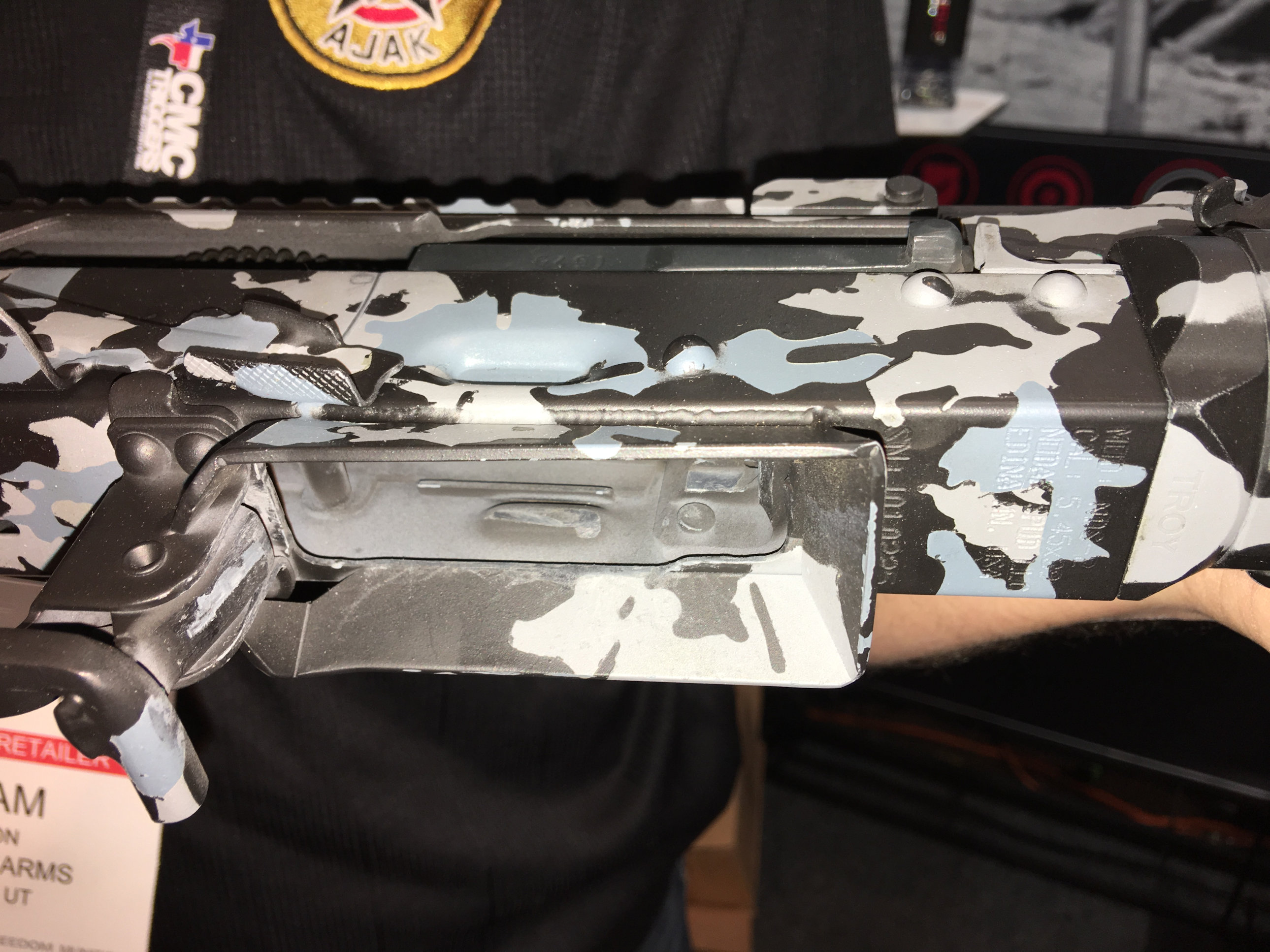
You can see all of the above features on the “brand new” Joe Firearms AJAK 74 Enhanced Plus tactical AK carbine, which we believe we handled and photographed at SHOT (unconfirmed/unverified).
Regardless, the guns (Joe Firearms AJAK Enhanced AK’s) we handled at SHOT looked and felt great, and really impressed us. It was immediately obvious to us that a lot of thought went into their design and construction. Assuming they prove reliable, accurate and durable at the range, and end-user/customer feedback is positive, we’re going to be major proponents. So, we can’t wait to run one or two of them at the range sometime, preferably in both Russian calibers.
It’s Defense Review’s understanding that the Joe Firearms AJAK Enhanced AK’s are available in both select-fire/full-auto and civilian-legal semi-auto-only formats.
Editor’s Note: DR has also learned that Joe Firearms is the exclusive US distributor for NG2 Defense AK suppressors.
au creat un nou „simț” conductiv care poate fi ușor modelat pe țesături pentru a crea fire flexibile. Pâslă, compusă din nanofire din cupru acoperită cu argint și din cauciuc siliconic, transportă energie electrică chiar și atunci când este îndoită, întinsă și răsucită, de multe ori ( „Compozite conductive expandabile din Cu-Ag Nanowire Felt” ).Pâsla conductoare este realizată din stive de nanotuburi de cupru acoperite cu argint umplut cu un cauciuc siliconic extensibil (stânga). Atunci când este întins, fentilul făcut din cauciucul mai flexibil este mai rezistent la lacrimi și găuri mici decât la cele din cauciuc rigid (mijloc). Aceste lacrimi pot fi văzute în cavități mici din pâslă (dreapta).
Posted: Apr 03, 2018
Stretchable, twistable wires for wearable electronics
(Nanowerk News) The exercise-tracking power of a Fitbit may soon jump from your wrist and into your clothing.
Researchers are seeking to embed electronics such as fitness trackers and health monitors into our shirts, hats, and shoes. But no one wants stiff copper wires or silicon transistors deforming their clothing or poking into their skin.
Scientists in Benjamin Wiley’s lab at Duke have created new conductive “felt” that can be easily patterned onto fabrics to create flexible wires. The felt, composed of silver-coated copper nanowires and silicon rubber, carries electricity even when bent, stretched and twisted, over and over again („Stretchable Conductive Composites from Cu–Ag Nanowire Felt”).
The conductive felt is made of stacks of interwoven silver-coated copper nanotubes filled with a stretchable silicone rubber (left). When stretched, felt made from more pliable rubber is more resilient to small tears and holes than felts made of stiffer rubber (middle). These tears can be seen in small cavities in the felt (right). (Image: Matthew Catenacci) (click on image to enlarge)
“We wanted to create wiring that is stretchable on the body,” said Matthew Catenacci, a graduate student in Wiley’s group.
To create a flexible wire, the team first sucks a solution of copper nanowires and water through a stencil, creating a stack of interwoven nanowires in the desired shape. The material is similar to the interwoven fibers that comprise fabric felt, but on a much smaller scale, said Wiley, an associate professor of chemistry at Duke.
“The way I think about the wires are like tiny sticks of uncooked spaghetti,” Wiley said. “The water passes through, and then you end up with this pile of sticks with a high porosity.”
The interwoven nanowires are heated to 300 F to melt the contacts together, and then silicone rubber is added to fill in the gaps between the wires.
To show the pliability of their new material, Catenacci patterned the nanowire felt into a variety of squiggly, snaking patterns. Stretching and twisting the wires up to 300 times did not degrade the conductivity.
The material maintains its conductivity when twisted and stretched. (Image: Matthew Catenacci)
“On a larger scale you could take a whole shirt, put it over a vacuum filter, and with a stencil you could create whatever wire pattern you want,” Catenacci said. “After you add the silicone, so you will just have a patch of fabric that is able to stretch.”
Their felt is not the first conductive material that displays the agility of a gymnast. Flexible wires made of silver microflakes also exhibit this unique set of properties. But the new material has the best performance of any other material so far, and at a much lower cost.
“This material retains its conductivity after stretching better than any other material with this high of an initial conductivity. That is what separates it,” Wiley said.
Aceste metasurfe ar putea avansa în mod semnificativ tehnologiile de control al zgomotului, deoarece ar putea izola mai bine principala problemă în controlul zgomotului: frecvențe joase. „Dacă convertiți energia la frecvențe mai mari, atunci puteți să o absorbi mai ușor mai târziu”, a spus Tournat.
El citează, de asemenea, că metasurfurile subțiri pot deveni componente ale unor dispozitive mai complexe, cum ar fi diodele acustice și tranzistoarele. Aceste constatări ar putea fi aplicate și altor tipuri de valuri. În optică, metasurfurile bazate pe un concept similar „ar putea înlocui cristalele generatoare de armonice secundare (SHG) folosite pentru a dubla frecvența unui laser în transmisie”, a spus Tournat.Factorii structurali din metafore, cum ar fi aranjamentul spațial al moleculelor sale și compoziția lor, stau la baza proprietăților lor optice, elastice și acustice.
Posted: Apr 03, 2018
A new metasurface model shows potential to control acoustic wave reflection
(Nanowerk News) An international team of researchers showed how a nonlinear elastic metasurface could convert a wave’s fundamental frequency to its second harmonic. Structural factors in metasurfaces, like the spatial arrangement of its molecules and its composition, underpin its optical, elastic and acoustic properties. Developing this metasurface could help architects reduce noise from performance halls to cityscapes. These findings could also enhance cloaking technology for submarines to evade sonar detection.
Typically, when a soundwave strikes a surface, it reflects back at the same fundamental frequency with a different amplitude. Their model, reported in the Journal of Applied Physics („Manipulating acoustic wave reflection by a nonlinear elastic metasurface”), shows that when a sound wave hits this metasurface, the incident fundamental frequency does not bounce back. Instead, the metasurface converts that energy into the wave’s second harmonic resonance.
Vincent Tournat, a senior research scientist in acoustics at France’s CNRS and an author on the paper, explained that “you send a A440 pitch and after reflection, this is transformed into A880 pitch.” He expounded that this wave conversion is possible “with a thin reflecting surface … much less than the acoustic wavelength.”
Tournat reports that they are among the first acoustics groups to study nonlinear acoustic metasurfaces. Their lab focuses on nonlinear acoustics, which describes high amplitude wave interactions with nonlinear elements or media. For example, this subfield studies how a sound interacts with cracks in a solid material, or how elastic waves interact with highly deformable structures.
The team developed their new metasurface concept from past experimental work. Previously, they printed soft rubber materials like PDMS, a silicon based polymer, arranged the components in rotating square configurations, and sent soundwave pulses through the structures. When pulses propagated through PDMS structures with a particular geometry, the researchers observed a strange effect: the propagation of solitons, stable nonlinear wave pulses. As a result, the highly deformable structure appeared as an ideal platform to design a specific elastic nonlinearity.
These metasurfaces could significantly advance noise control technologies because they could better isolate the main problem in noise control: low frequencies. “If you convert the energy to higher frequencies, then you can more easily absorb it later,” Tournat said.
He also cites that thin metasurfaces could become components of more complex devices like acoustic diodes and transistors. These findings could even be applied to other types of waves. In optics, metasurfaces based on a similar concept “could replace second harmonic generation (SHG) crystals used to double the frequency of a laser in transmission,” Tournat said.
These unexpected reflections are almost like a funhouse mirror for sound. “It would be analogous to look at you in a mirror and have a reflected image shifted in the ultraviolet optical range,” Tournat said. Moving forward, the team now aims to build the metasurface and experimentally test their findings.
Cercetătorii au creat un nanofilm care să stocheze datele holografic și să fie stabil din punct de vedere ecologic.Înregistrarea unei imagini holografice în pelicule de titan-argint implică utilizarea unui laser pentru a transforma particulele de argint în cationi de argint, care au o încărcătură pozitivă datorată electronilor extra. „Am observat că lumina UV ar putea șterge datele, deoarece a determinat transferul electronilor de la pelicula semiconductoarelor la nanoparticulele metalice, determinând aceeași transformare fotografică ca laserul”
Posted: Apr 03, 2018
Researchers develop nanoparticle films for high-density data storage
(Nanowerk News) As we generate more and more data, the need for high-density data storage that remains stable over time is becoming critical. New nanoparticle-based films that are more than 80 times thinner than a human hair may help to fill this need by providing materials that can holographically archive more than 1000 times more data than a DVD in a 10-by-10-centimeter piece of film. The new technology could one day enable tiny wearable devices that capture and store 3-D images of objects or people.
„In the future, these new films could be incorporated into a tiny storage chip that records 3-D color information that could later be viewed as a 3-D hologram with realistic detail,” said Shencheng Fu, who led researchers from Northeast Normal University in China who developed the new films. „Because the storage medium is environmentally stable, the device could be used outside or even brought into the harsh radiation conditions of outer space.”
In the journal Optical Materials Express („UV-resistant holographic data storage in noble-metal/semiconductor nanocomposite films with electron-acceptors”), the researchers detail their fabrication of the new films and demonstrate the technology’s ability to be used for an environmentally-stable holographic storage system. The films not only hold large amounts of data, but that data can also be retrieved at speeds up to 1 GB per second, which is about twenty times the reading speed of today’s flash memory.
Researchers created a nanofilm that can store data holographically and is environmentally stable. Here, Shencheng Fu carries out experiments with the new film. (Image: Northeast Normal University)
Storing more data in less space
The new films are designed for holographic data storage, a technique that uses lasers to create and read a 3-D holographic recreation of data in a material. Because it can record and read millions of bits at once, holographic data storage is much faster than optical and magnetic approaches typically used for data storage today, which record and read individual bits one at a time. Holographic approaches are also inherently high-density because they record information throughout the 3-D volume of the material, not just on the surface, and can record multiple images in the same area using light at different angles or consisting of different colors.
Recently, researchers have been experimenting with using metal-semiconductor nanocomposites as a medium for storing nanoscale holograms with high spatial resolution. Porous films made of the semiconductor titania and silver nanoparticles are promising for this application because they change color when exposed to various wavelengths, or colors, of laser light and because a set of 3-D images can be recorded at the focus area of laser beam using a single step. Although the films could be used for multiwavelength holographic data storage, exposure to UV light has been shown to erase the data, making the films unstable for long-term information storage.
Recording a holographic image into titania-silver films involves using a laser to convert the silver particles into silver cations, which have a positive charge due to extra electrons. „We noticed that UV light could erase the data because it caused electrons to transfer from the semiconductor film to the metal nanoparticles, inducing the same photo transformation as the laser,” said Fu. „Introducing electron-accepting molecules into the system causes some of the electrons to flow from the semiconductor to these molecules, weakening the ability of UV light to erase the data and creating an environmentally stable high-density data storage medium.”
Changing the electron flow
For the new films, the researchers used electron-accepting molecules that measured only 1 to 2 nanometers to disrupt the electron flow from the semiconductor to the metal nanoparticles. They fabricated semiconductor films with a honeycomb nanopore structure that allowed the nanoparticles, electron-accepting molecules and the semiconductor to all interface with each other. The ultrasmall size of the electron-accepting molecules allowed them to attach inside the pores without affecting the pore structure. The final films were just 620 nanometers thick.
The researchers tested their new films and found that holograms can be written into them efficiently and with high stability even in the presence of UV light. The researchers also demonstrated that using the electron-acceptors to change the electron flow formed multiple electron transferring paths, making the material respond faster to the laser light and greatly accelerating the speed of data writing.
„Particles made from noble metals such as silver are typically viewed as a slow-response media for optical storage,” said Fu. „We show that using a new electron transport flow improves the optical response speed of the particles while still maintaining the particle’s other advantages for information storage.”
The researchers plan to test the environmental stability of the new films by performing outdoor tests. They also point out that real-life application of the films would require the development of high efficiency 3-D image reconstruction techniques and methods for color presentation for displaying or reading the stored data.
Pentru a vă menține sistemul de transport lateral balistic, astfel încât acesta să vă ofere protecția maximă dorită, este extrem de important să urmați pașii de mai jos
CRG dezvoltă o baterie de înaltă performanță, conforme cu standardele multifuncționale, cu funcționare integrată, cu o capacitate balistică integrată, care poate fi purtată cu plăcuțe de armură pentru corpuri de armă cu arme mici, pentru o reducere mai mare a greutății soldatului detașat