Lămpi ceramice luminiscente pentru surse noi de lumină(Luminescent ceramics for new light sources )

În funcție de compoziția luminoforului este posibil să se obțină un spectru variabil de strălucire a ceramicii, adică alb, albastru, galben etc. Pentru acest scop, se selectează luminoforele optime în compoziția generală a materialului ceramic transparent”, adaugă Oleg Khasanov.
Sursele de lumină din ceramică luminescente vor avea, de asemenea, o rezistență mai mare. Aceasta înseamnă că sursele de lumină vor dura mult mai mult și vor fi mai greu de deteriorat.
Oamenii de știință de la TPU observă că ceramica din zilele noastre se aplică în diferite domenii: electronică, radioelectronică, industria de apărare, petrol și gaze, industria nucleară, aerospațială, automobile, precum și în domeniul energetic și medicină și în multe alte domenii. Materialele ceramice au un set avansat de proprietăți operaționale: o gamă largă de aplicații (de la temperatura rece la temperatura plasmei în duzele motorului de rachetă), determină rezistența și proprietățile electrofizice.

Posted: Sep 13, 2017

Luminescent ceramics for new light sources

(Nanowerk News) A technology for obtaining luminescent ceramics which may become a cheaper alternative to modern light sources is being developed by scientists of Tomsk Polytechnic University. In the future this kind of ceramics can replace LEDs; its application will make it possible to significantly reduce the cost of production of automobile headlights and other light sources. Another advantage of luminescent ceramics is higher strength due to which ceramic material products will be more durable.

Luminescent ceramics
Luminescent ceramics. (Image: TPU)
A research team from the Department of Nanomaterials and Nanotechnology and TPU Nano-Center under the supervision of Professor Oleg Khasanov develops luminescent ceramics. Research is conducted together with the Department of Lasers and Lighting Engineering.
In automobile industry new ceramics can be applied in different lighting devices, for example, in car headlights, and lights for urban and holiday illumination.
„In mass production luminescent nanoceramic light sources cost less compared to modern LEDs with more complex electronic structure,” says Professor Khasanov.
TPU scientists obtain various types of nanoceramics, i.e. luminescent and transparent ceramics, on a spark-plasma sintering unit (SPS) for powder materials. Ceramic powder is placed in a special mold which is conductive and capable to withstand high temperatures and pressure casting. After that, the powder is heated by impulse current at the required temperature and simultaneously compressed. Therefore, sintering lasts quickly.
„Depending on the composition of luminophor it is possible to obtain a variable spectrum of glow of ceramics, i.e. white, blue, yellow, etc. For this purpose we select optimal luminophors in the general composition of transparent ceramic material,” adds Oleg Khasanov.
Light sources made of luminescent ceramics will also feature higher strength. That means, the light sources will last much longer and they will be more difficult to damage.
TPU scientists note that nowadays ceramics is applied in various fields: electronics, radioelectronics, defense industry, oil & gas, nuclear industry, aerospace, automobile, as well as in power engineering and medicine and many other fields. Ceramic materials have an advanced set of operational properties: a wide range of applications (from space cold to plasma temperature in rocket engine nozzles), determined strength and electrophysical properties.
Source: Tomsk Polytechnic University
Subscribe to a free copy of one of our daily
Nanowerk Newsletter Email Digests
with a compilation of all of the day’s news.

Read more: Luminescent ceramics for new light sources

Catalizatori metalici lichizi suportați – o nouă generație de acceleratori de reacție (Supported liquid metal catalysts – a new generation of reaction accelerators )

Elementul galiu joacă un rol central în această nouă clasă de materiale. Galiul se topește la aproximativ 30 ° C și are un punct de fierbere de 2400 ° C. Acesta posedă capacitatea unică de a putea dizolva aproape toate celelalte metale. Când este expus la aer, straturi ultra-subțiri de oxid se formează pe suprafața galiului; totuși, acestea sunt reconvertite înapoi la elementul original în condițiile obținute în timpul multor procese catalitice.
Până în prezent, cercetătorii FAU și-au atins rezultatele spectaculoase utilizând paladiu dizolvat în galiu. În continuare intenționează să efectueze cercetări suplimentare pentru a afla dacă aceste efecte extraordinare pot fi obținute și prin utilizarea metalelor neprețioase dizolvate în galiu și, de asemenea, dacă efectele pot fi reproduse în legătură cu alte reacții chimice.
„Calculele noastre ne determină să presupunem că atomii individuali de metal dizolvați în galiu pot prezenta caracteristici reactive complet diferite de cele pe care le va expune același metal în formă cristalină”, ​​explică Andreas Görling.
„Din acest motiv suntem atât de fascinați de această nouă clasă de materiale catalitice, suntem convinși că, cu ajutorul complexelor de aliaje susținute, pot fi dezvoltați catalizatori foarte eficienți și rentabili, care au un potențial considerabil în ceea ce privește aplicațiile industriale” adaugă Hans-Peter Steinrück.

Posted: Sep 13, 2017

Supported liquid metal catalysts – a new generation of reaction accelerators

(Nanowerk News) Catalysts are agents that initiate chemical reactions, speed them up or significantly increase the yield of the desired product. New and improved catalysts are thus considered the key to creating more sustainable and efficient production processes in the chemical industry.

In a joint research project, five professors at Friedrich-Alexander-Universität Erlangen-Nürnberg (FAU) and their teams have recently discovered how to bypass the known drawbacks of the technical catalysts that are currently in use by means of a new material concept that makes the creation of significantly more efficient catalysts possible.
This new generation of catalysts employs liquid drops of metal alloy attached to porous carriers that are brought into contact with the gaseous reactants. The microscopically small drops of alloy are fluid because they contain a high proportion of gallium, an element with a very low melting point. At the same time, this high concentration of gallium ensures that the atoms of the dissolved secondary metal components are thoroughly dispersed: the individual metal atoms in solution within the gallium are responsible for the catalytic effect.
The researchers have published their findings in the leading specialist journal Nature Chemistry („Gallium-rich Pd–Ga phases as supported liquid metal catalysts”).
A diagram illustrating the processes at the catalytic surface of a liquid drop of gallium containing small amounts of palladium during the catalytic dehydrogenation of n-butane
A diagram illustrating the processes at the catalytic surface of a liquid drop of gallium containing small amounts of palladium during the catalytic dehydrogenation of n-butane. (Image: FAU/Mathias Grabau and Florian Maier)

Supported liquid catalysts

Over the past decade, researchers at FAU have repeatedly been able to demonstrate their international preeminence in the field of catalyst material innovations. Catalytic Materials is consequently a key research area within the Cluster of Excellence Engineering of Advanced Materials (EAM) at FAU.
Supported liquid catalysts have often been the focal point of interest for the FAU-based researchers. These combine the benefits of customised molecular reaction accelerators with the advantage that they can be more readily separated from the product.
In the concept outlined in the article published in Nature Chemistry, the use of metal alloys in supported liquid catalysts is described for the first time. In addition, it is also the first time that catalytic activity has been ascribed to liquid metal alloys.
Moreover, the initially tested material combinations have been found to significantly outperform standard technical catalysts that have taken years to develop.
„It is particularly interesting that there is little to no deactivation of the supported metal complexes when carbon deposits form on them,’ says Professor Peter Wasserscheid. ‘It is deposits such as this that are the main cause of the deactivation of catalysts used for catalytic conversion at high temperatures by the petrochemical industry.”
The researchers were able to demonstrate this important effect in the case of the dehydration of butane. The special structural nature of this new class of materials was discovered by four groups working in collaboration: microscopic analysis was undertaken by the team under Wolfgang Peukert, the teams of Hans-Peter Steinrück and Christian Papp completed the spectrographic analysis, Rainer Hock’s team was responsible for radiographic analysis while the corresponding calculations were undertaken by Andreas Görling and his colleagues.

Gallium: the secret of success

The element gallium plays a central role in this new class of materials. Gallium melts at around 30°C and has a boiling point of 2400°C. It possesses the unique ability of being able to dissolve almost all other metals. When it is exposed to air, ultra-thin layers of oxide form on the surface of gallium; however, these are reconverted back to the original element under the conditions obtained during many catalytic processes.
To date, the FAU-based researchers have achieved their spectacular results using palladium dissolved in gallium. They next intend to conduct further research to find out whether these extraordinary effects can also be obtained using non-precious metals dissolved in gallium and also whether the effects can be reproduced in connection with other chemical reactions.
„Our calculations lead us to assume that single metal atoms dissolved in gallium can display totally different reactive characteristics from those that the same metal in crystalline form will usually exhibit,” explains Andreas Görling.
„This is why we are so fascinated by this new class of catalytic materials. We are convinced that with the help of supported alloy complexes, highly efficient and very cost-effective catalysts can be developed that have considerable potential with regard to industrial applications,” adds Hans-Peter Steinrück.
Source: Friedrich-Alexander-Universität Erlangen-Nürnber

Read more: Supported liquid metal catalysts – a new generation of reaction accelerators


Nanopowder eliberează puterea în urină (w / video)(Nanopowder releases power in urine (w/video))

Ceea ce facem ca oamenii de stiinta ai Armatei este dezvoltarea de materiale si tehnologii care vor aduce beneficii direct Soldierului si imbunatati capacitatile lor”, a spus dr. Kristopher Darling, cercetator ARL. „Am dezvoltat o nouă tehnică de procesare pentru a sintetiza un material care sparge în mod spontan apa în hidrogen”.Echipa de cercetare a anunțat, în vara aceasta, că o pulbere nano-galvanică pe bază de aluminiu pe care o dezvoltau producea hidrogen pur atunci când vine în contact cu apa. Cercetătorii au observat o reacție similară atunci când adăugă pulberea lor în orice lichid care conține apă.

Posted: Sep 12, 2017

Nanopowder releases power in urine (w/video)

(Nanowerk News) Scientists at the U.S. Army Research Laboratory observed an unexpected result when combining urine with a newly engineered nano-powder based on aluminum. It instantly releases hydrogen from the urine at much higher rate than with ordinary water.

The research team announced earlier this summer that a nano-galvanic aluminum-based powder they were developing produced pure hydrogen when coming into contact with water. The researchers observed a similar reaction when adding their powder to any liquid containing water.
„What we do as Army scientists is develop materials and technology that will directly benefit the Soldier and enhance their capabilities,” said Dr. Kristopher Darling, an ARL researcher. „We developed a new processing technique to synthesize a material, which spontaneously splits water into hydrogen.”
Hydrogen, the most plentiful element in the universe, has the potential to power fuel cells and provide energy to future Soldiers.
Fuel cells generate electricity quietly, efficiently and without pollution. According to a Department of Energy’s website, fuel cells are „more energy-efficient than combustion engines and the hydrogen used to power them can come from a variety of sources.”
„We have calculated that one kilogram of aluminum powder can produce 220 kilowatts of energy in just three minutes,” said Dr. Anit Giri, also an ARL researcher.
In space, astronauts recycle waste water and urine because drinking water is a precious commodity. For Soldiers in austere environments, there are many precious commodities. Power and energy is becoming increasingly important to run communications and electronics gear for away teams, which can’t be resupplied.
Making use of urine as fuel source may result in tremendous benefits for Soldiers, officials said.
„When we demonstrated it with urine, we saw almost a factor of twofold increase in the reaction rates,” Darling said. „We were very excited. As a group we have been pushing for the last few months on developing the efficiency and the reaction kinetics to try to get them faster.”
The team is still investigating why urine causes a faster reaction, but it may have something to do with the electrolytes and the acidity of the liquid.
„It’s unique because the rate of the reaction is so efficient and extremely rapid from such a small volume of material,” Darling said.
The team is working closely with other researchers at the laboratory, including the Sensors and Electron Devices Directorate, to discover how to harness the material as a potential energy source.
„It was a spontaneous finding,” Darling said. „We weren’t expecting to develop this material specifically for hydrogen production. It was a group effort. We came together as a team to understand the importance of the discovery. This has great potential for benefiting Soldiers.”
In a statement, Dr. Philip Perconti, the laboratory director, said it „may find great utility for forward deployed troops who need a compact and lightweight energy source.”
In the coming months, the team will continue to investigate and push the limits of the discovery, to try and understand its implications.
„Our basic focus is materials development and optimization,” Darling said. „We’re looking at how we can optimize the composition, its interactions with other fluids, including saliva and other liquids available to Soldiers in a field environment.”
Source: U.S. Army Research Laboratory


Digitizatoarele cu infraroșu cu putere zero, bazate pe microprocesoare micromecanice îmbunătățite cu plasmă(Zero-power infrared digitizers based on plasmonically enhanced micromechanical photoswitches)

Senzorii de ultimă oră folosesc electronica activă pentru a detecta și a discrimina vibrațiile, vibrațiile sonore și alte semnale

Infrared-analytical pag 35-47

Nanosenzorul senzitiv se trezește numai în prezența unui semnal de interes (Dormant nanosensor awakens only in the presence of a signal of interest )

Construiți un senzor minuscul care detectează o semnătură de lungimi de undă în infraroșu (IR) caracteristice unei conducte de esapament fierbinți, unui foc de lemn sau chiar unei ființe umane. Proiectați senzorul astfel încât acesta să rămână în stare latentă și nesupravegheată, dar întotdeauna în stare de alertă, chiar și ani de zile, fără a atrage energia bateriei. Și construiți senzorul astfel încât actul de detecție în sine poate iniția emiterea unui semnal care avertizează războinicii, pompierii sau alții că a fost detectat un „semnal de interes”. Este doar o tehnologie de inteligență, recunoaștere și supraveghere (ISR), care poate spori gradul de conștientizare a situației, reducând în același timp necesitatea unor misiuni de întreținere potențial periculoase pentru înlocuirea bateriilor de descărcare. „Ceea ce este cu adevărat interesant în ceea ce privește tehnologia Northeastern IR sensor este că, spre deosebire de senzorii convenționali, acesta consumă zero putere de stand-by atunci când lungimile de undă IR care trebuie detectate nu sunt prezente”, a declarat Troy Olsson, manager al programului N-ZERO în DARPA’s Microsystems Technology Office. „Când aceste lungimi de undă IR sunt prezente și afectează senzorul IR al echipei Northeastern, energia din sursa IR încălzește elementele senzoriale care, la rândul lor, determină mișcarea fizică a componentelor senzorilor cheie. Aceste mișcări au ca rezultat închiderea mecanică a elementelor de circuit deschis, în alt mod, ceea ce duce la semnalele de detectare a semnăturii IR. „

Posted: Sep 12, 2017

Dormant nanosensor awakens only in the presence of a signal of interest

(Nanowerk News) Here’s your task. Build a tiny sensor that detects a signature of infrared (IR) wavelengths characteristic of a hot tailpipe, a wood fire, or perhaps even a human being. Design the sensor so that it can remain dormant and unattended but always alert, even for years, without drawing on battery power. And build the sensor so that the act of detection itself can initiate the emission of a signal that alerts warfighters, firefighters, or others that a “signal-of-interest” has been detected. It’s just the sort of intelligence, reconnaissance, and surveillance (ISR) technology that can increase situational awareness while minimizing the need for potentially dangerous maintenance missions to replace run-down batteries.

Reporting in the journal Nature Nanotechnology („Zero Power Infrared Digitizers Based on Plasmonically-enhanced Micromechanical Photoswitches”), a research team at Northeastern University, led by Electrical and Computer Engineering Associate Professor Matteo Rinaldi, reports pulling off this tall order of DARPA’s Near Zero Power RF and Sensor Operation (N-ZERO) program with a device the Boston team refers to as a “plasmonically-enhanced micromechanical photoswitch.”
micro features of multiple, wavelength-specific sensor patches
The micrograph features the multiple, wavelength-specific sensor patches that enable this N-ZERO device to capture infrared signatures of specific heat-emitting sources. (Image: DARPA)
“What is really interesting about the Northeastern IR sensor technology is that, unlike conventional sensors, it consumes zero stand-by power when the IR wavelengths to be detected are not present,” said Troy Olsson, manager of the N-ZERO Program in DARPA’s Microsystems Technology Office. “When those IR wavelengths are present and impinge on the Northeastern team’s IR sensor, the energy from the IR source heats the sensing elements which, in turn, causes physical movement of key sensor components. These motions result in the mechanical closing of otherwise open circuit elements, thereby leading to signals that the target IR signature has been detected.”
The sensor is a showcase of clever physics and engineering, including a grid of nanoscale patches whose specific dimensions limit them to absorb only particular IR wavelengths. “The charge-based excitations, called plasmons (that can be thought of somewhat like ripples on the surface of water), are highly localized below the nanoscale patches and effectively trap specific wavelengths of light into the ultra-thin structure, inducing a relatively large and swift spike in its temperature,” Rinaldi explained. These temperature spikes, in turn, lead to an upstream sequence of events that culminates in circuit-completing deformations of other parts of the sensor.
“The technology features multiple sensing elements—each tuned to absorb a specific IR wavelength,” Olsson noted. “Together, these combine into complex logic circuits capable of analyzing IR spectrums, which opens the way for these sensors to not only detect IR energy in the environment but to specify if that energy derives from a fire, vehicle, person or some other IR source.”
Consider the identification of vehicles from their IR emissions. Engines that burn gasoline or diesel fuels emit specific compounds in their exhaust gases. Among these compounds are CO2, CO, H2O, various oxides of nitrogen and sulfur (NOx and SOx, respectively), and hydrocarbons such as methane. “As a result, the infrared emission spectra of the heated tailpipe gases coming out of vehicles such as trucks, cars or aircraft can by themselves act as a signature specific to a vehicle type,” explained Zhenyun Qian, who has been working with Rinaldi and other research team members on the N-ZERO program.
A primary goal of the N-ZERO program is to develop fundamental technologies that open the way to new and more capable sensor systems relevant to national security. The NU team points out in its Nature Nanotechnology paper that the same technology could become important over the coming years as the Internet of Things expands to include hundreds of billions of devices, ranging from cars, to appliances, to remotely deployed sensors. “The capability of consuming power only when useful information is present will result in nearly unlimited duration of operation for unattended sensors deployed to detect infrequent but time-critical events, with a groundbreaking impact on the proliferation of the Internet of Things,” the Northeastern researchers predict in their paper.
Source: DARPA

Read more: Dormant nanosensor awakens only in the presence of a signal of interest

Extinderea limitelor conductorilor elastici(Stretching the limits of elastic conductors)

Noul material, produs sub formă de cerneală ca o pastă, pot fi imprimate în diferite modele pe textile și suprafețe de cauciuc ca cabluri alungibil pentru dispozitivele purtabile care încorporează senzori, precum și a da funcții ale pielii cum ar fi umane exterioare robotului ( Nature Materials , „Printable conductori elastici prin formarea in situ a nanoparticulelor de argint din fulgi de argint ” ).

Posted: Sep 12, 2017

Stretching the limits of elastic conductors

(Nanowerk News) A newly developed printable elastic conductor retains high conductivity even when stretched to as much as five times its original length, says a Japanese team of scientists. The new material, produced in paste-like ink form, can be printed in various patterns on textiles and rubber surfaces as stretchable wiring for wearable devices incorporating sensors, as well as give human skin-like functions to robot exteriors (Nature Materials, „Printable elastic conductors by in situ formation of silver nanoparticles from silver flakes”).

LED-integrated pressure-sensing glove
LED-integrated pressure-sensing glove. Each fingertip pressure sensor mounted on this glove is connected to an LED. The intensity of the LEDs varies according to the pressure applied by the fingertips. The glove makes it possible to ascertain degrees of pressure that are difficult to obtain just by examining images. (Image: Someya Group, The University of Tokyo)
The development of wearable devices such as those monitoring a person’s health or physical performance, like heart rate or muscle activity, is currently underway with some products already on the market. Moreover, with the advent of robots in areas such as health care and retail, in addition to manufacturing, future applications for sensitive elastic conductive material that can withstand high strain from stretching are likely to increase at a fever pitch.
„We saw the growing demand for wearable devices and robots,” says Professor Takao Someya at the University of Tokyo’s Graduate School of Engineering, who supervised the current study. „We felt it was very important to create printable elastic conductors to help meet the need and realize the development of the products,” he adds.
To achieve a high degree of stretchability and conductivity, the researchers mixed four components to create their elastic conductor. They found that their conductive paste consisting of micrometer-sized silver (Ag) flakes, fluorine rubber, fluorine surfactant—commonly known as a substance that reduces surface tension in liquid—and organic solvent to dissolve the fluorine rubber markedly outperformed the elastic conductor they had previously developed in 2015.
Without stretching, printed traces of the new conductor recorded 4,972 siemens per centimeter (S/cm), high conductivity using the common measure for assessing electrical conductance. When stretched by 200 percent, or to three times its original length, conductivity measured 1,070 S/cm, which is nearly six times the value of the previous conductor (192 S/cm). Even when stretched by 400 percent, or to five times its original length, the new conductor retained high conductivity of 935 S/cm, the highest level recorded for this amount of stretching.
Magnification by a scanning electron microscope (SEM) and transmission electron microscope (TEM) showed that the high performance of the conductor was due to the self-formation of silver (Ag) nanoparticles—one-thousandth the size of the Ag flakes and dispersed uniformly between the flakes in the fluorine rubber—after the conductive composite paste was printed and heated. „We did not expect the formation of Ag nanoparticles,” comments Someya on their surprising discovery.
Furthermore, the scientists found that by adjusting variables like the molecular weight of the fluorine rubber, they could control the distribution and population of nanoparticles, while the presence of surfactant and heating accelerated their formation and influenced their size.
To demonstrate the feasibility of the conductors, the scientists fabricated fully printed stretchable pressure and temperature sensors – that can sense weak force and measure heat close to body and room temperatures – wired with the printable elastic conductors on textiles. The sensors, which can be installed easily by laminating onto surfaces by hot pressing with heat and pressure, took precise measurements even when stretched by 250 percent. This is enough to accommodate high-stress flexible areas such as elbows and knees on conformable, form-fitting sportswear or joints on robotic arms often designed to surpass human capabilities and thus undergo higher strain.
The new material, which is durable and suitable for high-capacity printing methods like stencil or screen printing that can cover large surface areas, points to easy installation, and its properties of forming Ag nanoparticles (which are a fraction of the cost of Ag flakes) when printed provide an economical alternative for realizing a wide range of applications for wearables, robotics, and deformable electronic devices. The team is now exploring substitutes for Ag flakes to further reduce costs, while they are also looking at other polymers, like nonfluorine rubbers, and various combinations of materials and processes to fabricate elastic conductors with similar high performance.
Source: University of Tokyo

Read more: Stretching the limits of elastic conductors

Închis, totuși AvertSensor porneste întotdeauna numai în prezența unui semnal de interes(Dormant, Yet Always-AlertSensor Awakes Only in the Presence of a Signal of Interest)

Folosind puterea de stand-by virtuală zero, senzorii ar putea îmbunătăți gradul de conștientizare pentru războinici, adăugați inteligența la Internet a Lucrurilor.Construiți un senzor minuscul care detectează o semnătură a lungimilor de undă în infraroșu (IR) caracteristice unui canal de evacuare fierbinte, unui foc de lemn sau poate chiar unei ființe umane

Dormant

Lasere integrate pe diferite suprafețe (Integrated lasers on different surfaces)

Legarea a fost apoi finalizată la temperaturi relativ scăzute de aproximativ 220 grade Celsius, permițând stratului ultrasonic de oxid de siliciu să efectueze căldură între straturi, reducând potențialul de deteriorare a materialelor, întărind legătura și evitând nevoia de produse chimice periculoase, cum ar fi Piranha soluție și acid fluorhidric, utilizat în legătură directă.
Lucrarea demonstrează un laser versatil pe chip care poate fi integrat pe orice platformă materială și ar putea conduce la noi aplicații pentru dispozitive fotonice, cum ar fi tehnologiile detectorului pe cip și modulatorul pe cip.
„Abordarea la intervale de joasă temperatură este mai simplă și mult mai sigură decât legătura directă și înseamnă că producătorii de laser nu sunt restricționați prin alegerea substratului”, spune Ng.

Posted: Sep 08, 2017

Integrated lasers on different surfaces

(Nanowerk News) Fabricating hybrid semiconductor lasers on materials other than the commonly used silicon-on-insulator (SOI) substrates has proved challenging. Now, A*STAR researchers have developed an innovative technique that can integrate the lasers on to a range of different materials (IEEE Journal of Selected Topics in Quantum Electronics, „Generic heterogeneously integrated III–V lasers-on-chip with metal-coated etched-mirror”).

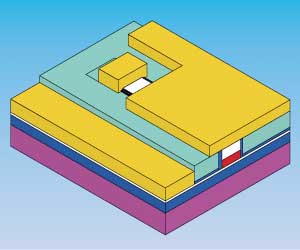
Schematic of a hybrid laser
Schematic of the hybrid laser. (Image: A*STAR Data Storage Institute)
Hybrid lasers combine the light-emitting properties of group III-V semiconductors like gallium arsenide and indium phosphide, with conventional silicon technologies, offering inexpensive photonic and microelectronic devices for application in optical telecommunication systems.
Their range of applications, however, is limited by the poor light-emitting characteristics of the silicon-on-insulator (SOI) wafers mostly used as substrates in the fabrication process. This spurred Doris Keh-Ting Ng and colleagues from the A*STAR Data Storage Institute to develop an innovative technique for bonding III-V lasers on to other substrates, be it silicon, quartz, or metal alloys.
By using an ultrathin layer of silicon oxide to bond the lasers to a silicon substrate, the researchers developed a simpler, safer and more flexible technique than direct bonding, which relies on chemical bonding between the surfaces.
“The challenge is to produce a smooth, extremely thin layer of silicon oxide on the surface of the substrate,” explains Ng. “By growing the film on the silicon substrate, but not on the III-V substrate, we greatly reduced the complexity of the process and improved the strength of the bond between the two materials.”
After first cleaning the surfaces with an organic solvent, the researchers exposed the surface to an oxygen plasma to increase its adhesive properties. They then initiated the bonding process at ambient temperature by bringing the two substrates slowly together, to reduce the air trapped between them, ensuring a much stronger bond.
The bonding was then completed at relatively low temperatures of around 220 degrees Celsius, allowing the ultrathin layer of silicon oxide to conduct heat between the layers, reducing potential damage to the materials, strengthening the bond and avoiding the need for hazardous chemicals, such as Piranha solution and hydrofluoric acid, used in direct bonding.
The work demonstrates a versatile on-chip laser that can be integrated on to any material platform and could lead to new applications for photonic devices, such as detector-on-chip and modulator-on-chip technologies.
“The low temperature interlayer approach is simpler and much safer than direct bonding, and means that laser manufacturers are not restricted by the choice of substrate,” says Ng.
Source: A*STAR

Read more: Integrated lasers on different surfaces